The Last Five Books

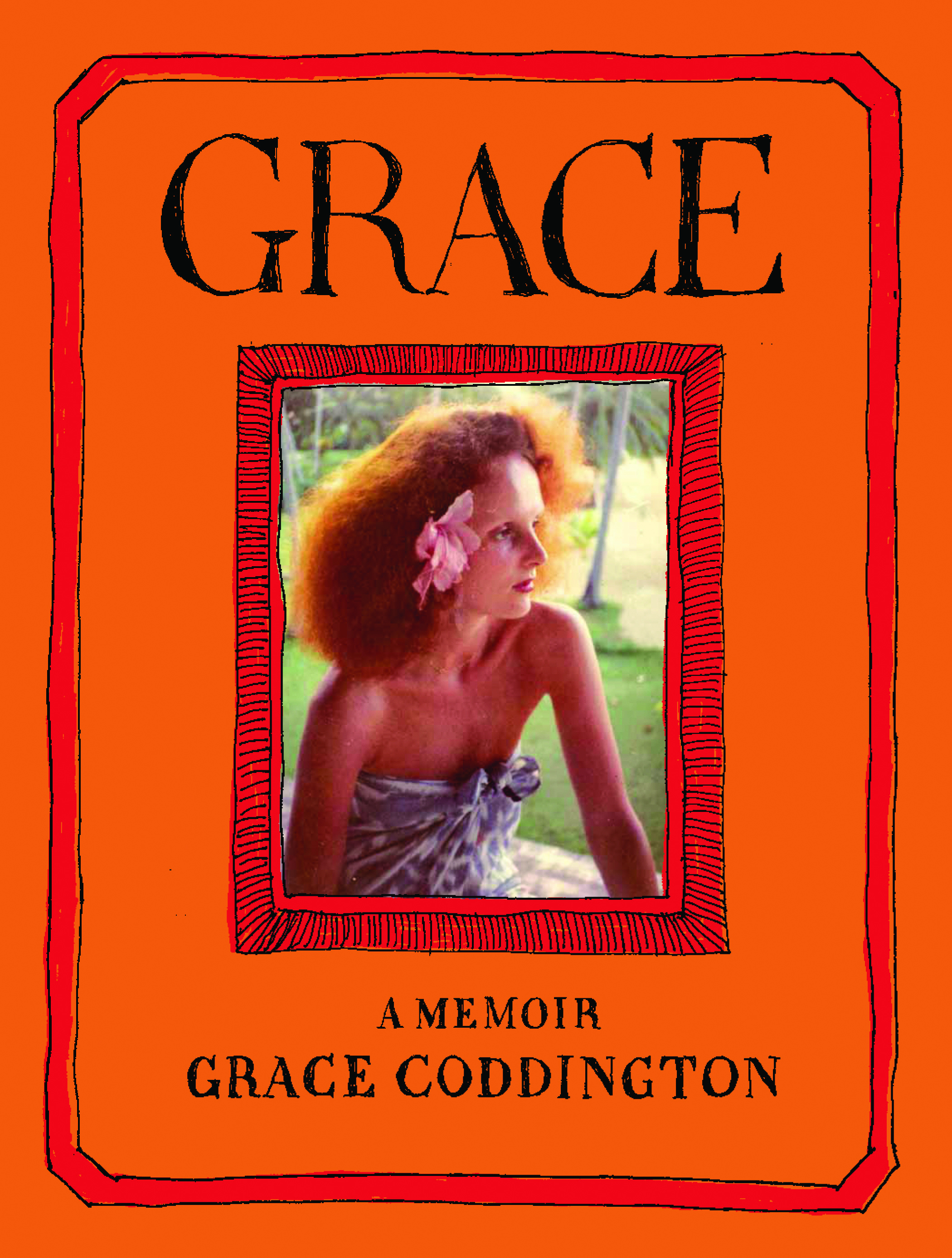
Grace: A Memoir (2012) by Grace Coddington

Like most people, I didn’t know of Coddington’s existence until I saw the documentary, The September Issue.  I was left loving her in the film for her spunk, plus her creativity seemed to just ooze out of the screen.

Thankfully, she published a memoir not to long after the filming and it was filled with the same whimsy and joy that can be seen onscreen.  The book itself is one that I would recommend reading in print as opposed to eBook.  The cover is bright orange and is not a usual book shape (more of a square), and it’s filled with great drawings by Grace herself.   And the icing on the cake, the contents leave you wishing that one day your life will have been as full, insightful and as successful both in career and friendships as hers.

Grace

Odd and the Frost Giants (2009) by Neil Gaiman

As per the usual recommendation, when possible, listen to Neil Gaiman’s books as opposed to reading them.  More often than not, Gaiman narrates them himself and adds the perfect amount of pause and inflection in every story.  Much like Chelsea Handler’s self-read autobiographies, Gaiman, having been the writer, truly expresses his wishes for how the stories should be communicated to the audience.

This was just a cute story to listen to while I was baking one afternoon, but it’s worth mentioning for the aforementioned reasons.  If you’ve never read Gaiman, I’d  recommend starting with his adult novel, American Gods.

OddandtheFrostGiants

Rest in Pieces: the Curious Fates of Famous Corpses (2013) by Bess Lovejoy

The title pretty much sums it up.  Leaders, actors, great thinkers, et al, in death all share unusual treatment to their deceased corpses, including but certainly not limited to having their penises cut off and preserved for posterity, floating in life-size fish tanks like wax figures for public viewing, and being shot out of a cannon into the desert.

Of all the figures described, only two women’s corpses are described as meeting macabre after-life endings.  Does this world consider the woman’s body too sacred in comparison to a man’s to desecrate?  Is the documentation missing from history?  Do women not deserve to be fought over and stolen from their graves?  I demand after-life grave robbing equality now!

But I digress…Lovejoy’s book is fun to read and is even safe for the faint of heart.  Her writing style is accessible and interesting, even if you aren’t aware of the life of said corpse.  Plus, there’s a great bibliography at the end for further reading, if that sort of thing does it for you.

RestinPieces

The Faithful Executioner: Life and Death, Honor and Shame in the Turbulent Sixteenth Century (2013) by Joel F. Harrington

Much like Roseanne Montillo’s book, Lady and Her Monsters highlighting the cultural events surrounding the writing of Mary Shelley’s Frankenstein, Harrington’s book paints a larger picture of the world surrounding the life of one special person in our collective history—the life and career of a death dealer, a.k.a the executioner.

The inspiration for the text is the actual diary of German executioner Frantz Schmidt (1555 – 1634) and Harrington’s book offers the reader a glimpse into 16th century Europe and all that your run of the mill executioner had to deal with in his daily life.  If you’ve already begun to glaze over with boredom, fear not!  Harrington offers up enough gruesome facts to keep you interested throughout most of the book, such as the various torture devices, what is done with the body postmortem and the shockingly high mortality rate for mothers and their babies.  Though sometimes I found myself skipping passages that were more detail/date focused, I appreciate that the text would appeal to the more serious history buff.

FaithfulExecutioner

Drinking and Tweeting (And Other Brandi Blunders) (2013) by Brandi Glanville

You gotta love a gal who has no filter, even when she’s sober and today, the girl that I’m speaking of is “Real Housewife of Beverly Hills,” Brandi Glanville.  You wanted the dirt about her divorce from cheater b-list actor Eddie Cibrian and his home-wrecking washed up country singer new wife, Leann Rimes, well you got it.

Glanville’s book is written as if you are sitting down having a heart-to-heart over cocktails and ruminating over past heartache.  It’s a fun, quick read that is a great pause from a more heavy book, or even crazy co-workers.  Glanville’s humor and wit, though related through the narrative of a broken marriage, makes you laugh and sympathize amidst the pain that any reader can relate to.

DrinkingandTweeting

The Last Five Books

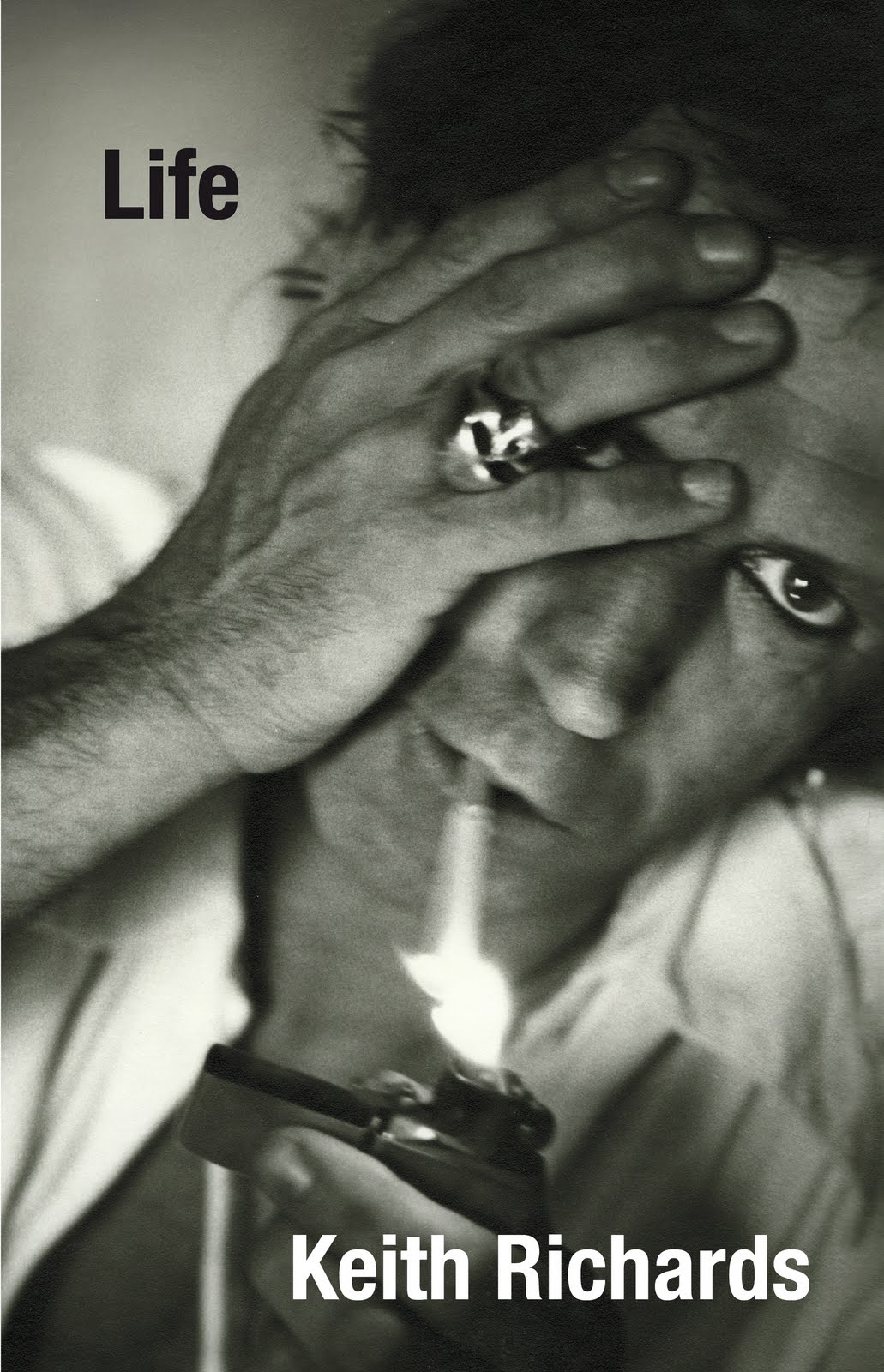
Life by Keith Richards (2010)

Richards tells his life story in stream of consciousness style while regretting nothing and spilling just the right amount of dirt on his band mates and other celebs.  Given everything (the drugs, the women, the road) his journey is summed up by a man who possesses a surprising level of introspection.

Keith Richards book cover Life.08-10

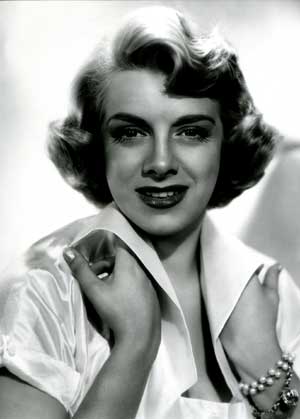
Girl Singer by Rosemary Clooney (2001)

Girl Singer is the epitome of bittersweet.  It constantly wavers between cliffs and valleys; the highs of singing, freedom and love and the lows of drugs, alcohol and the bondage of a troubled marriage.  Besides offering the reader a first class ticket into her career and love affairs, Clooney presents us with a cultural artifact into 1950s and 60s music and culture.  A great juxtaposition to Richards’ Life, Clooney describes the penultimate period where big bands and girl singers ruled and Rock and Roll was just on the horizon.

Rosemary+Clooney

Cyndi Lauper: A Memoir by Cyndi Lauper and Jaycee Dunn (2012)

Often times, reminisces of Cyndi Lauper conjure 1980s imagery of neon colors, spiky hair and of course, “Girls Just Want to Have Fun.”  Because of this, her memoirs couldn’t have waited any longer to show the world just who this woman is, and especially what she has done.

We all know that Lauper is a musician and artist, but when we hear that she is an activist, what that means is that she was one of the first advocates for gay rights, women’s equality, and a true trailblazer for HIV/AIDS awareness, especially at a time when it was shrouded by the highest amount of fear and taboo.  Lauper’s memoir is an essential reading for anyone who needs a boost of self-confidence and a reminder to keep their chin up when they’re wading through the muck of life.

CyndiLauper

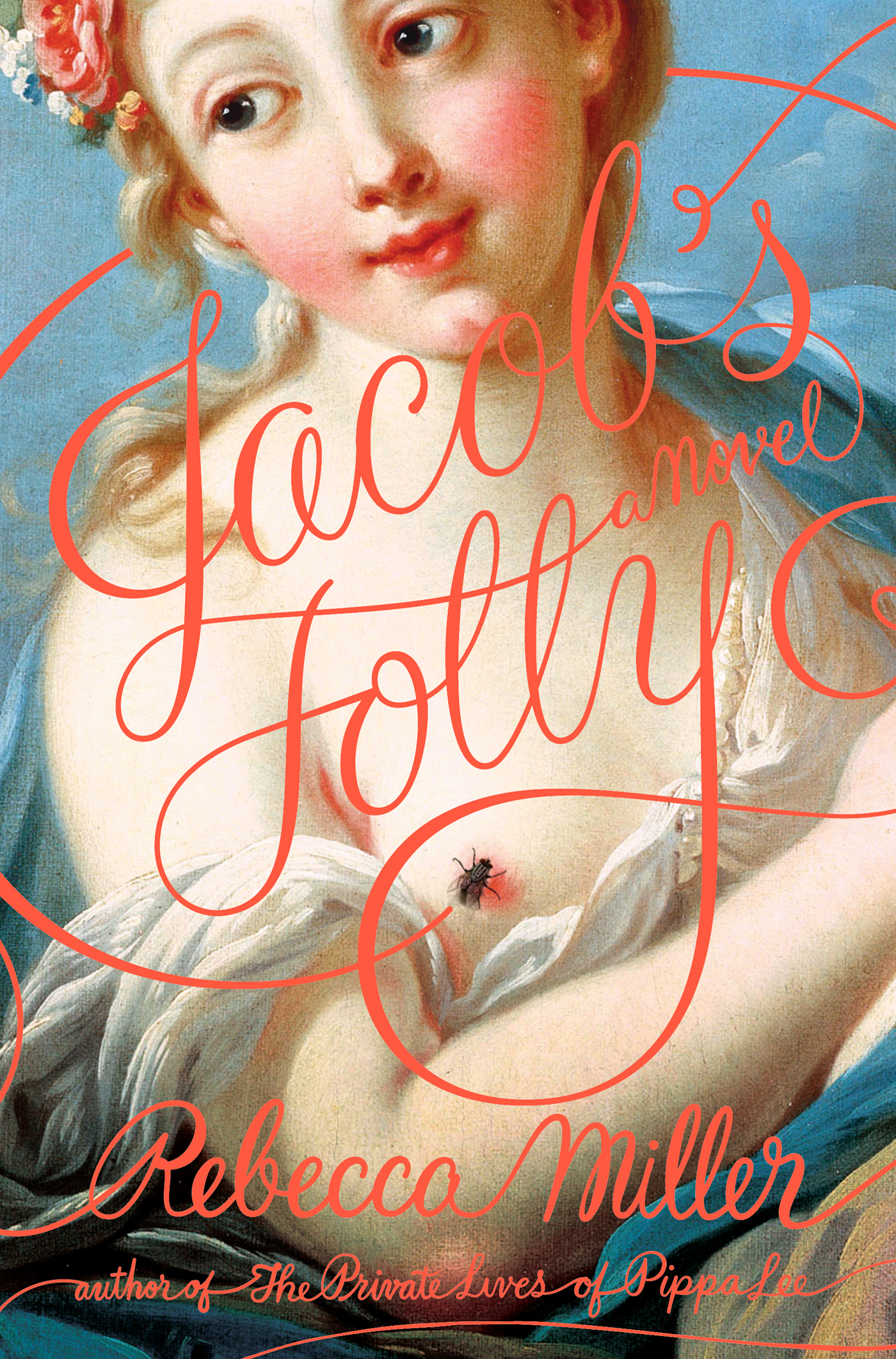
Jacob’s Folly by Rebecca Miller (2013)

A Hasidic Jew, born in the 1700s, is reincarnated as a fly in current day.  The story see-saws from his current day observations and his life in 18th century Paris.  Miller, who has in the past done a magnificent job of writing and directing from a varied female perspective, takes a stab this time at writing from the male perspective.  Her observations from the masculine gender’s point of view are entertaining, tawdry, and scintillating, thereby ever-changing your feelings towards the narrator.

RebeccaMiller

The Lady and Her Monsters: A Tale of Dissections, Real-life Dr. Frankenstein and the Creation of Mary Shelley’s Masterpiece by Roseanne Montillo (2013)

Author Roseanne Montillo describes the social thought and study leading up to the creation of Mary Shelley’s infamous story, Frankenstein.  To do this, Montillo details the very real history of grave digging for medical experimentation and the use of electricity as a possible re-animator of human life, both of which permeated both scholarly and pub conversations for hundreds of years.  She interweaves this history with Shelley’s feminist roots, being the daughter of women’s rights advocate Mary Wollstonecraft, and the subsequent publishing of the novel under an anonymous name due to the bias against female authors.

The conglomeration of the history of the human body, reanimation, electricity, and feminism are in itself a Frankenstein, being hobbled together to create the text that resulted in Frankenstein the story.

Montillo

[Listed in order by first to last book read]

Top Ten Books Read in 2012

Exploring Feminisms’ Top Ten in 2012

10.  Eva Braun: Life with Hitler by Heike B. Görtemaker

EvaBraun

This book epitomizes the phrase, “there’s a lid for every pot.”  Little is known about Eva Braun, the woman who was romantically linked and died with Hitler, due to the fact that towards the end he ordered all existing documents to be destroyed, even ones kept by Braun.  However, author Heike B. Görtemaker has pieced together through existing documents and letters a plausible picture of their courtship.  Görtemaker gives us a tale that can be both gripping and questioning, leaving much open for the reader to gather his or her own conclusions as to the validity of Hitler and Eva Braun’s relationship.

9.  Shaken, Not Stirred by Tim Gunn100_2026

 In this Kindle-only short story, Gunn briefly describes his father’s physical deterioration due to alcoholism and Alzheimer’s disease towards the end of his career, and the subsequent effect on his family.  Holding true to steadfast Tim Gunn-style, he is candid, witty, and introspective, thereby recognizing the flaws in his past and kneading them into something fruitful for the future.

IsEveryoneHangingOutWithoutMe

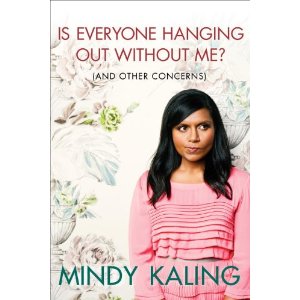
8.  Is Everyone Hanging Out Without Me? by Mindy Kaling

Mindy Kaling, also known as Kelly Kapur on the American version of the “Office”, has written an intelligent and introspective autobiography that offers us insight into the life of a truly funny woman.  Kapur’s writing is highly accessible: she’s sweet, silly, candid, and she possesses an incredible gift that makes you care about her, even though you’ve never met her.

7.  Armadillos and Old Lace by Kinky Friedman
100_1915

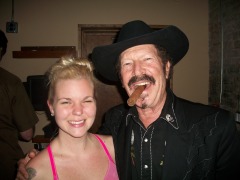
If you don’t know Kinky, get to know Kinky; the best Jewish cowboy country singer turned Jewish cowboy mystery writer around.  Friedman’s body of work, both fiction and non-fiction is impressive so it may be difficult to find a starting place besides at number one.  If you are going to skip around, then Armadillos and Old Lace (next to Elvis, Jesus and Coca-Cola) would be a safe bet.  Though peppered with slight vulgarity and delinquent humor (mercy!), Friedman always manages to be tender.  The main character, aptly named Kinky, loves animals, old ladies, his cigars, drinking, and saving the day.  He’s a good old boy with liberal sensibilities and stands up for those without a voice.  It’s a light mystery and you know that when  you get Kinky, you always get a happy ending.

GirlsWalksintoaBar6.  Girl Walks into a Bar by Rachel Dratch

Saturday Night Alum Rachel Dratch has written an adorable memoir about becoming accidentally pregnant in her 40s to a man that she is casually dating.  If you need an uplifting true story, especially to do with having children past what society deems to be your “prime” years, then definitely give it a go.  Dratch is a rebel who doesn’t apologize for her life choices and relays her experiences with honesty and a gentle touch; she’s to the point, but doesn’t come down too heavy.

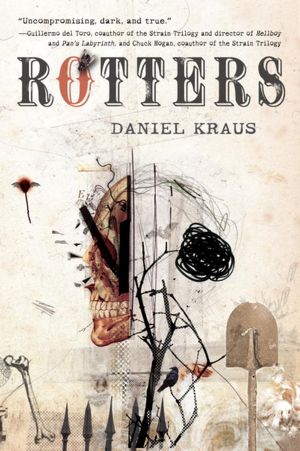
5.  Rotters by Daniel KrausRotters

This book was an accident.  As I was perusing the horror table at the Printers’ Row Book Fair in early 2012, I picked up this book whose appeal factors included grave robbing and corpses, and thinking it was adult fiction, bought it.  Little did I know that in all actuality, it was young adult.  Little did I also know is that teen/young adult novels can be as gory and poignant as an adult novel.  The great thing about this novel, and perhaps in many teen novels, is that little is open to interpretation because it’s messages are blunt; very little beating around the bush.  Sometimes, don’t we all just want to be handed a message that we can understand immediately?  I know that sometimes I do.

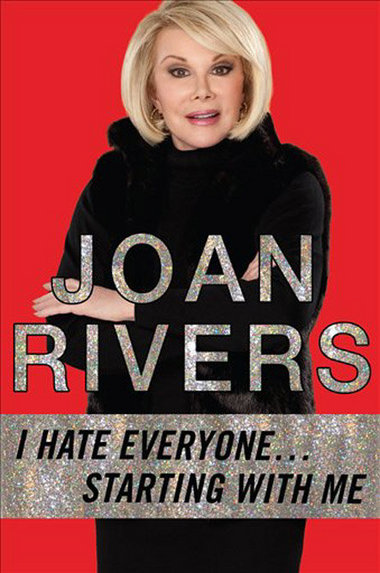
IHateEveryone4.  I Hate Everyone, Starting with Me by Joan Rivers

Women aren’t supposed to be funny without femininity.  It may sound archaic, but women are only allowed to be accepted into our society on a large-scale unless their mouth is paired with pretty.  Pretty looks, pretty hair, or pretty jokes intermingled with ugly ones.  Rivers tosses her jokes in the face of a society that is based on the consumption of pretty, feminine women.  She offends everyone to the most extreme degree, including herself, but it’s all one big joke.  Does she really hate mentally disabled children?  Of course not.  It’s all part of staying true to the purity of her craft.  She gets plastic surgery because she understands that no one wants to see an old wrinkled woman on television (isn’t that the ultimate paradox?), but then she uses her place in the spotlight to subvert what is expected of her as a female comedian.  In a nutshell, Rivers’ book is an offensive hoot.  Have fun.

3.  Amy, My Daughter by Mitch WinehouseAmycovers

Written posthumously by Amy Winehouse’s father, Mitch Winehouse pays the ultimate homage to his daughter–he writes her life.  Previous to picking it up, my knowledge of Amy’s life and music was limited to what the radio stations doled out, which was mainly negative gossip.  MW paints Amy as realistically as a father can, except he ups the credibility factor with fault.  He finds fault with himself and with Amy, and this is what brings the reader in because really, who wants to read 300 pages of praise?  If so, where can connections be made?  MW ultimately lets us grieve along with him, his family, and for the tragedy that was Amy’s death.

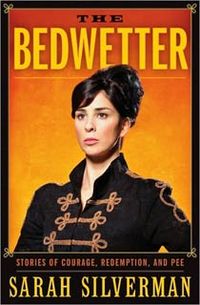
Bedwetter2.  The Bedwetter by Sarah Silverman

It’s jarring to hear a woman be so vulgar, compared only to the likes of Joan Rivers and a sprinkling of other female comedians who don’t give two shits about what mainstream culture says about them, but it’s also extremely refreshing.  Silverman’s no-holds-barred tongue is just the ruffling of the waters, much like Rivers’ book, that is needed to chip away at gender inequity, bit by bit.  Silverman’s book is a memoir of how comedy entered her life and how she has existed in that world.  Bedwetter is sometimes a tangled tale of inequality in the comedy arena that leaves you pissed off, intertwined with inspiration and gumption that makes you glad that there are women like Silverman out there who are disrupting at least one person’s sleep.

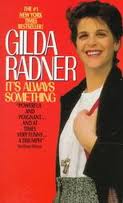
1.  It’s Always Something by Gilda Radnerit'salwayssomething

If you are seeking a solid story that leaves you feeling truly human and truly grateful, then read Radner’s autobiography.  In it, she hands us raw Radner on a plate and it leaves you completely changed at the end.  Radner’s memoir is one of cancer and her will.  She takes us on a journey that is the definition of bittersweet: getting cancer, its recession, fathoming her own possible demise, the ebbs and flows of hope, and her relationships and their own dealings with her cancer.  This book was written over twenty years ago and it reads as if it were written yesterday because love, friendship and struggle are (un)fortunately constants in life.


Book Review: Amy, My Daughter by Mitch Winehouse

As of a month ago, I knew very little about Amy Winehouse.  I remember when the song Rehab flooded the U.S. airwaves, forever imprinting her voice on our collective mind, whether we were fans or not.  When she died in July of last year, I, like many out there living much of our lives on the Internet, snickered at jokes made on Facebook, “she should have gone to rehab, yes, yes, yes” and other insensitive mockery.  All I knew of Winehouse was what the media fed us on a mass scale: a drugged up, anorexic mess with a tumultuous relationship with husband Blake Civil-Fielder.  When she died, the general consensus was that it was bound to happen given her drug abuse and lifestyle.

In June of this year, the biography Amy, My Daughter hit the stands, written by Mitch Winehouse, Amy’s father.  It was an intriguing concept, a book written from a father’s point of view on his deceased daughter.  Not knowing what exactly to expect, I gave it a go and found that it’s appeal factor would extend to a number of people in a number of directions.  It’s about love: familial, romantic, platonic and artistic.  It’s about passion.  It’s about God-given talent and creative output.  It’s about loving someone with an addiction and it’s about helplessness.  It’s about perceptions of addiction.  It’s about relapse and struggle.  It’s about the media and how they filter the truth.  It’s also about how one loser can really fuck up your life.

Mitch Winehouse’s writing is honest and accessible and doesn’t bog you down with self-pity or an over-inflated picture of Amy (besides what your typical father doting allows).  He begins with the end of Amy’s life, and then backtracks to her childhood through adulthood to the end again.  Much of the book describes her spunky personality and close-knit family unit.  Given all the negative press about Amy, it’s a wonder that she came from such a grounded and supportive family.  Even her parents, who divorced when Amy was young kept a friendly relationship thereafter.  When Mitch describes her addiction and his reaction to it, he holds nothing back, including the ugliness of Amy’s actions, and similarly the ugliness of his response.  His candid storytelling adds credibility to his point of view because he admits to situations where he may be seen as less than honorable, and dares to cast his daughter in a negative light for the sake of truth, whereas most parents tend to inflate their child’s persona.  He tells her life as he remembers it, and he remembers it well because he kept a diary throughout her years of stardom and addiction documenting their family’s highs and lows.

AMD carries you through her 27 year-old life and career, revealing details that allow you to gain a more thorough understanding of who Amy was as a woman and an artist.  For example, Amy wrote all of her own songs, which is surprising in this culture of mass produced, factory style music.  Because of her songwriting style, each song is a small window into a very personal and often painful time in her life.  Another surprising facet of Amy’s life was that she didn’t abuse drugs or alcohol until the met Blake Civil-Fielder, whom she later married and divorced.  Popular notions of the musician paint pictures of a hardcore addict who lived on the edge, but as her father reveals there were often spurts of sobriety where she would write and spend time with her family, but she always struggled daily with drug abuse, especially when using with Civil-Fielding.  After her husband was thrown in prison for bribery, Amy was able to get clean of hard drugs, which translated to alcoholism and was the ultimate cause of her demise.

Amy’s music acts as a bittersweet reminder of an extraordinarily talented young woman who suffered from substance abuse and died as a result.  It’s a sad wonder to think of what she could have done in the future, but luckily for us we are able to enjoy the three albums that she was able to create during her short life.  This book is a historical blueprint that enriches how we experience her music.  Mitch Winehouse’s biography on his daughter is essential reading in order to truly understand the woman behind the music.

This Author Doesn’t Bite: An Interview with Novelist Rhiannon Frater

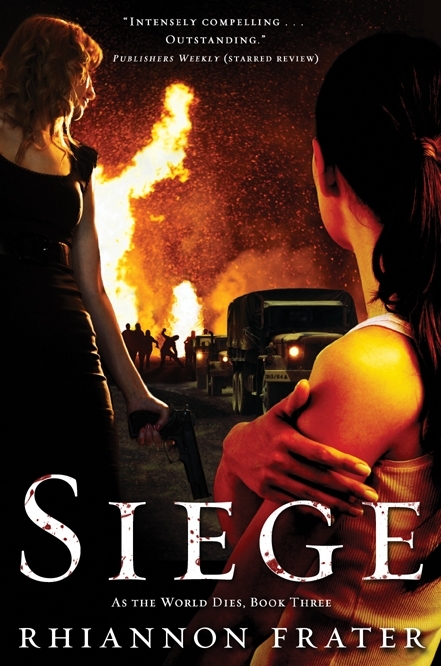
I ran across the As The World Dies trilogy, consisting of The First Days, Fighting to Survive, and Siege at the library, all snuggled together on the shelf, ostensibly innocent and unobtrusive.  The covers revealed allusions to women and zombies; little did I know that less than two weeks later, my life would be absolutely consumed and a month later, still reeling over the saga.

Written by author Rhiannon Frater, a Texas based author and zombie-survival aficionado, the trilogy outlines the lives of two women, Jenni and Katie, whose laundry list of to-dos in this new world infested with zombies includes surviving, love, wrestling with past and current demons, and an attempt to seek a glimmer of normalcy amidst it all.

Rhiannon was kind enough to take some time out of her busy day of creating kick-ass female protagonists and creative and gruesome ways to kill zombies to answer a few questions about the trilogy.

JM: Your characters often refer to George A. Romero’s zombie movies (director of Dawn of the Dead, Survival of the Dead, et al), as a guide on how zombies could act and events may unfold.  Have any other art forms or works inspired you during the writing of this trilogy?

RF: George A. Romero’s original zombie trilogy is a huge influence, of course.  I think any writer in the zombie genre would admit to being a fan of his works.  I wasn’t really influenced by any art forms or other works beyond Romero’s zombie movies. The people I met while traveling for my former job and the Texas landscape more heavily inspired me.  I love Texas and Texans as a whole.  I also did a lot of research about how people respond to natural disasters to ascertain how people would respond in a zombocalypse.

JM: Considering Romero’s films or any other inspiration, do you have an opinion on how women are typically portrayed, and how, if at all, did that influence the development of the female characters in the trilogy?

RF: Though I love Night of the Living Dead and regard it as my favorite zombie film, Barbara was a huge disappointment.  She spends most of her time on screen cowering.  When she finally starts to help defend the farmhouse, the dead pull her away.  That being said, Romero’s Dawn of the Dead gave us a fantastic female character in Fran.  Gaylen Ross did such a great job portraying her.  I was asked one time during an interview on a podcast who was the stronger female: Anna from the remake of the movie, or Fran from the original.  I had to say Fran.  It was the Seventies and she stands up for herself in a dynamic way.  She refuses to be a cowering female and joins the men in clearing the mall and defending it.  She also insists on learning to fly the helicopter.  I had the great pleasure of meeting Gaylen Ross this year and we spoke a lot about her portrayal as Fran.  She told me that she insisted on her character being strong.  I appreciate that tremendously.

But for a long time women in horror movies in general were just in the films to look pretty, flash their breasts, and die.  In zombie books, they had the same fate.  Women were also portrayed pretty negatively and were often just cannon fodder.

When I started writing the short story that birthed the As The World Dies trilogy, I never really consciously thought about the fact I was creating two female protagonists.  It was just a naturally occurring event in the framework of the story.  It wasn’t until later that I came to realize what a huge deal it actually was in the genre.

Now, happily, there are a lot more women in the genre and there are a lot of strong female characters filling the pages of zombie books.

JM: Creating strong female characters in all horror genres is important, and is slowly but surely becoming more apparent in our cultural consciousness, as evidenced by Selene in Underworld film series, and Alice in Resident Evil.  Regarding print media, literature specifically, I think that the idea that a woman can save the day is still carving out its place, and your trilogy is definitely helping to pave the way.

One aspect of the three books that struck me right away was how physically affectionate the characters are towards one another.  I think it’s safe to say that there is a high amount of cheek action, namely kissing and caressing, between characters of both the same and opposite sex.  What was your reasoning for including these interactions throughout the series?

RF: I guess because Texans are friendly?

We greet each other with hugs.  We wish each other goodbye with hugs and kisses on the cheek.  We’re a friendly lot.  Also, Jenni and Katie become sisters, best friends, and each other’s comfort. They treat each other like sisters.

Additionally, my research into how people respond to disasters revealed that people do cling to each other, even physically, for reassurance in difficult times. Just look at photos after a disaster. People literally hold onto each other.

JM: Given the amount of high tension that we absorb from the books, it definitely works by giving not only the characters, but the reader an extra layer of security and comfort as well.  The affection that they express is palpable by extension to the audience.

Throughout the three books, all natures of relationships are represented: bisexual, heterosexual, lesbian, mixed race, and varying ages.  To pinpoint the former three, many times they discuss stereotypes cast upon them from our homogenous society at large: bisexuality being questioned by both hetero and homosexual groups, an over sexualized view of lesbian relationships for the pleasure of heterosexual men, and my favorite, a man being a lesbian woman’s “beard”.   Given this, these discussions between characters never felt forced; they were always discussed very matter-of-fact or through humor, and the conversations always felt very fluid.  My question is: how do you tackle sensitive issues that could have been easily communicated in a ham-fisted manner with such finesse and ease?

RF: All those conversations happened pretty organically in the storyline.  I wasn’t trying to deliver a “message.”  I was just trying to portray the truth of those particular characters and their lives.  Society is in flux right now and a lot of people are discussing topics that were once taboo.  Sexuality is one of those aspects of the human condition that we struggle to understand in people who may not be like us.

Texans do tend to not care what their neighbor is up to as long as it doesn’t infringe on their personal space.  Because the survivors are living in such a small space, I think it’s natural that they would end up talking about subjects they might have not broached before.

JM: One of the aspects of this trilogy that impressed me was how real your characters were, ranging from spiteful to calculating, good-natured to grief-stricken, pragmatic to tenacious.  Your descriptions of their personalities often spread out throughout many chapters, as opposed to a one-paragraph summary.  This kept the characters fresh and ever-evolving and made it really difficult to not feel a kinship towards many of them; so much so that I was rooting so much for certain characters as if they were a close friend of my own.  As the book ended, I found myself grieving for the lost and when I turned the last page of the last book, I felt myself grieving then as I did throughout the next few weeks.  How do you create characters that are so life-like and complex?

RF: I don’t feel I create characters.  I feel I discover them as I write.  I see my stories as movies on the screen in my mind.  I try to translate to words the images I see on that screen.  The characters just kind of appear.  I have to sit back and ask, “Who are you?”  Sometimes characters end up challenging me in unexpected ways. I had to educate myself on bisexuality when Katie revealed her sexuality.  For Jenni I had to do research on her psychological issues.  Sometimes characters just pop up fully formed and ready to go.  Other times, I have to slowly unravel them.  It’s always a challenge.  They surprise me, too!  A well-developed character tends to do that a lot.

For example: Jenni’s impulse control issues really created some harrowing scenes in the trilogy.  I wasn’t always sure what the outcome would be!  But she’d go off and do something whacked on the screen in my head and I’d just mutter to myself and hope she’d come out of it somehow.

JM: In the final thoughts of your last book, you touch on how you believe in the good in people during times of crisis.  Throughout much anxiety and hardship, it was a comfort for me as a reader that no matter how much tension there was, I always knew that it would be okay because as a whole, the characters would always be there for each other.  Can you touch on this a little more for those who haven’t yet read the books or your final thoughts?

RF: I think the media has a huge impact on how people regard humanity.  There is a lot of evil in this world, but there is also a lot of good. Every day we live our lives by agreed upon rules that allow most of us to have rather good lives.  The hardships we experience as a modern society are nothing compared to our past.  The news shoves at us the worst of the worst, so we tend to be pretty gloomy about the future.

Yet, we survive in community.  We always have.  Great cities are born out a couple of hovels grouped together.  Nations rise because of people working together.  We advance ourselves because we work together as a community.

During disasters, we survive in groups.  For some reason it became the trope in the zombie genre to have humanity killing each other and being more monstrous than the zombies.  Yet, this wouldn’t be the reality.  Survivors would group together to survive.  They would fight to retain a semblance of society.  It’s our natural inclination. It’s who we are as a species.

Therefore, it seemed only natural that the people in Ashley Oaks would work together to survive and build a new community in a dead world.  That this shocks people is rather sad because it is the actual natural instinct of humanity.

Besides, Texans love the story of the Alamo.  They’d love the idea of making a new stand, but hopefully winning this time around.

JM: Well if there ever is a zombie-apocalypse, you’ll be one of the first people that I invite into my fort.

You can visit Rhiannon Frater’s website at: www.rhiannonfrater.com for tour dates, books, and even obtain a signed bookplate.

Pop Culture Presence: Five Memoirs

The Bedwetter by Sarah Silverman

I wasn’t a fan of Sarah Silverman before I read her book.  I knew that she was a Saturday Night Live cast member and I had seen her television show on Comedy Central where I had felt that she was “trying too hard”.  The book opens with the most shocking and candid family secret, leaving me stunned and staring into space.  I had no idea where she was taking me, but it certainly wasn’t funny.  As I read on, the layers of judgement were quickly stripped away as she discussed her experience and hardship as not only a woman trying to make it in comedy during the 1990s, but also one who often leaned towards vulgarity and potty humor-often synonymous with the masculine realm of the comedy business.  Her stories left me face-to-face with a new Silverman–witty, sensitive, hilarious, and honest with a heart as big as her ovaries.  This autobiography was a humbling lesson in shutting my mouth when I don’t know what I’m talking about.

What can I say?  Don’t judge a woman by her cover.

Is Everyone Hanging Out Without Me? by Mindy Kaling

If you read my previous post, which directly addresses Mindy Kaling on marriage, then you know that I greatly admire her first book.  Kaling’s autobiography describes her journey from childhood, being a somewhat overweight, comedy-loving child with hardworking immigrant parents who set the bar for her current work ethic, to present day (roughly 2011) on becoming a comedy writer, an actress, and a true believer monogamy.  She has a fiercely pragmatic outlook on life and love that is soberingly inspirational.  Kaling’s style is intelligent, smart and the book extremely well-written.

This book is A-List material for any gal or guy who has faced the following:

1. Thought s/he was too fat

2. Worked for really long and hard on what s/he loves and had to jump what seemed to be too many hurdles

3. Had an obsession with any number of TV shows and/or romantic comedies

4. Believes in the power of love

Hiding from Reality by Taylor Armstrong

Now you may be questioning why reading Taylor Armstrong’s (from Bravo’s The Real Housewives of Beverly Hills) autobiography on her husband’s suicide would be good for your health.  True, you may not have a lot in common with a Beverly Hills housewife, you may not have ever been in an abusive relationship, and you may not even have cable and have never heard of the show.  Despite all these and possibly more, Armstrong’s book is good for your health whether it be physical, mental or emotional.  She describes a lifetime of abuse in all varied forms, low self-esteem, helplessness and co-dependency.  She shares her story to reach out to women or men in abusive relationships and also probably to make some money after the debts lumped upon her after her husband’s suicide, and also to talk about that suicide, which so many of the show’s viewers want to get the dirt on.  Hiding from Reality sneaks up on you, leaving you to reflect on your own current or past relationships and also shines spotlight on your treatment of others.

Girl Walks into a Bar by Rachel Dratch

 You most likely know Dratch from Saturday Night Live as the quirky and elvish cast member who often had a baby-arm stemming from the top of her head.  Post-SNL, she was left with a somewhat open professional calendar filled with roles that type-cast her as the butch lesbian, the best-friend, the crazy person, the old woman with severe deformities…use your imagination.  As she approached her early 40s, Dratch found herself unmarried, underworked and accidentally pregnant.  She begins by taking us back down her dating roads, filled with absurdity, alcoholism and red flags and drives us right up to her future, filled with an uncertainty that encompasses boyfriend and her baby, which she appropriately deems her “midlife miracle”.  Dratch’s point of view is refreshing as she resists framing her story through rose colored glasses.  Her life took an 180 degree backflip and she’s taking it day by day.

Oh, and she loves being a mother.

Bossypants by Tina Fey

I don’t know how she does it, but when I closed this book, I felt like we truly were best friends.  Though that may sound brimming with stalker tendencies, I also heard that same reaction from likeminded girlfriends.  Despite the fact that I am a huge Saturday Night Live aficionado, I can’t exactly pinpoint which sketches Fey had written.  However, it is clear to see that her comedic acting skills, especially as Sarah Palin, are nothing to sneeze at.  After absorbing her book for a few months now, I see that there are obvious reasons for her popularity in television–the girl has mastered the power of introspection and incredible observation.  Fey’s autobiography is similar to that of Kaling, Silverman and Dratch where she documents little girl Fey through adulthood and her journey to becoming the  comedic powerhouse that she is today.  What sets Fey’s style apart is that she talks about the obvious and while this may seem to be a simple task , it’s extremely jarring given that she has such insight into her own life experiences and what happens around her.  When Fey describes her childhood and living in Chicago (she even went to the Planned Parenthood that I worked at years ago!), it reminds us that many artists come from humble beginnings and have tripped more than once along the way.

Delicious Ambiguity: A Look Back at Gilda Radner’s Autobiography, “It’s Always Something”

When I checked out Gilda Radner’s autobiography, “It’s Always Something” from the library, I had no idea what I was getting into.  The extent of my knowledge merely spanned Saturday Night Live comedian and cancer, breast? Divine providence, nosiness, morbidity, who knows, something drew me in.  In the end, what it amounted to was two days of reading, about four break-down, hysterical crying sessions, about two weeks of PSTD depression, and a new name for my unborn or adoptive daughter.

In 1986, Radner was given the sentence of ovarian cancer after getting the proverbial runaround from physicians, all ending in one misdiagnoses after another for nearly a year.  From start to finish, Radner writes this book as she is experiencing cancer treatments including chemotherapy, radiation, barium in every orifice, water flushes, a microbiotic diet and about everything in between.  For three years, she is put through hell on earth, both of the physical and mental kinds.  She describes just about every thought and experience, including intimate arguments with husband Gene Wilder, her fears concerning her prognosis, her many bowel blockages, losing her hair (and she means everywhere), her involvement with The Wellness Community, bulimia, jealously, her inability to bear children, and one of her biggest support systems, her dog Sparkle.  You are privy to her ups and downs, to her raw depression, desperation and the depths that she explores are beyond what most of us can conceive of.  The book is in essence her diary, and this is how she pulls you in and makes you her friend and confidant.  My appreciation of this text arose within the first two chapters when I realized that she wasn’t pulling any cheap shots.  There weren’t any defense mechanism type of jokes to lighten any of her or our uncomfortable feelings concerning cancer; it was pure honesty.  She puts it all on the table so we’re all on the same page and look at her situation for what it really is–cancer that could be life threatening and how she’s learning to deal with that.

The book ends in 1988, approximately three years from start of cancer treatments to current day, and she sums up by saying that she is still receiving treatment and is hopeful.  We are left, as she is, in a state of “delicious ambiguity.”  An uncertain future is a good future because we don’t know what will happen, and that means that anything is possible.  Only we know all too well the outcome of this story: Gilda died in 1989 after being in a coma for three days while being put under for a CAT scan.  What makes this book so amazing is that it is in essence a documentary of three years of her life, straight from the horse’s mouth.  What also makes this book so amazing, and so sobering, is that we are privy to real-life dramatic irony.  She confides in us that she wants to live and we are unable to tell her the painful truth.

Was her struggle for nothing?  Of course not.  Though I am left with feelings of torment as I reflect on her story and anger at how unfair it was that she had to suffer for nearly five years (with nearly two years of unnamed pain and discomfort).  And though I am having trouble seeing past the injustice and senselessness that life sometimes throws at us, the strength and raw hutzpah that Radner threads throughout her trial is palpable.  She relentlessly keeps her chin up, and when it’s down, it’s part of the dialogue.  Living from day to day is a huge priority for her–potlucks, interacting and sharing experiences with others facing cancer, swimming, tennis, and even making the doctors and nurses laugh are all therapeutic for her emotional and physical recovery.  Towards the beginning of her treatments in the hospital, she would arrive with several pairs of silly slippers and moan comically and tragically through the intercom from her bed, all in the name of keeping her spirits up.  Whenever possible, she tried to make the process hers.

Three days after finishing the book, I returned it to the library in which I work and was reluctant to release it.  Sure, I could have deviously discarded it and kept it for myself in the name of collection development.  But then I thought, if I keep it for myself, then no one else at the library will happen upon on it as I did, maybe changing their lives as well?  Later in the day, the dark cloud of Gilda’s death was still hovering over me as I was coincidentally searching for obituaries on microfilm when it shut down unexpectedly as I was making a copy.   After four failed attempts at printing Mr. Jones’s obit, I went for help, only to find out that it was just out of paper.  As I shook my head and cursed my carelessness, my library director walked by and said, “never mind,” in the voice of who else, Gilda’s famed and opinionated social commentator, Emily Litella.

Delicious ambiguity.

Just Kids by Patti Smith

When I picked up Just Kids, the story of rocker Patti Smith and photographer Robert Mapplethorpe, I had no idea who each was except for the vague recognition due to their presence in our cultural consciousness.  It kept surfacing in reading lists and conversations at the pubic library that I worked in, and when I inadvertently listened to the Smith’s haunting cover of Words of Love on the Buddy Holly cover compilation, Rave On, I interpreted this last sign as a form of serendipity.  

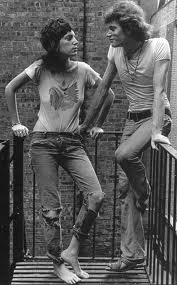
The book spans the mid-1940s, beginning with the birth of Smith and Mapplethorpe through the very late 1980s, at the advent of his death.  The book unfolds gradually first recounting Smith’s childhood, then Mapplethorpe’s, their artistic burgeoning, meeting, and life and artistic growth together.  The story contained within the two covers is a cultural artifact at the very least, and Smith builds a time machine for us and distributes a free pass into the New York underworld of artists, poets, singers, vagabonds, prostitutes, junkies and lost souls.  We as readers are allowed to recline as Kris Kristofferson and Janis Joplin navigate through “Me and Bobby McGee”.  We mourn with the Chelsea Hotel community for the death of Jimi Hendrix and Jim Morrison.  Smith becomes our child, us the mother as she describes going to sleep starving, leaving me wanting to jump into the pages to share my midnight snack.

Amidst the turbulence and permutation of the decades, the relationship between Mapplethorpe and Smith is steadfast.  It is one of chemical, of the indescribable where no apologies are needed.

Being born in the 1980’s, I could relate with little of the literal content–the people, the places, the air of the 1960s-70s.  All this is of no consequence.  The story of Mapplethorpe and Smith is universal to all beings.  You don’t need to know them, their history or even their work because what their tale expresses is ubiquitous to the soul.  One being needing another, offering a safety net by allowing transmutation as an artist, friend, lover and as the two have shown us, something beyond classification.

2011: Explore My Literary Feminisms!

At the beginning of 2011, I set a goal to read 24 books before the year was through in the attempt to trump my 17 from 2010.  If I didn’t reach it, no biggie, the point is quality, not quantity.  I did feel though, that a good amount of my time was melting into endless nights of watching the uber-dramatic and the really important issues of wives from Beverly Hills and the Mob.  Maybe a portion of my time would be better spent on what I sometimes forget that I really love?

My choices were not preplanned at the beginning of the year and I tried to tackle a range of books resulting in some feminist, most not, and a surprising few dabbled in Library Science, which I saw as more bang for my buck in the end.

My reading plan for this year not only differed from last year in goal (from 17 to 25), but also price.  Besides one or two that were bought for me, I checked all of the books out from the library.  Like many library types, a good amount of us buy our books.  Shocking, I know.  A lot of us are collectors of books and pride ourselves on showing off our giant libraries.  Think of it as battle scars.  However, being on a fairly strict budget for much of 2011, I decided to put my money, or rather, no money, where my mouth is (I think this also had a direct impact on my increased number of books).  Once I remembered that I had free access to an endless amount of books, I found it difficult not to fill my arms with mass amounts of fiction and non-fiction with the  voracious appetite of a brain eating zombie who had just encountered fresh prey!

Top 10

The Night Eternal
by Guillermo del Toro and Chuck Hogan (2011)

The third and final book in the Strain Trilogy about vampires taking over the earth.  The trilogy was amazing and each book led me on an emotional roller coaster.  Needless to say, I cried when I closed the last book.

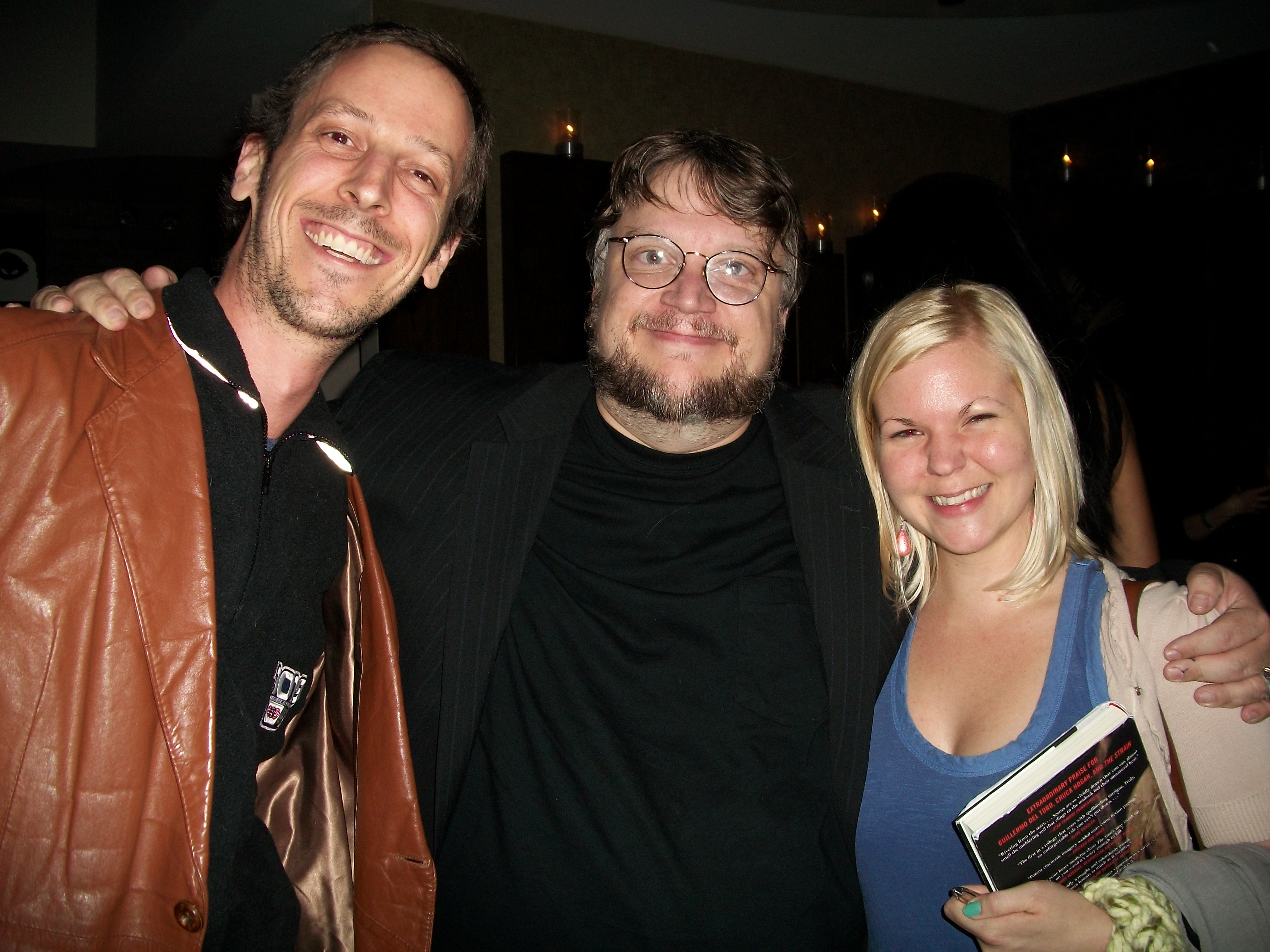
With GDT himself and yes, I am holding the first book of the Strain Trilogy

Neverwhere
by Neil Gaiman (1996)

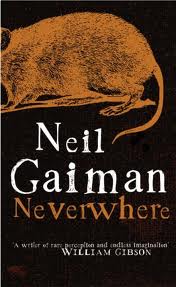
This year I discovered Gaiman, as you will see as you read further.  I read most of his adult fiction this year, and Neverwhere was my favorite Gaiman novel, and second favorite overall this year.  It had a happy ending, a very likable protagonist, and it sucked me in within the first few pages.  I also recommend this on audiobook because Gaiman himself reads the text and because of this, the audiobook expresses exactly what the writer was thinking when he was writing it.

Gunn’s Golden Rules
by Tim Gunn (2007)

This book is my Bible, or the closest thing I’ve ever read to a guide on how I want to live my life.  Gunn gives practical advice on how to act like a normal human being, encompassing good manners, the importance of treating yourself with respect and of course, making everything work.  I will definitely be reading this on a yearly basis and I recommend buying this one.

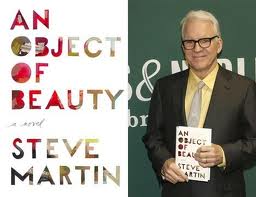
An Object of Beauty
by Steve Martin (2010)

If you like artwork, New York, fashion, Steve Martin, coming of age stories, color pictures in books or any combination thereof, then this book is for you.

Herland
by Charlotte Perkins Gilman (1915)
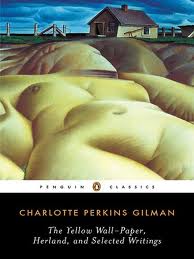
Three men crash land into an all-female utopia where the women actually function just fine!  Go figure!  Plus, it’s a classic by a classic woman.  If you haven’t read CPG yet, I recommend starting with her short story the Yellow Wallpaper.

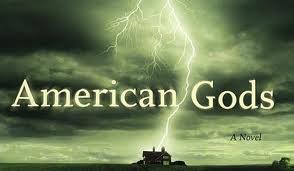
American Gods
by Neil Gaiman (2001)

Gods living on earth in human forms.  What more could you want?  This piece of fiction is epic and like Neverwhere, grabs you right away.  At times, this book tackles some tough life and death issues but not so much that you feel like you’re reading a Russian novel.

Bossypants
by Tina Fey (2011)

Fey is a feminist and Fey is funny.  And I also want her to be my best friend.  Recommended for women and men who aren’t scared of childbirth, rotten breath or pubic hair that resembles vermicelli noodles.

The Fellowship of the Ring
by J.R.R. Tolkien (1954)

This year I thought that I’d take on the book since I love the movies so much.  It really reinforced that books and film are two totally different mediums and therefore are difficult to compare.  The book fills in gaps in the movie that I didn’t even know there were.  Plus, I was surprised by what an easy read it ended up being.

Based Upon Availability
by Alix Strauss (2010)

Short stories about women who are interconnected by their association with the Four Seasons Hotel.  Like her last fiction novel, Joy of Funerals, Strauss is really great at writing from varied female points of view.

Men Are Stupid and They Like Big Boobs
by Joan Rivers (2008)

What can I say?  It’s Joan Rivers and she rocks.  She’s a bipartisan powerhouse with a voice and an opinion.

Runners Up

The Anansai Brothers
by Neil Gaiman (2005)

The story of two reunited brothers who are the sons of an African God.  Very Gaimanesque: death; life; Gods; whimsy; a somewhat awkward central character who comes into his own; and as always, he presents us with magic and superstitions and makes it so easy to want to be part of that world.

Oh No She Didn’t: The Top 100 Style Mistakes Women Make and How to Avoid Them
by Clinton Kelly (2010)

Kelly’s guide makes you reflect on  your own wardrobe, laugh out loud on the bus and then look around to judge everyone near you.  However, I think his critique on eyebrows is totally incorrect.

Locke and Key
by Joe Hill (2008)

I am going to say it, Stephen King can’t hold a candle to his son’s writing.  Having never been a real graphic novel fan (besides being made to read Maus and Persepolis in undergrad), Hill’s graphic novel has prompted me to want to read the next three in the series.  A little bloody, a little disturbing and totally enthralling.  (May I also recommend Hill’s fiction: Heart Shaped Box and Horns.)

The Graveyard Book
by Neil Gaiman (2008)

The story of a baby who is adopted by ghosts in a graveyard after his parents are murdered.  Though technically a teen novel, I thoroughly enjoyed this coming of age story.

Carrion Comfort
by Dan Simmons (1989)

If you liked the Strain Trilogy, I’d recommend this novel as well.  Vampires living on earth unbeknownst to humans, a group of rag-tags on the hunt and characters that you fall in love with.  The end gets a little murky and I wouldn’t hold it against you if you speed read the last 1/4 of the book.

Tim Gunn’s Guide to Quality, Taste and Style
by Tim Gunn (2007)

Like Joan Rivers, I like everything that Gunn writes so naturally he’d make it to my runners up group.  Though not one that I’d stress that you buy, he does give good, solid advice on fashion and style, though through a somewhat more conservative lens.  Maybe it’s a New York high fashion thing.

Abraham Lincoln, Vampire Hunter
by Seth Graham-Smith (2010)

Sometimes we need something to read where we don’t have to think, right?  Well this is it.  Lincoln was actually a vampire hunter and guess what, slave owners were usually vampires.  It’s real!  Seriously!

Wigfield
by Paul Dinello, Amy Sedaris and Stephen Colbert (2003)

Yet another book where you can just laugh and not have to think much, though be prepared to accept the utter silliness and absurdity of the whole piece.  I’d recommend this on audiobook because Paul Dinello, Stephen Colbert and Amy Sedaris perform the voices for several of the characters.

Mister B. Gone
by Clive Barker (2007)

The concept for this book is really unique–a first person, or rather demon, point of view.  Demon Jakabok Botch is trapped within the pages of the book that you are reading, at that very moment, and he warns and implores you throughout the book to stop reading or else be damned!

The Vegetarian Low-Carb Diet
by Rose Elliot (2006)

Okay, so I am listing this as a runner up because I lost ten pounds in two months.  I was a vegetarian already but the low-carb thing really works.  I wouldn’t take this book as word, but it’s easy to use it as a general guide and make it your own.

Summer of Night
by Dan Simmons (1991)

This book is a prequel to another Simmons book, Winter Haunting and describes a group of boys over the course of one summer.  It entails possession, ghosts, baseball and creepy teachers.  It’s an easy, mindless read and I would recommend it if you have nothing better to read.

The Terror
by Dan Simmons (2007)

I keep reading Simmons because I feel like a lot of the time he almost gets there, but not quite.  This book falls in the typical Simmons style, much like Carrion Comfort.  Most of this book is great–the story of an arctic expedition, Eskimos with special powers, and a large killer spirit who kills off a ship of 19th century English explorers.  The first 3/4 of this book keeps your interest piqued, and then the last 1/4 goes a little off course.  If you can stretch your imagination and suspend belief for a few dozen pages, then you’ll be fine.

Eh.

Holidays on Ice
by David Sedaris (1997)

I realize that by saying this I may be pegged with eggs on the street by strangers, but this book is not great.  The stories are disjointed and the book doesn’t seem to have much focus.  I think it could have been a lot better it if were just stories about his normal [holiday] anecdotes, but it pulls in some strange tales, such as a young Asian girl moving in with an American family and the mother killing her grandchild.  While this story is totally acceptable and somewhat entertaining, it seemed like it would be better in another book.

Salem’s Lot
by Stephen King (1975)

The more I read Stephen King, the more disappointed I am, and the more I read.  Stephen King is known as the king (pun intended) of horror, but I think that his novels are just okay.  I’m not drawn in, scared or excited by his stories and this novel was no exception.  There were a lot of gaps in the story and I was missing the meat of a great vampire tale.  The idea behind it was great, a vampire comes to a small town, but it lacked the follow-through.

The Girl Who Loved Tom Gordon
by Steven King (1999)

A little girl gets lost in the woods and is accompanied by a battery operated radio with the voice of commentators reporting on baseball player Tom Gordon.  I did like how King describes being perpetually wet and stung by mosquitoes, because we can all relate to this.  However, I felt myself becoming bored at times because like Salem’s Lot, I felt like the meat of the story was lacking.

Being Their Own Women: Self Discovery & Independence in Women’s Personal Lives


The Awakening
by Kate Chopin

Set in the late 19th century, The Awakening spans two pivotal seasons in Edna Pontellier’s life as a young wife and mother.  Having never felt truly alive during the entire span of her life, Edna “awakens” during a summer of spiritual liberation, leading her to reflect on her life as someone’s wife and mother.  The story results in a woman who subverts the conventions of her time by defying filial and maternal expectations by focusing on her life as her own woman.

Personal Velocity
 by Rebecca Miller

Miller’s book consists of seven short stories that describe the lives of seven very different women. They are bound by their grit, strength, incredible struggles, and their will to survive amidst their personal tribulations. Despite each of their uphill struggles, each character finds solace the minute details of life uses that to persevere in their own ways, revealing the complexity of women’s reaction to struggle.

A Spy in the House of Love
by Anais Nin

In this semi-autobiographic work, the lead female character, Sabina, struggles to develop her sexual and artistic expression.  This work is known for its erotic language and strong themes of a relationship with the self and passion.

The Story of Avis
by Elizabeth Stuart Phelps

Avis is an artist who decides to marry who she thinks is a “modern man,” believing (and being led to believe) that once married she can continue to express her creative self.  However, the traditional gender roles that suppress(ed) women and elevate men take their hold over Avis’ artistic expression.

Orlando
by Virginia Woolf

Born as a man, Orlando transforms into a woman as (s)he lives over several centuries, experiencing the gamut of gender norms, restrictions and suppositions that are forced on men and women. Seeing the treatment of Orlando as both a man and a woman by society, though (s)he is the same person, highlights the inequities that both men and women have faced throughout the ages.

The Bell Jar
by Sylvia Plath


Though sold as fiction, The Bell Jar is an autobiographical account of Esther (some argue Plath), a young woman working for a summer as an employee of a major magazine away from home.  There, Esther suffers a mental breakdown, and the reader is taken down with her into the depths of her insanity, so much though that it is difficult to distinguish insanity from reality.

Nightwood 
by Djuna Barnes


Taking place in Paris, Nightwood tells the story of two women romantically involved and the deterioration of their relationship.  This novel highlights both hetero-sexual and lesbian relationships that are expressed through dark, thick and lyrical language.

Selected Writings of Gertrude Stein
by Gertrude Stein

This collection features non-fiction essays, anecdotes and fictional stories about Stein’s female partner, and artists of the day.  This book is a perfect sampling of Stein’s well-known fragmented and unique writing style.  It also features the well-known short story “Miss Furr and Miss Skeene,” who we assume to be two romantically linked women who strive for their own fulfillment in life and relationships.

HERmione
by H.D. (Hilda Doolittle)

Perhaps the most obscure of all her titles, this autobiographical account and coming of age story, written by Hilda Doolittle, commonly known as H.D., details her unsure and tumultuous life during her twenties at Bryn Mawr. H.D., known in the book as Hermione Gart, battles to transition between her old, obedient self that her parents once knew and the new identity that she begins to forge now that she is away at school and exposed to people who help to foster her true self.

The Yellow Wallpaper and Other Stories
by Charlotte Perkins Gilman

Most known for the short story, The Yellow Wallpaper, a woman is denied creative output by her husband and is treated as psychologically weak and incompetent, which ultimately exacerbates to her mental deterioration. This collection also features Gilman’s non-fiction prose, Women and Economics and an excerpt from her novel Herland which illuminates a peaceful, all female utopia without the presence of men and that of a patriarchal, capitalist system.