The Public Library-Six Months in the Trenches

It has been one year since I graduated with my Master’s in Library Science, and exactly six months since I began working in a public library.  Obviously, six months barely qualifies me to say that my big girl librarian pants are fully on.  Despite this, I have cultivated some unique insights specifically relating to the theory taught in grad school and the application of them in my daily life.  Here is my six month reflection, or if you will, the real deal on what happens in one public library.

The RUSA Interview: Just Relax!

In my very first library science class, General Reference Sources, I remember falling in love with the RUSA (Reference and User Services Association via the American Librarian Association) guidelines for the “reference interview”.  Which means, there are a set of guidelines that one must follow in order to give top-notch reference service to a patron, whether face-to-face or online.

When I began at the library, refreshing my reference interview points were priority number one, and I tried so hard to remember all of them during any exchange with a patron.  I put so much pressure on following them to a T, but soon found that the five guidelines can be fluid and really do have a way of naturally presenting themselves in the conversation.

There’s a refresher, or a fresher, if you will:

Approachability: look like you want to answer a question…smile!

Interest: act like you’re listening, or better yet, actually listen!  You’d be surprised how many librarians fail the first two…

Listening/inquiring: listen and ask questions.  I find this to be the most difficult because often times someone will be uber-confident in what they are asking for, and that may cause you to doubt your own instincts.  For example, an older woman was sure that the new release she was looking for was written by Vince Vaughn.  It turned out to be the fiction writer Vince Flynn.  The point is, it’s okay to question their question.

Searching: you help them find the information.  This is my biggest area for improvement because in grad school reference classes, you have to explain how you found everything and describe it step-by-step in your homework.  However, this is real life, not a paper, and a patron is often standing in front of you.  I tend to just find it and give it to them, which is a huge no-no.  Sure, it’s easier for me because I know I can find it, but I need to help them learn to plant, you get me?

Following-up: I find this to be a grey area, and you just need to feel it out over time.  Sometimes the patron doesn’t need a strict follow-up after they have searched.  For example, if they are looking for the movie The Birds, and you find it on the computer and hand them the DVD, then a formal follow-up may not be necessary because you know that they are happy.  Usually what I’ll do is when I find the source or hand it to them, I’ll ask if that is what they want.

All in all, the reference interview is fairly intuitive.  Just smile, be interested, ask lots of questions and remember to stay calm.  Sometimes, the patron will even school you on sources and may know a lot more, and that is okay.  Swallow your pride and welcome the opportunity to learn something new–you don’t know what a “fake book” is?  I didn’t either until a patron told me!

Crowd Control

In graduate school, discussions of the homeless, those with mental problems, or just plain raucous patrons were always done in ivory tower style.  What happens if they smell?  What if they are looking at women in thong underwear on the Internet?  What if they are sleeping in a book carroll?  What if they are washing their armpits in the bathroom sink?  The solutions to these questions were never directly answered, but instead we gave them a big “whadda do”? with a shoulder shrug and went onto discussing online reference sources.  I can’t say if this was exclusive to my particular classes or because those teaching were librarians in academic libraries, which tends to weed out the general public.  Either way, these questions quickly materialized into reality as the nearby homeless shelter opened during the winter months and/or some of our regulars stopped taking their schizophrenia medication.

Naturally, each library most likely has their own policies and chains of command regarding who to notify and what steps to take in case someone gets a little rowdy.  Despite this, a lot of times the (assistant)directors may not be present on the floor and the librarians and circulation staff are left to wo/man that all to often, “grey area” that patrons usually dance in.  What if that patron does indeed smell?  Or what if someone is listening to their music too loud, but I don’t think it’s too loud?  These questions in turn may lead a disgruntled patron to complain and it can be extremely uncomfortable for the librarians because this is that grey area.  A patron may be annoying another person, but it may not be enough to take action on the part of the librarian, which in turn may infuriate the complaining party.  These situations can be a daily occurrence in the library, and whose job is it to educate us in interpersonal communication?  Looking back, I do think that a more thorough dialogue in grad school could have been helpful, especially in teasing out diplomacy skills and tactics to aid librarians that would prevent them from becoming overwhelmed when faced with an angry patron.  Library Therapy 101, sign me up!

There’s No Cryin’ in Librarianin’

When I began working in the library, my mind was swollen with ideas on how things should be done.  When it comes down to the nitty-gritty of it, no matter how much you learn in school, or how many journal articles you read, there’s no substitution for hands on experience, and if you’re lucky, that hand is usually that of an experienced librarian on your shoulder.  Don’t get me wrong, I’ve never lost my lust for spewing my opinions all over the stacks, but it wasn’t until I swallowed my pride and shut my mouth that the real pearls began to bubble up.

It’s a humbling experience to admit that you don’t know what you are doing, whether you’ve been in the biz for six months or ten years.  Like many careers, in the library you are constantly inspired by other people’s creativity and insight and you just cannot compete with a dedicated librarian’s decades of experience.  And no matter how crabby a librarian can sometimes be (yes, and unfortunately, that stereotype still does exist because that type of librarian still exists), a good librarian is a steadfast sponge for new information.  It can be a struggle, especially for me, to admit that I don’t know everything because I KNOW EVERYTHING ALREADY!  When a co-worker has graciously tried to mentor me, my guard sometimes flares up.  On many occasions my emotions have run the gamut from feeling like crying, being defensive, angry, and slowly and thankfully more often, grateful.  It’s difficult to zip the lips and admit that your knowledge base is lacking, but if you’re lucky, you’ll get paired with an old-school librarian who wants to share their knowledge.

Six Months to Life 

As Hank Williams has said, if God’s willing and the creek don’t rise, this is just the beginning of my library career.  I have no clue what this post will look like in six weeks, six months, or six years.  What I do know is that I want to be the best librarian ever and hopefully one day, I’ll be that kick-ass, and hopefully not the too crabby librarian that inspires some other new six-monther.

Pop Culture Presence: Five Memoirs

The Bedwetter by Sarah Silverman

I wasn’t a fan of Sarah Silverman before I read her book.  I knew that she was a Saturday Night Live cast member and I had seen her television show on Comedy Central where I had felt that she was “trying too hard”.  The book opens with the most shocking and candid family secret, leaving me stunned and staring into space.  I had no idea where she was taking me, but it certainly wasn’t funny.  As I read on, the layers of judgement were quickly stripped away as she discussed her experience and hardship as not only a woman trying to make it in comedy during the 1990s, but also one who often leaned towards vulgarity and potty humor-often synonymous with the masculine realm of the comedy business.  Her stories left me face-to-face with a new Silverman–witty, sensitive, hilarious, and honest with a heart as big as her ovaries.  This autobiography was a humbling lesson in shutting my mouth when I don’t know what I’m talking about.

What can I say?  Don’t judge a woman by her cover.

Is Everyone Hanging Out Without Me? by Mindy Kaling

If you read my previous post, which directly addresses Mindy Kaling on marriage, then you know that I greatly admire her first book.  Kaling’s autobiography describes her journey from childhood, being a somewhat overweight, comedy-loving child with hardworking immigrant parents who set the bar for her current work ethic, to present day (roughly 2011) on becoming a comedy writer, an actress, and a true believer monogamy.  She has a fiercely pragmatic outlook on life and love that is soberingly inspirational.  Kaling’s style is intelligent, smart and the book extremely well-written.

This book is A-List material for any gal or guy who has faced the following:

1. Thought s/he was too fat

2. Worked for really long and hard on what s/he loves and had to jump what seemed to be too many hurdles

3. Had an obsession with any number of TV shows and/or romantic comedies

4. Believes in the power of love

Hiding from Reality by Taylor Armstrong

Now you may be questioning why reading Taylor Armstrong’s (from Bravo’s The Real Housewives of Beverly Hills) autobiography on her husband’s suicide would be good for your health.  True, you may not have a lot in common with a Beverly Hills housewife, you may not have ever been in an abusive relationship, and you may not even have cable and have never heard of the show.  Despite all these and possibly more, Armstrong’s book is good for your health whether it be physical, mental or emotional.  She describes a lifetime of abuse in all varied forms, low self-esteem, helplessness and co-dependency.  She shares her story to reach out to women or men in abusive relationships and also probably to make some money after the debts lumped upon her after her husband’s suicide, and also to talk about that suicide, which so many of the show’s viewers want to get the dirt on.  Hiding from Reality sneaks up on you, leaving you to reflect on your own current or past relationships and also shines spotlight on your treatment of others.

Girl Walks into a Bar by Rachel Dratch

 You most likely know Dratch from Saturday Night Live as the quirky and elvish cast member who often had a baby-arm stemming from the top of her head.  Post-SNL, she was left with a somewhat open professional calendar filled with roles that type-cast her as the butch lesbian, the best-friend, the crazy person, the old woman with severe deformities…use your imagination.  As she approached her early 40s, Dratch found herself unmarried, underworked and accidentally pregnant.  She begins by taking us back down her dating roads, filled with absurdity, alcoholism and red flags and drives us right up to her future, filled with an uncertainty that encompasses boyfriend and her baby, which she appropriately deems her “midlife miracle”.  Dratch’s point of view is refreshing as she resists framing her story through rose colored glasses.  Her life took an 180 degree backflip and she’s taking it day by day.

Oh, and she loves being a mother.

Bossypants by Tina Fey

I don’t know how she does it, but when I closed this book, I felt like we truly were best friends.  Though that may sound brimming with stalker tendencies, I also heard that same reaction from likeminded girlfriends.  Despite the fact that I am a huge Saturday Night Live aficionado, I can’t exactly pinpoint which sketches Fey had written.  However, it is clear to see that her comedic acting skills, especially as Sarah Palin, are nothing to sneeze at.  After absorbing her book for a few months now, I see that there are obvious reasons for her popularity in television–the girl has mastered the power of introspection and incredible observation.  Fey’s autobiography is similar to that of Kaling, Silverman and Dratch where she documents little girl Fey through adulthood and her journey to becoming the  comedic powerhouse that she is today.  What sets Fey’s style apart is that she talks about the obvious and while this may seem to be a simple task , it’s extremely jarring given that she has such insight into her own life experiences and what happens around her.  When Fey describes her childhood and living in Chicago (she even went to the Planned Parenthood that I worked at years ago!), it reminds us that many artists come from humble beginnings and have tripped more than once along the way.

Happy National Poetry Month!

Though it may seem a bit controversial to choose Charles Bukowski for my third selection of the National Poetry Month series, I feel that his commentary on poverty, race, corporate injustice, the environment, et al, earn him a spot.

Charles Bukowski-Born into This

(Select the above link for the video of Bukowski reading his poem)

DINOSAURIA, WE
by Charles Bukowski

Born like this
Into this
As the chalk faces smile
As Mrs. Death laughs
As the elevators break
As political landscapes dissolve
As the supermarket bag boy holds a college degree
As the oily fish spit out their oily prey
As the sun is masked
We are
Born like this
Into this
Into these carefully mad wars
Into the sight of broken factory windows of emptiness
Into bars where people no longer speak to each other
Into fist fights that end as shootings and knifings
Born into this
Into hospitals which are so expensive that it’s cheaper to die
Into lawyers who charge so much it’s cheaper to plead guilty
Into a country where the jails are full and the madhouses closed
Into a place where the masses elevate fools into rich heroes
Born into this
Walking and living through this
Dying because of this
Muted because of this
Castrated
Debauched
Disinherited
Because of this
Fooled by this
Used by this
Pissed on by this
Made crazy and sick by this
Made violent
Made inhuman
By this
The heart is blackened
The fingers reach for the throat
The gun
The knife
The bomb
The fingers reach toward an unresponsive god
The fingers reach for the bottle
The pill
The powder
We are born into this sorrowful deadliness
We are born into a government 60 years in debt
That soon will be unable to even pay the interest on that debt
And the banks will burn
Money will be useless
There will be open and unpunished murder in the streets
It will be guns and roving mobs
Land will be useless
Food will become a diminishing return
Nuclear power will be taken over by the many
Explosions will continually shake the earth
Radiated robot men will stalk each other
The rich and the chosen will watch from space platforms
Dante’s Inferno will be made to look like a children’s playground
The sun will not be seen and it will always be night
Trees will die
All vegetation will die
Radiated men will eat the flesh of radiated men
The sea will be poisoned
The lakes and rivers will vanish
Rain will be the new gold
The rotting bodies of men and animals will stink in the dark wind
The last few survivors will be overtaken by new and hideous diseases
And the space platforms will be destroyed by attrition
The petering out of supplies
The natural effect of general decay
And there will be the most beautiful silence never heard
Born out of that.
The sun still hidden there
Awaiting the next chapter.

Happy Poetry Month, you crusty old crab.

Happy National Poetry Month!

Poem numero dos in honor of National Poetry Month celebrates Dorothy Parker!

I have included two short, but oh so poignant of Parker’s poems.

New Items

Men seldom make passes
At girls who wear glasses.

Résumé

Razors pain you;
Rivers are damp;
Acids stain you;
And drugs cause cramp.
Guns aren’t lawful;
Nooses give;
Gas smells awful;
You might as well live. 

Exploring Feminisms Is All Grown Up!

Exploring Feminisms put on her big girl pants, or rather big girl hat, and is now a website!

http://www.exploringfeminisms.com

Happy National Poetry Month!

  Happy National Poetry Month!  It’s one of Exploring Feminisms’ favorite months!

This first poem of the April poetry month series is written by recently departed but always feminist, lesbian, activist, amazing… Adrienne Rich.

Heroines
(1980)

Exceptional
even deviant
you draw your long skirts
across the nineteenth century
Your mind
burns long after death
not like the harbor beacon
but like a pyre of driftwood
on the beach
You are spared
illiteracy
death by pneumonia
teeth which leave the gums
the seamstress’ clouded eyes
the mill-girl’s shortening breath
by a collection
of circumstances
soon to be known as
class privilege
The law says you can possess nothing
in a world
where property is everything
You belong first to your father
then to him who
chooses you
if you fail to marry
you are without recourse
unable to earn
a workingman’s salary
forbidden to vote
forbidden to speak
in public
if married you are legally dead
the law says
you may not bequeath property
save to your children
or male kin
that your husband
has the right
of the slaveholder
to hunt down and re-possess you
should you escape
You may inherit slaves
but have no power to free them
your skin is fair
you have been taught that light
came
to the Dark Continent
with white power
that the Indians
live in filth
and occult animal rites
Your mother wore corsets
to choke her spirit
which if you refuse
you are jeered for refusing
you have heard many sermons
and have carried
your own interpretations
locked in your heart
You are a woman
strong in health
through a collection
of circumstances
soon to be known
as class privilege
which if you break
the social compact
you lost outright
When you open your mouth in public
human excrement
is flung at you
you are exceptional
in personal circumstance
in indignation
you give up believing
in protection
in Scripture
in man-made laws
respectable as you look
you are an outlaw
Your mind burns
not like the harbor beacon
but like a fire
of fiercer origin
you begin speaking out
and a great gust of freedom
rushes in with your words
yet still you speak
in shattered language
of a partial vision
You draw your long skirts
deviant
across the nineteenth century
registering injustice
failing to make it whole
How can I fail to love
your clarity and fury
how can I give you
all your due
take courage from your courage
honor your exact
legacy as it is
recognizing
as well
that it is not enough?

(Note: the formatting here is not how the text was originally laid out on the page.  Click here to see the actual layout of the poem, which can be read in her work, A Wild Patience Has Taken Me This Far: Poems from 1978-1981.)

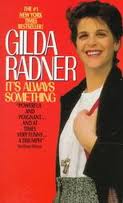
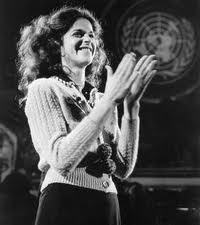
Delicious Ambiguity: A Look Back at Gilda Radner’s Autobiography, “It’s Always Something”

When I checked out Gilda Radner’s autobiography, “It’s Always Something” from the library, I had no idea what I was getting into.  The extent of my knowledge merely spanned Saturday Night Live comedian and cancer, breast? Divine providence, nosiness, morbidity, who knows, something drew me in.  In the end, what it amounted to was two days of reading, about four break-down, hysterical crying sessions, about two weeks of PSTD depression, and a new name for my unborn or adoptive daughter.

In 1986, Radner was given the sentence of ovarian cancer after getting the proverbial runaround from physicians, all ending in one misdiagnoses after another for nearly a year.  From start to finish, Radner writes this book as she is experiencing cancer treatments including chemotherapy, radiation, barium in every orifice, water flushes, a microbiotic diet and about everything in between.  For three years, she is put through hell on earth, both of the physical and mental kinds.  She describes just about every thought and experience, including intimate arguments with husband Gene Wilder, her fears concerning her prognosis, her many bowel blockages, losing her hair (and she means everywhere), her involvement with The Wellness Community, bulimia, jealously, her inability to bear children, and one of her biggest support systems, her dog Sparkle.  You are privy to her ups and downs, to her raw depression, desperation and the depths that she explores are beyond what most of us can conceive of.  The book is in essence her diary, and this is how she pulls you in and makes you her friend and confidant.  My appreciation of this text arose within the first two chapters when I realized that she wasn’t pulling any cheap shots.  There weren’t any defense mechanism type of jokes to lighten any of her or our uncomfortable feelings concerning cancer; it was pure honesty.  She puts it all on the table so we’re all on the same page and look at her situation for what it really is–cancer that could be life threatening and how she’s learning to deal with that.

The book ends in 1988, approximately three years from start of cancer treatments to current day, and she sums up by saying that she is still receiving treatment and is hopeful.  We are left, as she is, in a state of “delicious ambiguity.”  An uncertain future is a good future because we don’t know what will happen, and that means that anything is possible.  Only we know all too well the outcome of this story: Gilda died in 1989 after being in a coma for three days while being put under for a CAT scan.  What makes this book so amazing is that it is in essence a documentary of three years of her life, straight from the horse’s mouth.  What also makes this book so amazing, and so sobering, is that we are privy to real-life dramatic irony.  She confides in us that she wants to live and we are unable to tell her the painful truth.

Was her struggle for nothing?  Of course not.  Though I am left with feelings of torment as I reflect on her story and anger at how unfair it was that she had to suffer for nearly five years (with nearly two years of unnamed pain and discomfort).  And though I am having trouble seeing past the injustice and senselessness that life sometimes throws at us, the strength and raw hutzpah that Radner threads throughout her trial is palpable.  She relentlessly keeps her chin up, and when it’s down, it’s part of the dialogue.  Living from day to day is a huge priority for her–potlucks, interacting and sharing experiences with others facing cancer, swimming, tennis, and even making the doctors and nurses laugh are all therapeutic for her emotional and physical recovery.  Towards the beginning of her treatments in the hospital, she would arrive with several pairs of silly slippers and moan comically and tragically through the intercom from her bed, all in the name of keeping her spirits up.  Whenever possible, she tried to make the process hers.

Three days after finishing the book, I returned it to the library in which I work and was reluctant to release it.  Sure, I could have deviously discarded it and kept it for myself in the name of collection development.  But then I thought, if I keep it for myself, then no one else at the library will happen upon on it as I did, maybe changing their lives as well?  Later in the day, the dark cloud of Gilda’s death was still hovering over me as I was coincidentally searching for obituaries on microfilm when it shut down unexpectedly as I was making a copy.   After four failed attempts at printing Mr. Jones’s obit, I went for help, only to find out that it was just out of paper.  As I shook my head and cursed my carelessness, my library director walked by and said, “never mind,” in the voice of who else, Gilda’s famed and opinionated social commentator, Emily Litella.

Delicious ambiguity.

Watch Your Women’s History!

Watch Your Women’s History

Let’s appreciate the varied feminisms of seven amazing female directors.

Daughters of Dust (Directed by Julie Dash)

Daughters of the Dust is told from the point of view of an unborn child, and draws in female family lines, displacement and the history of slavery in the United States and its effect on black women.  Daughters is one of those canonical feminist/black diaspora films that any feminist minded gal or guy needs to see.  Think film studies students not watching Citizen Kane–it’s just not done.

Antonia’s Line (Directed by Marleen Gorris)

This is the quintessential feminist film.  It’s egalitarian, woman centered, matriarchal, and there’s a lesbian sex scene not from a male’s perspective!  I get excited just thinking about it!

Eve’s Bayou (Directed by Kasi Lemmons)

Directed by Kasi Lemmons, Eve’s Bayou is about an affluent black southern family, the relationships within that unit and how the history of the family line, slavery and geography all intermingle.  Watching this film along with Daughters of the Dust is also a political act.  By using our renting/purchasing power in favor of these movies, we show our cultural institutions, whether they be the library, Netflix, or even Hollywood, that we support black female directors.

Fire (Directed by Deepa Mehta)

I was told recently that some people believe that Mehta makes Indian films for an American audience, and because of this her films are not taken seriously by Indian audiences.  Being an American gal, I can only speak from my point of view and will argue any day of the week that there is good stuff here.  Forbidden love between two women, arranged marriage, Indian food, and hope amongst all odds–all good stuff.  Maybe this film is geared towards Americans, but if it motivates more Americans to watch films directed by Indian women, then so be it.

Cleo from 5 to 7 (Directed by Agnes Varda)

This French flick details two hours in a Parisian woman’s life as she awaits what could be terminal results from her doctor.  We follow her as she walks the streets of France and with her we contemplate life, worry, and possibilities, and further, it shines a light on what we have in front of us.

Swept Away (Directed by Lina Wertmuller)

This is a true “exploring feminisms” film because of its divisive nature.  You could either love this film about a man and woman getting shipwrecked where sodomy, lust and coconuts ensue, or you can hate it.  What cannot be argued is it’s provocative depiction of how class affects men and women dissimilarity and will spark some great discussion.

Marie Antoinette (Directed by Sofia Coppola)

 Still considered by many to be an Indie director despite her famous director father and family, Coppola is one of my favorite contemporary female directors because she directs with the heart.  She also dabbles with a delicate touch that is so affective and yet has such an assertive voice.  Marie Antoinette is fun, whimsical and is so subversive for a period piece that you can’t help but become absorbed in the frosting and bubble gum that is this movie.  Celebrate Women’s History Month with one tough queen!

He Said/She Said Review: The Innkeepers

The Innkeepers
dir: Ti West (USA, 2011)
MGS rating: 7.0
JM rating: 7.5

This “dialogue review” of Ti West’s The Innkeepers, a new haunted hotel horror film, is a joint-venture of Exploring Feminisms and my spouse Mike’s film blog White City CinemaThe film opens Friday at Chicago’s Music Box Theatre.

MGS: The Innkeepers is a new horror film by the talented young writer/director Ti West. You and I were both fans of his previous movie, the retro-Eighties Satanic possession flick The House of the Devil, and so we opted to check out his latest On Demand. Because The Innkeepers is a true independent production, it had the unusual honor of premiering On Demand more than a month before its theatrical release, something that major Hollywood films won’t do . . . yet. In what other ways do you think The Innkeepers reveals its indie credentials and what do you see as being the strengths and weaknesses of this mode of production?

JM: First of all, I actually never thought about what types of movie were On Demand via Comcast because we rarely rent them, but when I think back we also rented The Human Centipede, so I can definitely see a pattern. To address your question, I knew that it was an indie flick because it defied a lot of conventions that you can almost psychically predict while watching a Hollywood film. First, the set and the story were really simple — just a haunted house and a few characters who you really get to know. To narrow in on the characters, namely the main two inn employees (male and female), there is no overt romance, which always seems to happen when you put two heterosexual characters together of the opposite sex. They have a great silly chemistry and I found my mind wandering to past jobs that I’ve had where I have such a great time with a co-worker that the job seems to melt away. Also, the main character, Claire acts like an actual carefree and down to earth girl and I couldn’t imagine her being any other way in “real life” because her acting was so understated. To jump ahead, I would argue that the ending was the epitome of a true indie film. It was simple and scary — no gimmicks, no scenes that were completely predictable, and slightly ambiguous. A strength of this film is that you have no idea what is going to happen, and you connect so quickly with the characters that they are like your friends and you don’t want them hurt. Another strength is, again, it’s difficult to predict what is going to happen and in most horror films especially I can usually predict every next move because they are so formulaic. A weakness would be, and not so much of this being an indie film but rather of the film itself, that I was slightly confused by the end. It was so simple that I didn’t know if I should keep digging for deeper meaning or just let it be. It reminded me of Roman Polanski’s The Ninth Gate where the movie is really good, but the end baffles and slightly disappoints me because I don’t know what to think. I’ll be the first to admit that I like my endings to be crystal clear (though I do love The Wrestler, as you know).

MGS: You make some good observations about the characters. Not only did I find it refreshing that Luke and Claire weren’t romantically involved, I think West nailed a very specific type of relationship dynamic between co-workers; Luke and Claire are comfortable around each other, they do a lot of joking around to kill time but they’ve also probably never hung out together outside of work and ultimately don’t know each other that well. And the fact that Claire was a little creeped out by Luke gave their interactions an interesting twist. I loved that she decided to go back to the lobby and potentially contend with the ghost rather than go into his bedroom while he was wearing tighty-whiteys! I felt there was something very real and humorous about that decision.

The last movie we jointly reviewed was Don’t Be Afraid of the Dark, a Hollywood horror film I would like to contrast with The InnkeepersDark had a big budget, movie stars and state-of-the-art special effects but I found the script formulaic and the characters one-dimensional. It drove me up the wall that Guy Pearce, one of my favorite actors, was given nothing more to do than cluelessly refute the ever-increasing amount of supernatural evidence piling up around him. I felt the characters in The Inkeepers were much better drawn: the quirky/geeky girl in her early twenties with no real direction in life, the aging hipster/slacker guy looking to make some easy money on the internet, the alcoholic former actress looking to remake her image as a psychic. The actors, of course, deserve a lot of the credit for this. The bond between Luke and Claire suggests to me that there was a lot of rehearsal time between Sara Paxton and Pat Healy. I’d also like to say that I was delighted by Kelly McGillis as the has-been actress. After casting Dee Wallace and Mary Woronov in House of the Devil, I think Ti West is showing an almost Tarantino-like knack for the inspired casting of former stars.

The next aspect of the film I’d like to discuss is the pacing, a unique aspect of West’s style that is controversial – at least judging by internet message boards. Both House of the Devil and The Innkeepers are “slow burn” narratives where nothing explicitly horrific happens until over an hour into each movie. It seems to me that West is taking his cues from early Polanski in this regard; I remember hearing Polanski say that he wanted to lull his audiences into a state of near-boredom for the first 30 minutes of Repulsion so that the shock effects would be more powerful once they finally came. Apparently, this sense of pacing doesn’t work for some modern viewers. What did you think?

JM: I think that the pace of the film is actually what drew me in because I was forced to be ultra-aware of what I was seeing and hearing. I knew that something scary was going to come because after all, it is a horror film and I’ve also seen the previews, but I didn’t know when. During the first half of the movie, I found myself leaning forward and listening as intently as I could because I didn’t want to miss any slight noise or apparition. This technique kept me suspended in a state of trepidation, thus making me hyper aware of what was happening in the film. At certain points, I even held my breath because the sound of my own breathing might cause me to miss out on something important.

With regard to the actors, I was shocked to learn that the actor who played Luke was also in one of my favorite films, The Assassination of Jesse James by the Coward Robert Ford, as Wilbur, one of the Ford brothers. Talk about a versatile actor. It’s definitely a credit to West that he had the foresight to envision Healy in such a drastically dissimilar role.

We’ve been talking a lot about big budget Hollywood films and indie films, but what about Hollywood horror and indie horror, specifically? To veer slightly off course for a minute, do you think that Hollywood horror films are inherently flawed due to larger budgets and conventional Hollywood formulas and/or influence over creative control? Likewise, what are your thoughts on independent horror? Do you believe that they have any inherent advantages over Hollywood horror?

MGS: I don’t think a horror film, or any genre film for that matter, could be inherently flawed because it happened to be produced in Hollywood. I think you’ll agree with me that a lot of the best horror movies from the late 1960s through the early 1980s were made in Hollywood and boasted big budgets, stars and respectable directors: Rosemary’s BabyThe ExorcistAlienThe Shining, etc. But the cultural climate was very different then. It was an exciting time when filmmakers were still exercising new freedoms for the first time in the wake of the collapse of the old Production Code. It seems to me that most of the Hollywood horror films in recent years either belong to the “torture porn” subgenre or are stale, unnecessary reworkings of movies from that earlier era (with The Exorcist in particular being continually plundered for aspects of its story, themes, visual style and iconography). The only good Hollywood horror films I can even think of from the past decade are Drag Me to Hell and The Exorcism of Emily Rose. I think if you’re looking for originality in horror today, you have to look overseas (to Scandinavia and Asia, in particular) or to independent American movies, which brings me back to Ti West.

I think my only problem with West, and this has nothing to do with budgets, is that his work strikes me as perhaps a little too slight in terms of his ideas and his overall ambition. The House of the Devil and The Innkeepersare small, stylish, well-crafted movies about attractive young women wandering alone through locations that are dark and menacing. I happen to like them but now that I know West can do this, I’d like to see him do something else – perhaps tackle a subject that will tap into more universal fears or resonate through the culture in a more uniquely contemporary way. Then and only then will I be able to compare him to Polanski, Friedkin or Kubrick. But West is young and smart and I think he has a bright future ahead of him. Any final thoughts you’d like to add?

JM: Yes, a short plug for Scandinavian films. I also am beginning to love Norwegian, Swedish and Finnish horror, such as Let the Right One InRare Exports and Troll Hunter, for example, and it makes me a little sad that this sort of creativity is missing in films coming out of America right now. I would sum up by saying that I do agree with you in that I am a little dubious of possibly a third movie involving a young, cute lead actress who gets into trouble. It almost makes me think that he maybe has “a thing” for seeing young girls “get theirs,” so to speak. I’d like to see something different since I know that he is capable in other ways, as previously discussed, of subverting the horror norm right now.

Just Kids by Patti Smith

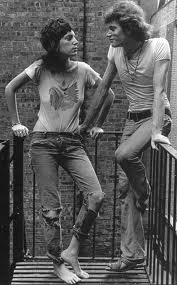
When I picked up Just Kids, the story of rocker Patti Smith and photographer Robert Mapplethorpe, I had no idea who each was except for the vague recognition due to their presence in our cultural consciousness.  It kept surfacing in reading lists and conversations at the pubic library that I worked in, and when I inadvertently listened to the Smith’s haunting cover of Words of Love on the Buddy Holly cover compilation, Rave On, I interpreted this last sign as a form of serendipity.  

The book spans the mid-1940s, beginning with the birth of Smith and Mapplethorpe through the very late 1980s, at the advent of his death.  The book unfolds gradually first recounting Smith’s childhood, then Mapplethorpe’s, their artistic burgeoning, meeting, and life and artistic growth together.  The story contained within the two covers is a cultural artifact at the very least, and Smith builds a time machine for us and distributes a free pass into the New York underworld of artists, poets, singers, vagabonds, prostitutes, junkies and lost souls.  We as readers are allowed to recline as Kris Kristofferson and Janis Joplin navigate through “Me and Bobby McGee”.  We mourn with the Chelsea Hotel community for the death of Jimi Hendrix and Jim Morrison.  Smith becomes our child, us the mother as she describes going to sleep starving, leaving me wanting to jump into the pages to share my midnight snack.

Amidst the turbulence and permutation of the decades, the relationship between Mapplethorpe and Smith is steadfast.  It is one of chemical, of the indescribable where no apologies are needed.

Being born in the 1980’s, I could relate with little of the literal content–the people, the places, the air of the 1960s-70s.  All this is of no consequence.  The story of Mapplethorpe and Smith is universal to all beings.  You don’t need to know them, their history or even their work because what their tale expresses is ubiquitous to the soul.  One being needing another, offering a safety net by allowing transmutation as an artist, friend, lover and as the two have shown us, something beyond classification.