My Top 10 Feminist Horror Movie Picks for 2013

In the Exploring Feminisms household, horror is one of the most common film genres playing on our television.  Of those out there, very few are what I would consider feminist, or at least having a feminist agenda of some sort.  So the task of the day is to find some that may lend a little hope to the genre.

As with every year, this task is always a lot more difficult than I think it will be, resulting in a lot of viewing, and a lot of discarded films.

While sifting through the plethora of bloody thrillers, teen screams, zombie flicks and vampire love stories, directed by both men and women, I came across a few that stood out as notable films ranging from masked and subtle to overtly feminist.  Overall, I saw two distinct motifs appear this year, and their themes timeless: coming of age stories and attaining beauty at any cost.

~~~

Aliens
(James Cameron, 1986)

Okay, I know that we’ve all probably seen this film about a thousand times on TBS, but as I watching it again (sans commercials) with a more critical eye, I was surprised to see a few nuggets of insight that maybe be somewhat hidden to the casual channel flipper.

In the second of the franchise, (Aliens being the follow-up to the classic, Alien) we learn that Ripley had a daughter decades before she was propelled through time, but who is now within the timeframe of the story, deceased.  This fact gives more weight to her self-appointed role of guardian of Newt, the newly rescued child who undoubtedly reminds her of her daughter.   What’s more, because the nature of the military is inherently male-dominated, based on a masculine ideology, it is extremely subversive that Ripley’s character makes a conscious decision in the face of her superiors and other military personnel to show compassion and nurturing qualities.

The cast also includes not only women, but a variety of races and ethnicities within roles of power.  Given that this film was made in 1988, seeing a measurable amount of minority cast members is arguable progressive for the time.

Aliens

American Mary
(Jen & Sylvia Soska, 2012)

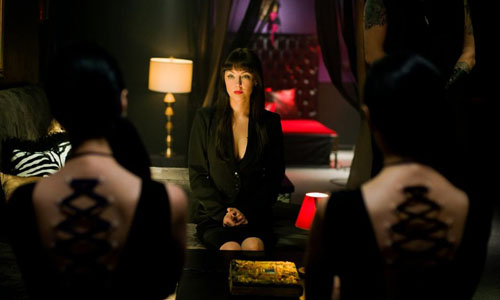
 American Mary is the story of Mary, a med school student who is extremely adept in the way of suturing, but is having trouble making ends meet.  When her dominating (ok, asshole) male professor invites her to a party with only male doctors as guests, she is used as a human rag doll.  Too disturbed to continue her formal education, she becomes an amateur plastic surgeon for an underground body modification crowd.

The film can be categorized in the body horror sub-genre, and recommended for fans of films like Inside or In My SkinAM is a definite step up from the Soska sisters’ first film, Dead Hooker in a Trunk, by giving us some satisfying gore, a more fleshed out plot, and better acting with Katharine Isabelle from Ginger Snaps leading the way.  Though I do tend to feel that rape revenge movies, much like Holocaust films, by virtue of the content, already have the audience fired up and ready for revenge.  Lo and behold, I did get fired up and like Mary, wanted revenge, and we as an audience are not disappointed.
american-mary

Black Rock
(Katie Aselton, 2012)

In Black Rock, three old friends return to a deserted campsite in an attempt to reforge their fragmented friendship, though while on their way there, it becomes explosive due to painful betrayals in their past.  In an ironic twist, a group of violent, dishonorably discharged men back from the Middle East is what glues the women back together again.

The situation between the ex-soldiers and the three friends mirrors that of Americans invading the Middle East, and the reports of aggressive soldiers abusing civilians and prisoners of war.  Except in this instance, the three friends must go guerrilla style after the men try to murder them and turn into the hunters.  In essence, the women become the aggressors themselves, but do so in the name of their own survival.  This film is extremely suspenseful and at times uncomfortable to watch because of its complete unpredictability.

Black Rock

Contracted
(Eric England, 2013)

Contracted is a breath of fresh air not only within the horror genre bubble, but also to film at large right now.  When compared to any given contemporary Hollywood film, this indie flick puts them all to shame.  It’s funny, gory, shocking, cute, and original, and film that conveys all of those adjectives is certainly a rarity.

Contracted is about a down on her luck in love lesbian that makes an unwise, alcohol and drug induced mistake and sleeps with a strange guy.  What follows is a cosmic retribution, possibly by the lesbian Gods that be, where an unknown and horrific plague is cast upon her body.

Contracted

Death Becomes Her
(Robert Zemeckis, 1992)

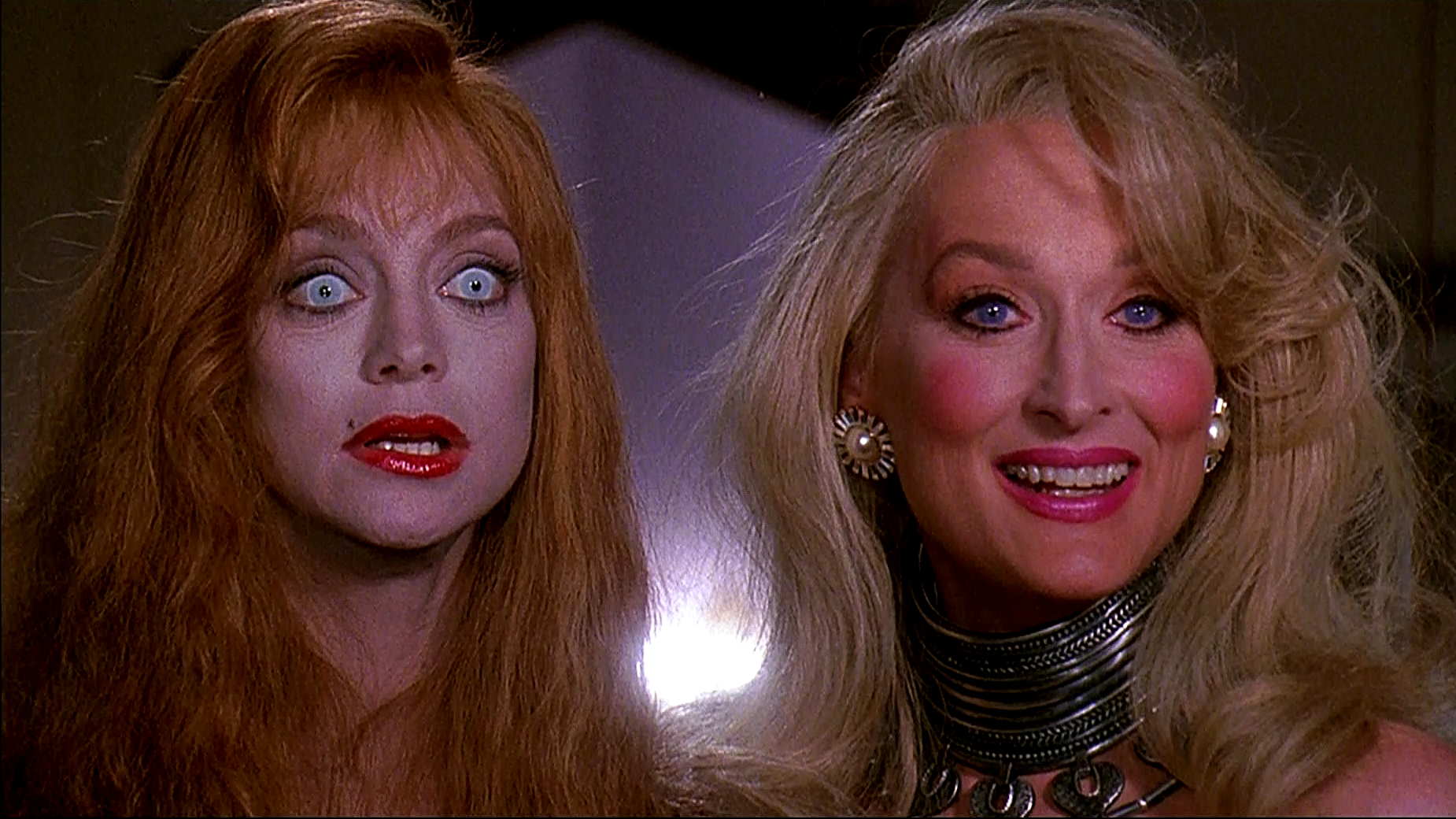
Like Aliens, you may be surprised by this film making it on the list.  But, after watching it for the first time since the 1990s, the writers were onto something, and my assumption is an astute eye for observing the pervasive late 20th culture of Hollywood and the stigmatization of the elusive aging actress.

The title Death Becomes Her sums up the whole point of the film; death, or aging comes upon a woman, but for many actresses, aging is the proverbial kiss of death-the death of their youth, and subsequently in the youth-obsessed culture in which we live, the death of a career.  This concept is parodied in the film as two women drink “the potion” and stay young and classically beautiful forever.  However, the caveat is that they must take care of their bodies because if their physical bodies do in fact die, they will continue to live.  Though parodied to the extreme, we see the lengths of what some women will endure to stay forever “beautiful,” though for these women, beautiful is exactly the opposite of what they become.
Death Becomes Her

Dumplings
(Fruit Chan, 2004)

Mrs. Li, an actress in her 30s sees herself, in comparison to herself decades earlier in her films and to her husband’s younger lovers, as unattractive and undesirable.  Like the middle-aged actresses in Death Becomes Her, the not even yet middle-aged Mrs. Li also takes a potion of sorts, except instead of swallowing a glowing pink liquid one time for eternal youth, she needs to continually eat fetuses in the form of dumplings to remain wrinkle-free.

Dumplings is the perfect bookend to Death Becomes Her, and shows how regardless of the decade or country, women feel pressure to maintain eternal youth to feel a sense of relevance as they get older.  In Mrs. Li’s case, she finds complete legitimacy in skirting the lengths of infanticide.

dumplings

Excision
(Richard Bates, Jr., 2012)

 It is rare when a writer/director can tap into the the inner workings (similar to Jack and Diane (below) and Turn Me On, Dammit!) of a teenager with any modicum of accuracy, and this film does just that.

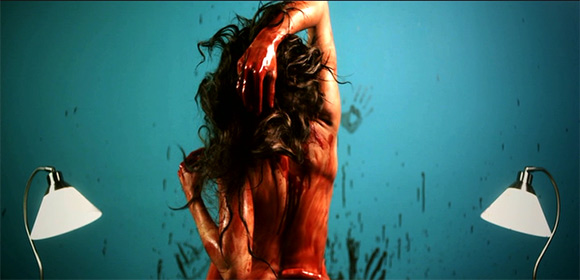
Excision depicts the darker side of a teenager navigating through their newly discovered, unwieldy sexual urges, and in this case, the main character fantasizes about necrophilia.  The Internet Movie Database (IMDB) describes lead character Pauline as, “disturbed and delusional,” but this description underestimates the difficultly of coming to terms with your newly developing body and all the psychological confusion therein.

Sex with corpses aside, the way that main character Pauline is portrayed is both unusual and empowering.  Though in high school and without any real friends, Pauline is preternaturally self-assured.  She owns her desires; she decides when to have her first sexual experience, with whom, and what type of experience she wants to have.  She recognizes the limitations of an encounter with a teenage boy, and instead of the typical first jackrabbit-like, awkward sexual experience for most teenage girls, she dictates how the experience will best pleasure herself.  This is especially rare in both film and real life as many women feel a sense of shame concerning their own bodies.
Excision

 Eyes Without a Face (“Les yeux sans visage”)
(Georges Franju, 1960)

Christiane is involved in a disfiguring car accident, but instead of letting her live with her less than perfect visage, her father kills young women in the hopes of transplanting their faces onto his daughter’s now lack of one.  Her father practices his untested medical procedures on stray dogs, puts her through a series of transplants where her face rots away from her bones, and even stages her own death.

Throughout the film, as her father continues to assert more authority over her life, Christiane begins to prefer death to a life of a virtual ghost with no autonomy.  Without her permission or the choice to make decisions over her own body, he prefers that she be dead to the world as opposed to being perceived as unattractive to a society that is universally understood to be obsessed with flawless beauty.

Eyes Without a Face

Grace
(Paul Solet, 2009)

When it comes to the horror genre today, in this case, the vampire genre, it is damn near impossible to glean any originality in most horror sub-sects today that haven’t been regurgitated, recycled or spread too thin.   In the story of Grace and her newborn child, we see originality brought to the genre by taking the vampire story a step further outside of the box as Grace finds that her baby is only satiated by the nourishment of blood.

Grace is thick with issues that are extremely personal to women specifically, including the loss of a child, breast feeding, women loving women, Oedipal issues, et al, but takes them a step further by stretching the limits of what women will endure to fulfill their more disturbing desires.

Grace Film

 Jack and Diane 
(Bradley Rust Gray, 2012)

Jack and Diane is one of those great coming of age stories that serves as a reminder that the experience of first love, whether you are attracted to the same or opposite sex, is the great equalizer.  Don’t you remember?  You acted completely irrational; you ignored your parents’ phone calls; you came home late without permission; you couldn’t sleep…you went crazy!  It was all very star-crossed lovers, and even Shakespeare understood hundreds of years ago the power of that innocent, all consuming love, except in Jack and Diane’s case, it would be more akin to Juliet and Juliet, but the passion remains the same.

Of course, with all the lovey-doveyness of the first love, there was always a deeper-seated, more sinister undercurrent: obsession, insecurity, doubt and all of those new, unchecked emotions.  Instead of, say, in Romeo and Juliet, resulting in double suicide of sorts, in Jack and Diane’s case, these emotions manifest themselves as ravenous monsters.

Jack and Diane is unique, sweet, and dares to step outside of the realm of the typical coming of age script by normalizing young, same sex relationships and offers us a quaint, original way of representing human emotions.

Jack and Diane

Afterbirth

After three years of feminist horror lists, a shocking thought came to me recently.  Is there such a thing as a feminist horror film? Considering one angle: in many of the films listed over the years, a common thread is the victim reclaiming power by exacting a bloody revenge against her aggressor.  Reclaiming power after being subjugated can be, well, empowering.  On the other side of the coin, if someone asserts their power over you, and you then reclaim that power and use it against them, it maintains that imbalance, and the question becomes: doesn’t asserting power over another make you no better than your abuser?  Or does appropriating that violent power from your aggressor empower?  You have to ask yourself, which kind of feminist are you?

Need more recommendations?  Check out my lists for 2011 and 2012!

Miss Indian Schmindean American-ian

All right, let’s talk about the real issues for once.  The real, white-centered, heterosexual, whole pig-eating, cow-dung shoveling truth.  The world is about to end because of an Indian (not the Native American kind, the “Arab” kind of Indian).  And her hot body, white pearly teeth, and white-person accent are to blame.

Just kidding.  But, if you don’t keep up with the Miss America pageant, which in and of itself is completely problematic, sexist and racist, a brown-skinned woman won. Before we discuss, let’s put aside a discussion of the pageant as a whole, and pretend that it’s a totally legit competition.

Last night a woman, born in the United States, raised in New York and mostly in the Midwest, with ancestors that were NinaDborn in India, won Miss America.  The Facebook and Twitter comments following her crowning in protest called her an Arab, a terrorist, and some so eloquently wrote “9/11 was 4 days ago and she gets miss America?” and “So miss america is a terrorist” (way to capitalize that “A”).  So, as a white gal feeling some cultural shame and feeling that I need to educate my white/”American” comrades and in the hopes that all Arabs, Indians/Asians, Blacks, and basically every other race won’t completely lose all faith in the Caucasian race, here are a few explanations:

Regarding geography: I suppose we should start with the obvious (or maybe not so obvious)- Indians and “Arabs” are not the same.  People who are of Arab descent hail from the Middle East and the northern hemisphere of Africa.  India is to the east and sometimes west of many Arab countries, and is actually just a stone’s throw away from China.  Comparable to Chicago and the rest of Illinois.  They’re close, but oh so very, very far away.

Regarding terrorists: white people can be terrorists.  Black people can be terrorists. Women can be terrorists.  In fact, right at this moment, there’s a woman on the FBI’s most wanted list.  And she’s not an Arab (can also be pronounced, Aye-Raab)! True, a lot of Aye-Raaaaaabs are indeed terrorists, and totally forget about the fact that we are fighting a war in Arab country right now, and our government needs to justify why we are there by making Arabs seem evil.  Arab horror films, novels and actions figures due out this Christmas season.

Regarding “American” women:  the net is all aflutter with peanut gallery commentary that Theresa Vail should have won; she hunts, she’s from Kansas, she has tattoos, she’s blonde, and she’s white.   By this logic, Davuluri didn’t win because she doesn’t live in a trailer.  But I digress.  Theresa Vail, like Nina Davuluri, was born in the United States, and I am willing to bet my boxed blonde hair that her ancestors probably aren’t originally from the good ole’ U.S. of A.  This is not to say that Theresa Vail lives in a trailer, or is a dumb southerner, but simply because she possesses the aforementioned attributes, she does not have a golden ticket to the top of the Miss America list.

Regarding “American” women who hunt:  Twitter troll Maria Gruba (whose page has mysteriously disappeared), a real American hunts.  In 2008, according to Vegetarian Times magazine, 7.3 million Americans (also pronounced ‘Mericans) were vegetarians, and that was five years ago!  Just think of all the un-‘Merican citizens who have betrayed their meat-eating flag since then!

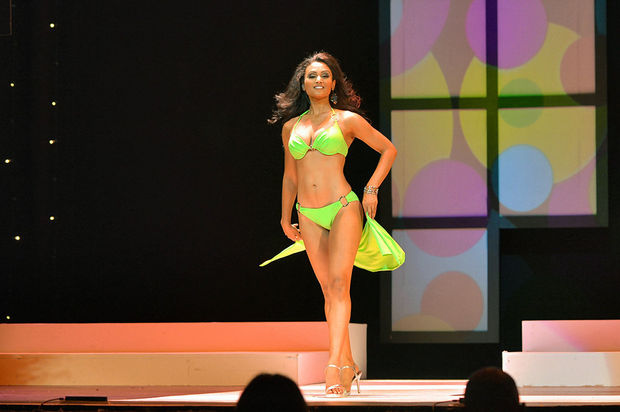
NinaDBathingSuitRegarding why Nina Davuluri could actually be considered an American: she was born in America; she wears a bikini in public; she has big hair; she loves world peace; and according to the New York Miss America website, she believes in a healthy lifestyle…obviously a terrorist if you don’t love Mickey Ds.  And really, who cares whether or not she was born in the U.S. (because you know haters are going to ask for proof in two shakes), she’s trying to spread good will towards all, empower women, and she’s living the American dream.  Her family came to the U.S. 30 years ago, they made a life, and now their beloved daughter is catalyst for positive change.  When it comes down to it, isn’t that what being American is really all about?

The Last Five Books

The Dude and the Zen Master
Jeff Bridges and Bernie Glassman (2013)

The Dude and the Zen Master is the transcription of a conversation between actor Jeff Bridges and Jewish Zen Master Bernie Glassman on their life experiences, and how we should all strive to be more relaxed like “The Dude,” the main character in the Coen Brothers’ film, The Big Lebowski.  The two men offer very different perspectives based on their professions, which lends the perfect balance.  The book is filled with easy to absorb, practical examples that can be practiced on the spot during tough situations throughout life and work.

DudeandtheZenMaster

It
Stephen King (1986)

I listened to It on audiobook for 44 hours.  Yes, 44 hours.  If you’ve never read Stephen King, his writing is extremely descriptive; It goes on and on, chock-full of vivid, minute details.  King’s style is also written from a very male, masculine point of view.  The descriptions are told through the voice of someone who obviously idolized his boyhood youth and all of the experiences therein–a lack of sexual insight, friendships in youth, silly and base teenage boy insults, et al.

All in all, if you are a reader to who craves an intricate portrait of a community, mixed with a killer clown alien, then this book is for you.  However, if you are someone who often finds yourself skipping pages when said author puts the phrase ad nauseum to shame, then pass this one up.

IT

Ocean at the End of the Lane
Neil Gaiman (2013)

A cosmically strong lineage of three women (grandmother, mother and daughter), along with a little English boy, fight an evil witch-woman in a small English town.  This book is beautifully written, a quick read, and the way in which Gaiman describes the home life of the female characters makes you want to live with them and eat their homemade jam.

Ocean at the End of the Lane

Rubyfruit Jungle
Rita Mae Brown (1973)

While reading Rubyfruit Jungle, I couldn’t help but think of 19th century novel The Awakening by Kate Chopin; honest female lead characters who challenge social norms in times where women received the short end of the stick (even more than now, one could argue).  RJ details the life of Molly Bolt as a child in the south through young adulthood as she moves to New York, and we follow her journey as a blossoming lesbian.  She is a rough and tumble character, and the book is filled with hilarious and brutally honest thoughts on womanhood, the life of a wife, and lesbian stereotypes.  I haven’t read a book this entertaining and thought-provoking in a long time.

Rubyfruit Jungle

Seriously…I’m Kidding
Ellen DeGeneres (2011)

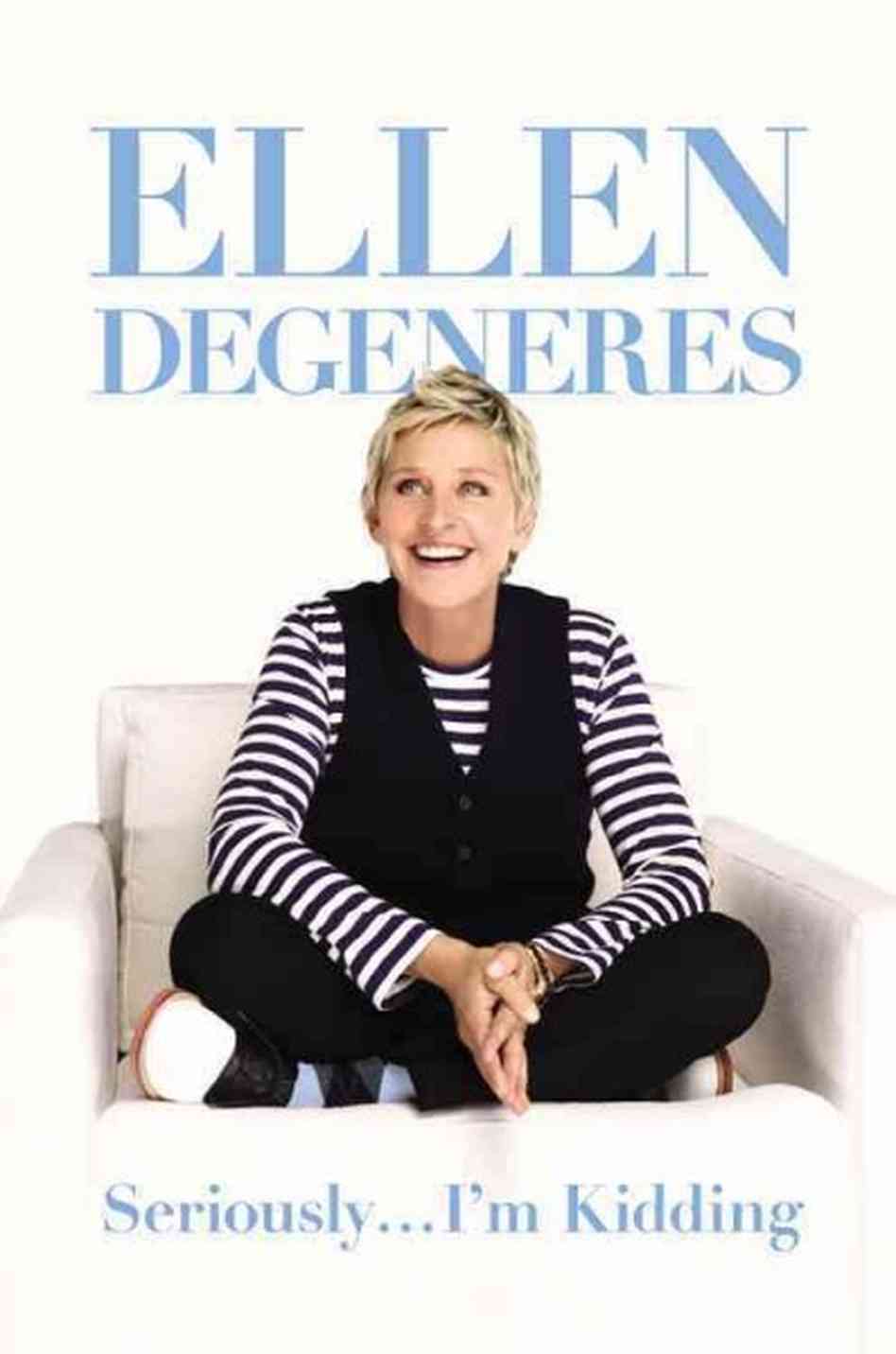
You can read this book in about 3-4 hours, and one could compare it to the likes of a more airy Bossypants by Tina Fey.  DeGeneres shares almost stream of consciousness tips and life experience on lofty subjects such as gardens and dinner parties.  Luckily, there are a few leftist niblets to keep the average liberal reader interested, such as a shout out to female inventors and addressing her sexual orientation, thereby fighting the good fight to normalize same-sex relationships in American culture.

Seriously...I'm Kidding

The Last Five Books

Gulp
Mary Roach (2013)

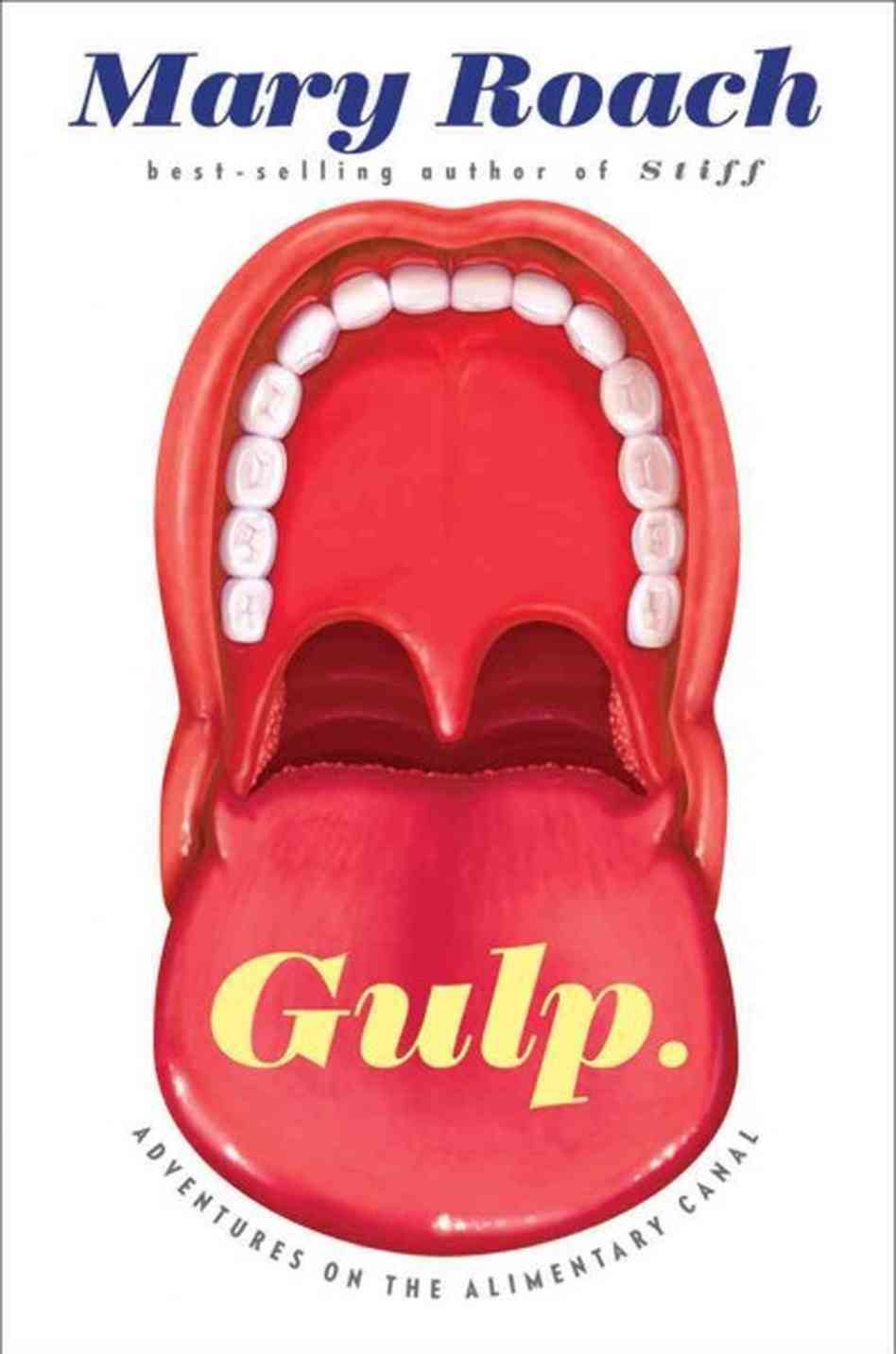
I first read Mary Roach’s work when I came across her first book, Stiff: The Curious Lives of Human Cadavers.  Since then, she’s written a number of non-fiction, research based books and Gulp: Adventures on the Alimentary Canal continues to live up to her tried and true style of putting herself out there, essentially skinning herself for us, the reader, and relating it back with humor and tact.  Let me explain.

Gulp

Gulp is about the digestive system, from start (mouth) to finish (guts, and then you can guess).  She goes in deep, smelling and tasting what we cringe to even read about, such as cat food in its many flavors, to interviewing Elvis’ doctor and an examination of his little known “mega colon.”

Roach chooses a topic, researches it, and pulls out the most interesting parts; in essence, she does the dirty work for us, while keeping the gross-out factor classy.

Every House is Haunted
Ian Rogers (2012)

Pun not necessarily intended, each story leaves you feeling haunted.  At the end of each tale, Rogers leaves you in want of each one to be a full novel because the characters and stories are so intriguing. He takes the essence out of a full length novel and gives you just the exciting parts through the short story format. Highly recommended to anyone who likes quirky short stories with a bit of an edge, and fans of Neil Gaiman.

Boy Eating

The Last Girlfriend on Earth
Simon Rich (2013)

Saturday Night Live writer and son of New York Times columnist Frank Rich, Simon Rich writes witty, extremely amusing and poignant stories.  I’ve never read a story where someone can make the life from the point of view of a condom seem poetic.

the-last-girlfriend-on-earth-by-simon-rich

Jurassic Park by Michael Crichton (1990)

I am a huge fan of reading a book, watching the movie, and comparing the two.  I find that when people ask, which is better, the film or the novel, it is an impossibility to offer a straight forward answer because they are two completely different mediums.  One is visual, and the other is cognitive.  You can’t watch a movie and know a character’s internal monologue, nor can you recreate the soundtrack of a film that gives a movie its energy.

Jurassic Park as a book, when compared to the film, makes more sense, and the characters possess a lot more integrity.  Though as far as comparison goes, you can compare the lightness of the content; the book is a beach read as much as the movie is an entertaining film without any real depth.

JurassicParkBook

NOS4A2 by Joe Hill (2013)

Joe Hill’s (son of Stephen King-hey, I’m sure it’ll help sell more books) fourth book and third novel has proven him to be one of the contemporary horror writing greats.  Though not in a strict Bram Stoker sense, NOS4A2 is about a Nosferatu of sorts who drives a bad-ass car and loves Christmas.

Joe Hill (compared to the likes of Steve Martin) writes surprisingly well from a female point of view and resists the all too popular urge to write about sex from a woman’s point of view though really coming from a supposing man’s point of view.

NOS4A2

He Said/She Said Director Profile: Sofia Coppola

Following our discussion of John Carpenter, Michael Glover Smith (author of www.whitecitycinema.com) and I focus on Sofia Coppola for our second He Said/She Said Director Profile.

sofia

JM: This is being written just a few hours after seeing Sofia Coppola’s movie, The Bling Ring. Thinking back over those few hours and over her entire body of work, I am noticing recurring themes that thread throughout all of her films that draw me to her as a writer and director. These are namely the music, and the humanity and universal appeal of the stories and characters. I’d like to start off by discussing the latter. In all of Sofia’s films (see complete filmography at the end of this piece), she taps into experiences and emotions that are universal to everyone, even if the character may be more grandiose than the typical person. For example, in Marie Antoinette, you can identify with the queen’s feelings of separation, loneliness, and weight of responsibility. In The Bling Ring, she demonstrates how in American culture, there is a lust to be “known” and to do this, it is necessary to shroud yourself in tangible consumerism. Are there any films of hers that you feel any special kinship towards?

MGS: I think I feel more of a kinship to The Bling Ring than any of the others, for reasons I will elaborate on later. But first, I want to point out that I think it’s interesting you say Coppola’s films are “universal” while paradoxically also being about characters who may be “grandiose.” I generally agree with this but the most common complaint that I’ve heard about her work is that she only deals with the problems of people who are privileged. In other words, “Why should we care that a rich movie star staying at a five-star hotel in Tokyo feels ‘alienated’?” My response to this is “Why shouldn’t we be able to relate to characters just because they happen to be rich and famous?” The Virgin Suicides is, I believe, the only film she’s made that isn’t about upper class characters. But, as everyone knows, she grew up the daughter of a famous filmmaker, so I think she is depicting in her movies a world that she knows very well and I think her insider’s P.O.V is both knowing and, more importantly, critical. And you’re right — I think she bends over backwards in Marie Antoinette, for instance, to try and make the heroine seem like a “typical” teenage girl so that young people watching today can relate. That’s the whole point of that particular movie, no? The Bling Ring, on the other hand, is particularly interesting in that it features the least likable characters in any of her films. All of them are frighteningly shallow and vapid and yet I don’t feel as if she’s judging them too harshly: the desire for fame, status, wealth, facebook friends, etc. is everywhere in our society so we all should be able to relate on some level — even if you and I would never do anything as drastic as break into someone’s home. However, I can already hear my students complaining that they couldn’t “care about the characters,” which is my least favorite criticism to hear about any movie.

JM: I’ve never heard that critique, but I understand why people would say that. However, that judgement stems from a lack of understanding of her bigger picture, and only a cursory look at what it aims to express. With her films, you have to look at the entire world that she’s creating, and that world’s relation to our real world. As I previously said, if you look past the characters’ race and class, you see emotions and pressures that extend beyond the superficial and into our reality. In The Bling Ring, it’s easy to judge superficial, privileged white kids living in California, but then again, as you said, we are all living in a world where we can identify with their desire to acquire more privilege, power and material possessions. If we could take advantage of others who possess more than us, would we attempt to appropriate that wealth and power as well? I think a lot of people already do in smaller, more abstract ways that are particular to their own lives.

With concern to Marie Antoinette, I think that saying that the only point of the film is to make Antoinette’s character simply relevant to teenage girls may be oversimplifying a tad bit. I could understand an argument that her character’s experience may be geared towards women, but I could also argue that the character of her husband could be one that men could identify with, such as one about to get married. For both characters, what I take away from their plights is that they are overwhelmed by responsibility, and a desire to skirt that responsibility by essentially being irresponsible, which I think everyone can identify with at one point during their lives. Given that this film is on the surface about a European queen during the 1700s, I think it’s quite a feat to make a contemporary audience identify with her, even if the majority are only teenage girls. And in that same vein, I’d like to talk a little further about the specific conventions and techniques that she uses to do that in that film, and also in Lost in TranslationThe Virgin Suicides, and especially The Bling Ring. Specifically, the way she utilizes music, through the lyrics and instruments, to capture a feeling of a scene. When Marie Antoinette came out, there was some criticism about her use of the song “I Want Candy” by the 1980s band Bow Wow Wow. I thought using that song was ingenious for several reasons. First, it gave the scene a sense of whimsy and fun, almost a “Girls Just Want to Have Fun” vibe. Second, it made the 18th century relatable to contemporary audiences. Finally, she also used it as an aid to the set design and costumes. At that point in the film, it was all about excess, fluff, pink and frosting, and she used the bubblegum-ness of the song to mirror that of the film.

marie

MGS: Good point about her use of music. I loved that “I Want Candy” montage. For me, Sofia Coppola’s greatest strength as a director is the way that she combines images and music to convey an incredible sense of energy. I think my favorite scene in The Bling Ring, for instance, was when Rebecca and Mark were driving and singing Kanye West’s “All of the Lights.” What really made that sequence for me was the use of jump-cuts, which provided a visual correllary to the fact that the characters were high on cocaine. And you and I both could cite countless examples from her films to illustrate how she conveys a similar energy. How about her use of Heart’s “Barracuda” to accompany a tracking shot of Josh Hartnett’s bad-boy character strolling through a high-school hallway in The Virgin Suicides? Or the twin strippers’ dancing to the Foo Fighters’ “My Hero” in Somewhere?

To address your other point, I don’t think it’s necessarily a “bad” thing to make audiences relate to characters in period-piece films. But I do think it might be more courageous to show viewers how different and strange the past was in comparison to the present — to make us understand without necessarily being able to “identify.” There is a very memorable scene in one of my favorite movies, Roberto Rossellini’s The Taking of Power By Louis XIV, where you see the incredibly elaborate process of how food was prepared and served to the king. The scene goes on forever and the longer it goes on the more it feels like something out of science fiction — and it just becomes mesmerizing. The opposite of this approach is what you see in those Elizabethmovies with Cate Blanchett. In the second one, I remember a scene where the queen smokes tobacco (brought to her from the new world by Sir Walter Raleigh) for the first time, and inhaling it makes her break out into fits of laughter. The idea is that it seems like she’s smoking pot, which makes no literal sense; it’s just a cheap, shorthand way to communicate something to contemporary audiences. It’s like the filmmakers are collaborating with the viewers over the heads of the characters, and that strikes me as dishonest. I don’t think this is what Sofia Coppola does in Marie Antoinette at all. She’s much more honest in that she includes deliberate anachronisms — like 1980s New Wave pop music on the soundtrack — in order to call attention to her modern point-of-view.

I’d like to bring up now what I consider Coppola’s biggest flaw: I think she’s a much better director than writer. While I think she’s good with sound and image, and while I think she’s good at directing actors, I feel like her approach to characterization and plotting has occasionally been a bit trite. I think when she tries her hand at satire, especially, her scenes tend to fall flat. The way the Giovanni Ribisi and Anna Faris characters are written in Lost in Translation seems too broad to me in comparison to the other characters in the movie. Same thing with Leslie Mann in The Bling Ring: her clueless New Age-mommy character feels one-dimensional and like an attempt to explain why her daughters were seduced by a life of crime. I know you’re a bigger fan of Coppola than I am so I wonder if this criticism makes any sense to you and if you disagree.

JM: I agree that there is value in showing the past as it was, but let’s face it, a movie about the 1700s in Europe may turn a lot of people off, and Coppola makes history more accessible to those who maybe wouldn’t necessarily have an interest in that topic otherwise. In my last defense of Marie Antoinette, I once took a class in grad school while pursuing my Masters in Library Science that focused on the history of the printed book. During that course, we focused on a chapter on scribes in the Middle Ages and saw pictures of early tomes with doodles along the spines from 500 A.D. from bored scribes. Even in the Middle Ages, people got bored at work and in class, as we do now. Throughout the entire class, the professor kept repeating that there is no us and them, only us; that people from 1,000 years ago, and two weeks ago, face roughly the same issues. My point here is that by Coppola presenting Marie Antoinette as a normal person with palpable needs and problems, she allows us to make an emotional connection to an unlikely historical figure.

Regarding Coppola’s writing abilities, her stories can be described as simple, and a good vehicle for the “less is more” ideology. In comparison to most films now, which are extremely complicated and where there is more, more, more of everything, she takes a basic story or feeling and illuminates the story around that concept. When I watch Coppola’s films, I know they are her films because of how my gut feels. She doesn’t beat you over the head with what she’s expressing, she lets it wash over you.

To briefly address the role of the mother in The Bling Ring, I don’t necessarily see her character as a complete explanation of why her daughter stole from others, though I agree that we can gather that her lack of parental supervision may have made it easier for her daughter to act up. I think the “why” of why this group of people did what they did goes back to what we’ve been discussing all along, and it’s multifaceted. It’s the parents, it’s Facebook, it’s our collective experience as people living in the 2000s, capitalism, and we could go on and on.

To just change the subject slightly, I’ve been asking myself if Sofia Coppola is a feminist director, or if the question is even important. I ask because so few films are directed by women even in today’s film world, and I wonder what the women who are working are doing and saying. She’s a woman, sure, but that doesn’t make her a feminist. Men can be feminists, and women can be huge proponents of patriarchy (insert Serena Williams here, but that’s for another day). Given my own working knowledge and constant exploration of what feminism is, I’d say yes. She also does pass the Bechdel Test. If I were pressed to give my own ruling on you, I’d say that you would fall into the feminist camp, Mike, so I’d like to know your opinion on this.

blingring

MGS: Great story about the scribes.

I should clarify that I like the simplicity of Coppola’s narratives. The “plot” of The Bling Ring is so lightweight that it’s barely there. But, for me, the film registers primarily as a sensual — and wholly cinematic — experience: it’s all about sound, color, light and movement and how these things register specifically to a group of people who are young, carefree and self-absorbed. In this respect, it’s like a pop song (as is Spring Breakers, with which it shares many similarities — more on that in a second). By contrast, I think the scenes with the parents feel a bit contrived and moralistic: Coppola makes it a point to illustrate that the parents are either absent or ignorant about what their kids are doing and Leslie Mann’s dialogue is pretty cartoonish. I agree that Coppola isn’t saying bad parenting is solely to blame but I think the film would’ve been more complex and troubling if we had seen that at least some of the parents were decent, smart, caring people.

The feminism question is a good one but also a thorny one: Coppola’s films aren’t explicitly about, say, gender inequality but if you can say that it is feminist for an artist to thoroughly explore the experiences and feelings of female characters (and I think you can), then I’d say Coppola’s a feminist by that criteria. I also think you could argue that she brings a female point-of-view to her sense of film aesthetics, and I don’t just mean in a simple “female gaze”-kind of way. The critic Kent Jones said something great about Coppola in his review of The Bling Ring. He wrote: “Sofia Coppola is uncommonly gifted at the articulation of something so fleeting and ephemeral that it seems to be on the verge of evaporating on contact with her hovering, deadpan, infinitely patient camera eye.” I know exactly what he means and I think this quality that he’s talking about arises from a specifically female touch (as opposed to say, the more masculine approach that Harmony Korine brings to Spring Breakers, which nonetheless also has a druggy/dreamy/poppy feel and similarly uses the exploits of shallow teenagers to critique capitalism).

Having said all that, my favorite aspect of The Bling Ring was the ending. I really admired the courage it took for Coppola to not only make a film about “unlikable” people but to end it with Nicki Moore (Emma Watson’s character) looking directly at the camera and pimping her website. To me, that said that this young woman had learned nothing and was, if anything, a worse person than before she went to prison. She was basically using her criminal activity to try and extend her 15-minutes of Z-list fame. That, to me, was a daringly truthful and unsettling ending and one that more than compensated for the reservations I had earlier about the depiction of the parents. Anything you’d like to add?

JM: Your description of The Bling Ring plot as “lightweight” is a distinct calling card of Coppola, but in her films, this airiness is expressed through the sound, the colors, the music, and so forth. For me, it’s the combination of all of those elements that I was previously describing that “wash over you,” and that includes the writing. What Kent Jones says is spot on with the “fleeting and ephemeral,” which I really get a sense of in The Virgin Suicides. The feeling that she leaves you with is difficult to describe in concrete terms, it’s almost an aura of the film. You make the point that it is an attribute of a female touch, and I would agree, but I would say that it’s a feminine touch, whereas visceral, blunt themes with heavy violence and explicit sex may lean more towards a masculine sensibility.

A quick note on the parents, I looked up the mother’s website, Andrea Arlington, and her online profile seems pretty matched up with how she was portrayed in the film. This seems like one of those cases where you can’t even “make this stuff up,” that reality in this case is sufficient for the film. To play devil’s advocate just a bit more, I think that one could make a slight argument that in The Bling Ring the mother of Nick did seem concerned and was not portrayed as a space cadet. However, I get that we aren’t given a lot of information on the other parents, so a more well-rounded argument is difficult to make.

Looking over her five films, I can’t wait to see Sofia Coppola’s filmography grow into a lengthy, full-bodied collection. When you and I first met, I remember gushing about The Virgin Suicides and singing Coppola’s praises, and you told me that you didn’t like her. Granted, when we first met I believe your film taste to be a little bourgeois and has definitely come down to earth a little more. That being said, how do you feel about her now?

MGS: At the time we met, I had only seen Lost in Translation, which I think is overrated but which seems to be her most beloved film. I do feel, however, that she has gotten better with each subsequent movie. I consider myself a fan and I look forward to her future work.

Jill’s Ranking of Sofia Coppola’s Films 
5. Somewhere
4. Lost in Translation
3. The Bling Ring
2. The Virgin Suicides
1. Marie Antoinette

Mike’s Ranking of Sofia Coppola’s Films
5. The Virgin Suicides
4. Lost in Translation
3. Marie Antoinette
2. Somewhere
1. The Bling Ring

Happy American Independence Day From Exploring Feminisms!

Independence Day means celebrating freedom, so today we’re celebrating the hopeful freedom for all to marry!

Image

The Last Five Books

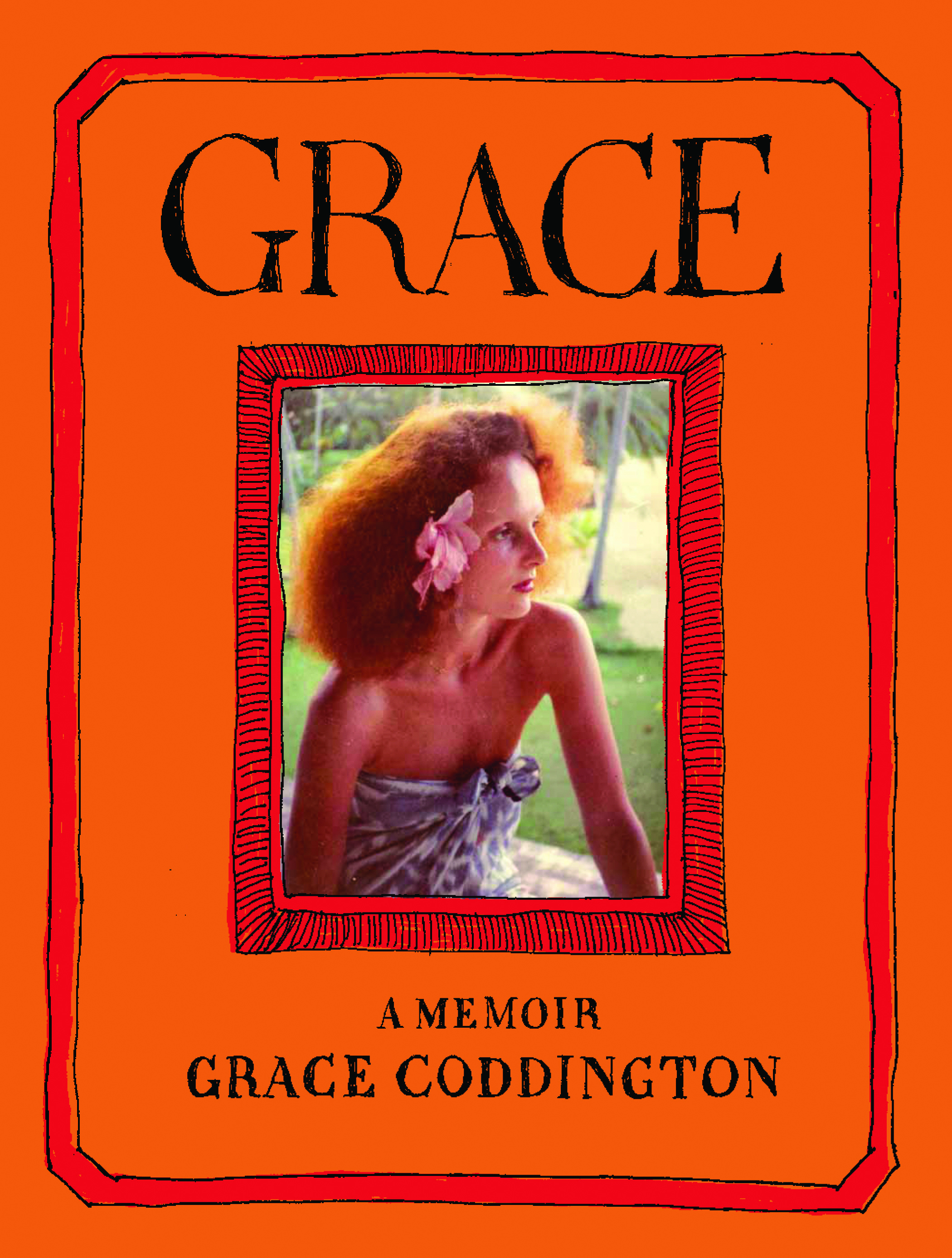
Grace: A Memoir (2012) by Grace Coddington

Like most people, I didn’t know of Coddington’s existence until I saw the documentary, The September Issue.  I was left loving her in the film for her spunk, plus her creativity seemed to just ooze out of the screen.

Thankfully, she published a memoir not to long after the filming and it was filled with the same whimsy and joy that can be seen onscreen.  The book itself is one that I would recommend reading in print as opposed to eBook.  The cover is bright orange and is not a usual book shape (more of a square), and it’s filled with great drawings by Grace herself.   And the icing on the cake, the contents leave you wishing that one day your life will have been as full, insightful and as successful both in career and friendships as hers.

Grace

Odd and the Frost Giants (2009) by Neil Gaiman

As per the usual recommendation, when possible, listen to Neil Gaiman’s books as opposed to reading them.  More often than not, Gaiman narrates them himself and adds the perfect amount of pause and inflection in every story.  Much like Chelsea Handler’s self-read autobiographies, Gaiman, having been the writer, truly expresses his wishes for how the stories should be communicated to the audience.

This was just a cute story to listen to while I was baking one afternoon, but it’s worth mentioning for the aforementioned reasons.  If you’ve never read Gaiman, I’d  recommend starting with his adult novel, American Gods.

OddandtheFrostGiants

Rest in Pieces: the Curious Fates of Famous Corpses (2013) by Bess Lovejoy

The title pretty much sums it up.  Leaders, actors, great thinkers, et al, in death all share unusual treatment to their deceased corpses, including but certainly not limited to having their penises cut off and preserved for posterity, floating in life-size fish tanks like wax figures for public viewing, and being shot out of a cannon into the desert.

Of all the figures described, only two women’s corpses are described as meeting macabre after-life endings.  Does this world consider the woman’s body too sacred in comparison to a man’s to desecrate?  Is the documentation missing from history?  Do women not deserve to be fought over and stolen from their graves?  I demand after-life grave robbing equality now!

But I digress…Lovejoy’s book is fun to read and is even safe for the faint of heart.  Her writing style is accessible and interesting, even if you aren’t aware of the life of said corpse.  Plus, there’s a great bibliography at the end for further reading, if that sort of thing does it for you.

RestinPieces

The Faithful Executioner: Life and Death, Honor and Shame in the Turbulent Sixteenth Century (2013) by Joel F. Harrington

Much like Roseanne Montillo’s book, Lady and Her Monsters highlighting the cultural events surrounding the writing of Mary Shelley’s Frankenstein, Harrington’s book paints a larger picture of the world surrounding the life of one special person in our collective history—the life and career of a death dealer, a.k.a the executioner.

The inspiration for the text is the actual diary of German executioner Frantz Schmidt (1555 – 1634) and Harrington’s book offers the reader a glimpse into 16th century Europe and all that your run of the mill executioner had to deal with in his daily life.  If you’ve already begun to glaze over with boredom, fear not!  Harrington offers up enough gruesome facts to keep you interested throughout most of the book, such as the various torture devices, what is done with the body postmortem and the shockingly high mortality rate for mothers and their babies.  Though sometimes I found myself skipping passages that were more detail/date focused, I appreciate that the text would appeal to the more serious history buff.

FaithfulExecutioner

Drinking and Tweeting (And Other Brandi Blunders) (2013) by Brandi Glanville

You gotta love a gal who has no filter, even when she’s sober and today, the girl that I’m speaking of is “Real Housewife of Beverly Hills,” Brandi Glanville.  You wanted the dirt about her divorce from cheater b-list actor Eddie Cibrian and his home-wrecking washed up country singer new wife, Leann Rimes, well you got it.

Glanville’s book is written as if you are sitting down having a heart-to-heart over cocktails and ruminating over past heartache.  It’s a fun, quick read that is a great pause from a more heavy book, or even crazy co-workers.  Glanville’s humor and wit, though related through the narrative of a broken marriage, makes you laugh and sympathize amidst the pain that any reader can relate to.

DrinkingandTweeting

My Year of Water

It all started with a bucket…100_2175

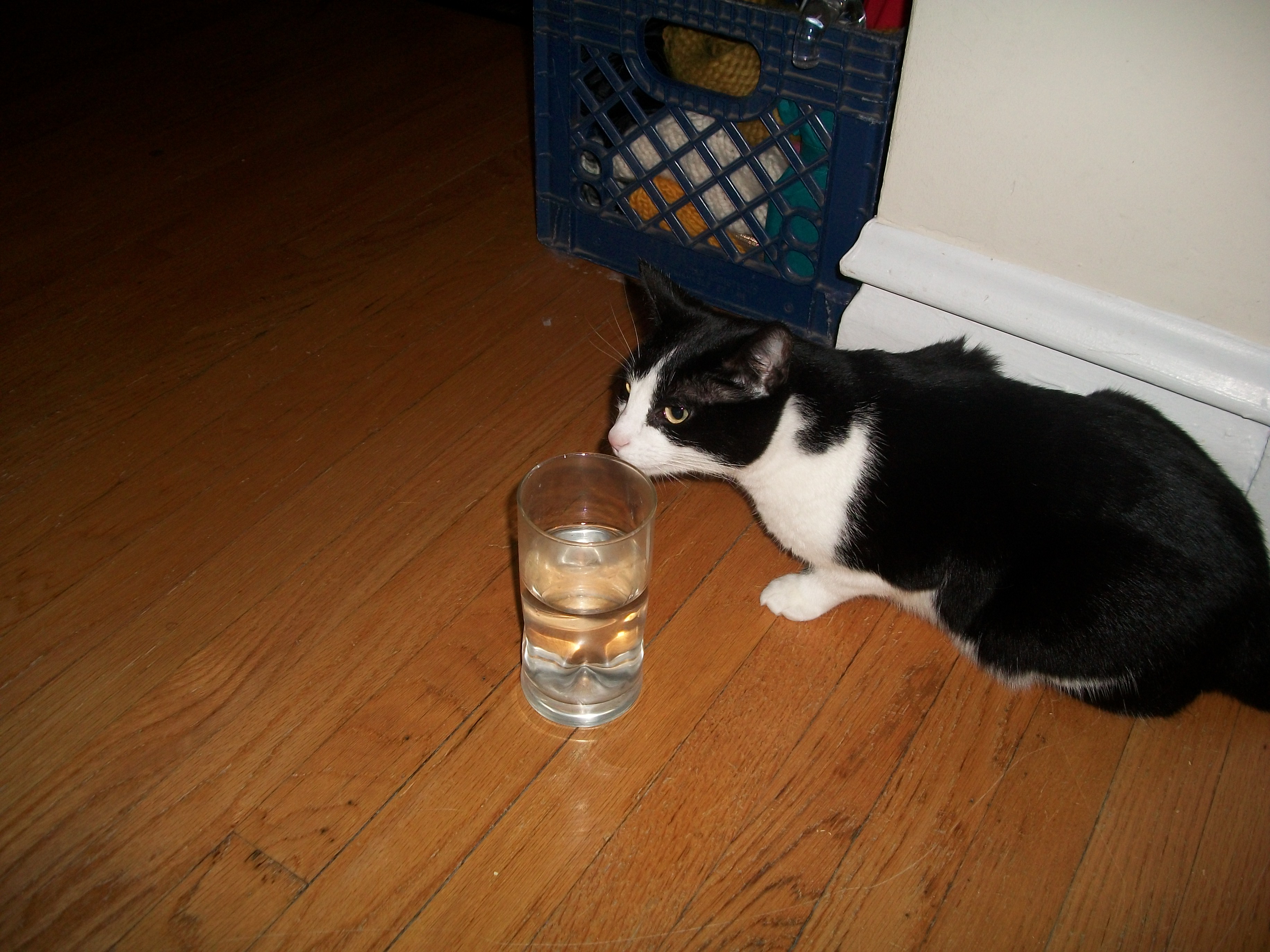
Since I was a young gal, I had always lived in homes where it took at least a full minute for the water to warm sufficiently to wash my face or hands.  And since I was little, I always felt ill at ease knowing that the water, which was in such need as evidenced by all of those third world country commercials especially rampant in the 80s and 90s, was going literally down the drain.  So, now that I’m a big girl, I figured I can do what I want and left a glass next to the bathroom sink and a bucket in the bathtub.  Whenever I turned 100_2182on the water, I poured the cold water, glass by glass, into the bucket in the bathtub until the desired warmth. Gradually, this evolved to pouring the glasses of water spoiled by my cats’ spit (because GOD FORBID they actually drink out of their own bowl), the water in the shower, and the water left over after blanching vegetables and cooking pasta.

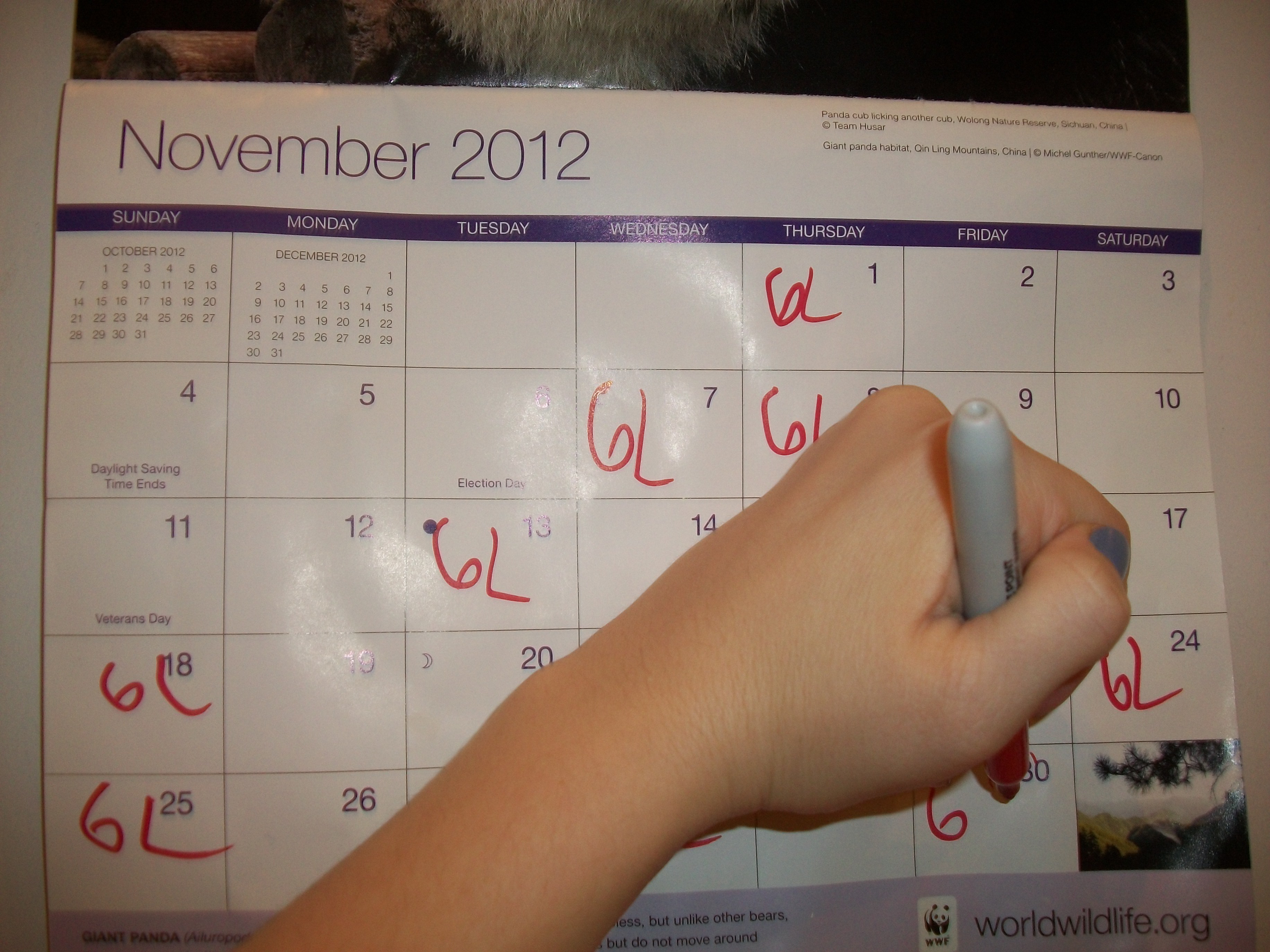
The aforementioned experiment in good will began towards the end of 2011, and left me in100_2180 wonder of how much water I was actually saving (what was done with the water in the bucket to follow shortly).  Given the perfect timing, I set out on a year-long quest to pour, document, conserve and, lastly, calculate (resulting in some arguments with my spouse and the cats along the way).  My study 100_2186begins on the first of the year in 2012, through New Year’s Eve. My bucket holds six liters, and I marked how many liters per day via a calendar hung on the wall in the bathroom.  Some days yielded only one liter, and other days, fifteen liters.  Different months yielded differing results, i.e. the stay-cation when showers were a rare occurrence for the week, hence no water from the shower. Or, trips back from the farmers’ market when lots of greens were blanched, leaving pots and pots of green liquid that further fed my indoor and container plants on the porch.

The results below reflect that of a household containing two adults and two full-grown cats.

Here are my 2012 results:

612 liters of water saved, or

306 2 liter bottles, or

Pool

Just over 159 gallons

If only 9 people did this in one year, we could fill up a pool this size ————————————>

The most water gathered was from heating up the water before the shower, and after the shower.  (You know, after you’re down showering, when you turn off the water, that little button-like device that turns the shower water into the faucet water pops down and a lot of extra water comes out at the end after it’s off.)  Just before I knew I was going to turn the water off, I’d stick the bucket under and almost a full liter would come out each time.

You may be wondering, what does one do with all of that water throughout the year, especially during the colder months?100_2178 It was used in a number of ways.  As previously mentioned, watering my indoor plants, plants on the porches during the warmer months, and the Christmas tree during December, but mostly, it was used to flush the toilet, which is a little wonderful secret that remains elusive to many people.  If your toilet is full of (liquid) waste, you can pour the bucket of water down and it will not only flush, but refill some of the way.  It’s really quite 100_2176amazing if you’ve never tried it before.  Our household is also a “if it’s yellow, let it mellow” one, so the times that the toilet is actually flushed each day is minimal.

At this point, I’d like to think that you’re wowed and awed by the findings.  But, I’d like to drive the point home a little more, if I may.  Let’s face it, in the U.S., we live in a patriarchal, capitalist society, based on consumption, aggression and power.  Meaning, we’ve aggressively tried to exercise our power over the environment by consuming mass amounts of our natural resources, and in turn dumping our excess into landfills and the air.  Therefore, saving water, composting, recycling, et al may seem counterintuitive considering the constant intake of advertising telling us to consume, consume, consume.  In short, wasting water seems normal to us because it’s completely acceptable, if not encouraged in other, more subtle queues in our daily lives.

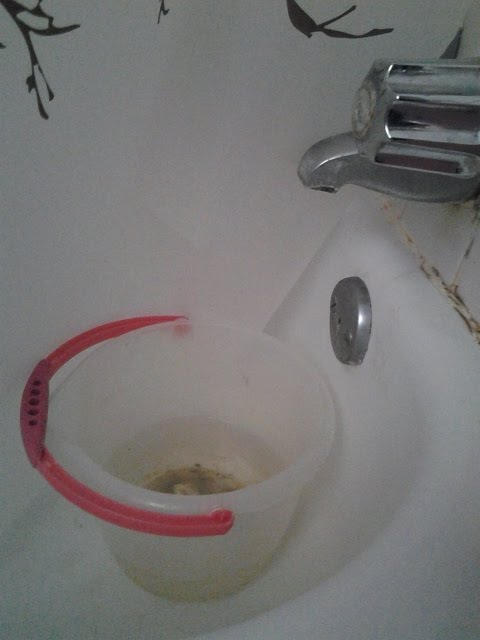
Now that it’s 2013, the bucket has become a permanent fixture in the bathtub. Some have responded to my bucket with resistance, including disgusted facial expressions and my personal favorite, “My husband would never let me do that” (I’ll keep my response to that one to myself).  The biggest hurdle is accepting responsibility and making that commitment.  Saying that you’re going to “go green” is great, but our planet doesn’t really care about your empty promises.  I am by no means “there” yet–I don’t ride my bike everywhere, I occasionally forget my coffee mug at the coffee shop, and I still put a lot of crap into the landfill.  But, day by day, the attempt is made to do what’s right and accept accountability for how I treat the earth.  It suffices to say that my six liter pink-handled bucket is now a part of our family; hopefully it will become a part of yours.

Below: my bucket today, catching water from a leaky faucet.

mail


2014 Update: The faucet has been fixed, but water is still being saved in other creative ways-water from blanching chard, water left over from canning, et al.

Poetry Month Pick: “Brilliance” by Mark Doty

I fell in love with poet and author Mark Doty when I read his memoir “Heaven’s Coast,” about the relationship and illness of then mark-dotypartner Wally, who succumbed to AIDS related complications.  Through his memoir and poetry, Doty offers a universal view on romantic relationships that transcends sex, gender, economic status, race and sexual orientation.  His observations express emotions inherit to struggle and love, and he has the amazing ability to put feelings of the gut into words, which reach out from the pages into us as readers.

I chose Doty in honor of not only National Poetry Month, but also to recognize that gay rights are human rights and in hope of a day where there will be a level playing field for all.

Brilliance by Mark Doty

Maggie’s taking care of a man
who’s dying; he’s attended to everything,
said goodbye to his parents,

paid off his credit card.
She says Why don’t you just
run it up to the limit?

but he wants everything
squared away, no balance owed,
though he misses the pets

he’s already found a home for
-he can’t be around dogs or cats,
too much risk. He says,

I can’t have anything.
She says, A bowl of goldfish?
He says he doesn’t want to start

with anything and then describes
the kind he’d maybe like,
how their tails would fan

to a gold flaring. They talk
about hot jewel tones,
gold lacquer, say maybe

they’ll go pick some out
though he can’t go much of anywhere and then
abruptly he says I can’t love

anything I can’t finish.
He says it like he’s had enough
of the whole scintillant world,

though what he means is
he’ll never be satisfied and therefore
has established this discipline,

a kind of sever rehearsal.
That’s where they leave it,
him looking out the window,

her knitting as she does because
she needs to do something.
Later he leaves a message:

Yes to the bowl of goldfish.
Meaning: let me go, if I have to,
in brilliance. In a story I read,

a Zen master who’d perfected
his detachment from the things of the world
remembered, at the moment of dying,

a deer he used to feed in the park
and wondered who might care for it,
and at that instant was reborn

in the stunned flesh of a fawn.
So, Maggie’s friend-
is he going out

into the last loved object
of his attention?
Fanning the veined translucence

of an opulent tail,
undulant in some uncapturable curve,
is he bronze chrysanthemums,

copper leaf, hurried darting,
doubloons, icon-colored fins
troubling the water?

The Last Five Books

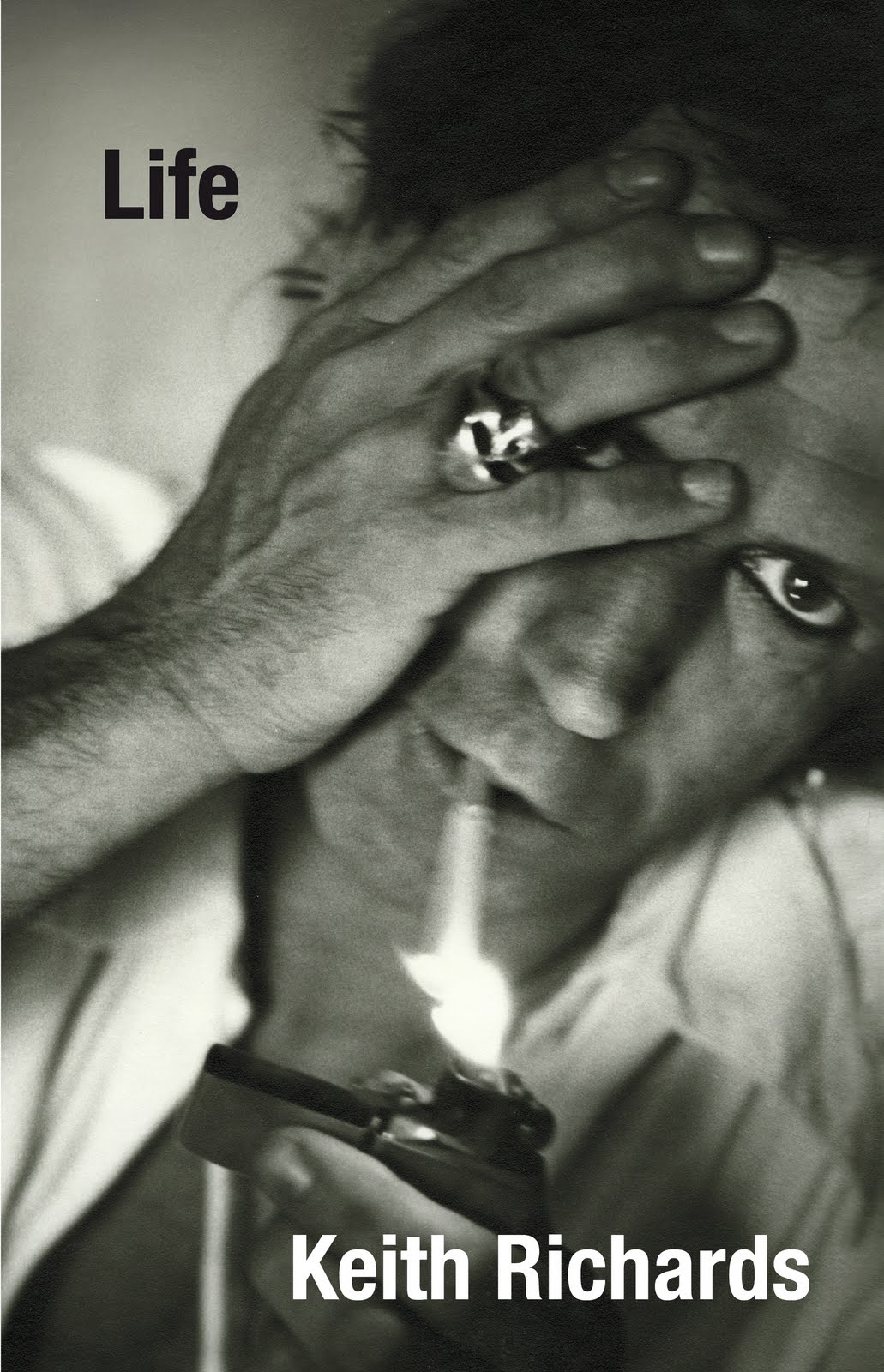
Life by Keith Richards (2010)

Richards tells his life story in stream of consciousness style while regretting nothing and spilling just the right amount of dirt on his band mates and other celebs.  Given everything (the drugs, the women, the road) his journey is summed up by a man who possesses a surprising level of introspection.

Keith Richards book cover Life.08-10

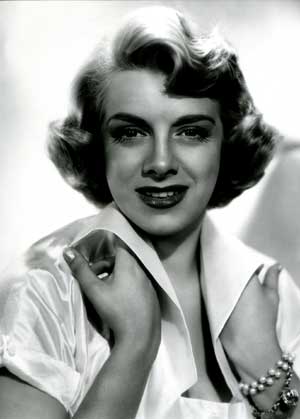
Girl Singer by Rosemary Clooney (2001)

Girl Singer is the epitome of bittersweet.  It constantly wavers between cliffs and valleys; the highs of singing, freedom and love and the lows of drugs, alcohol and the bondage of a troubled marriage.  Besides offering the reader a first class ticket into her career and love affairs, Clooney presents us with a cultural artifact into 1950s and 60s music and culture.  A great juxtaposition to Richards’ Life, Clooney describes the penultimate period where big bands and girl singers ruled and Rock and Roll was just on the horizon.

Rosemary+Clooney

Cyndi Lauper: A Memoir by Cyndi Lauper and Jaycee Dunn (2012)

Often times, reminisces of Cyndi Lauper conjure 1980s imagery of neon colors, spiky hair and of course, “Girls Just Want to Have Fun.”  Because of this, her memoirs couldn’t have waited any longer to show the world just who this woman is, and especially what she has done.

We all know that Lauper is a musician and artist, but when we hear that she is an activist, what that means is that she was one of the first advocates for gay rights, women’s equality, and a true trailblazer for HIV/AIDS awareness, especially at a time when it was shrouded by the highest amount of fear and taboo.  Lauper’s memoir is an essential reading for anyone who needs a boost of self-confidence and a reminder to keep their chin up when they’re wading through the muck of life.

CyndiLauper

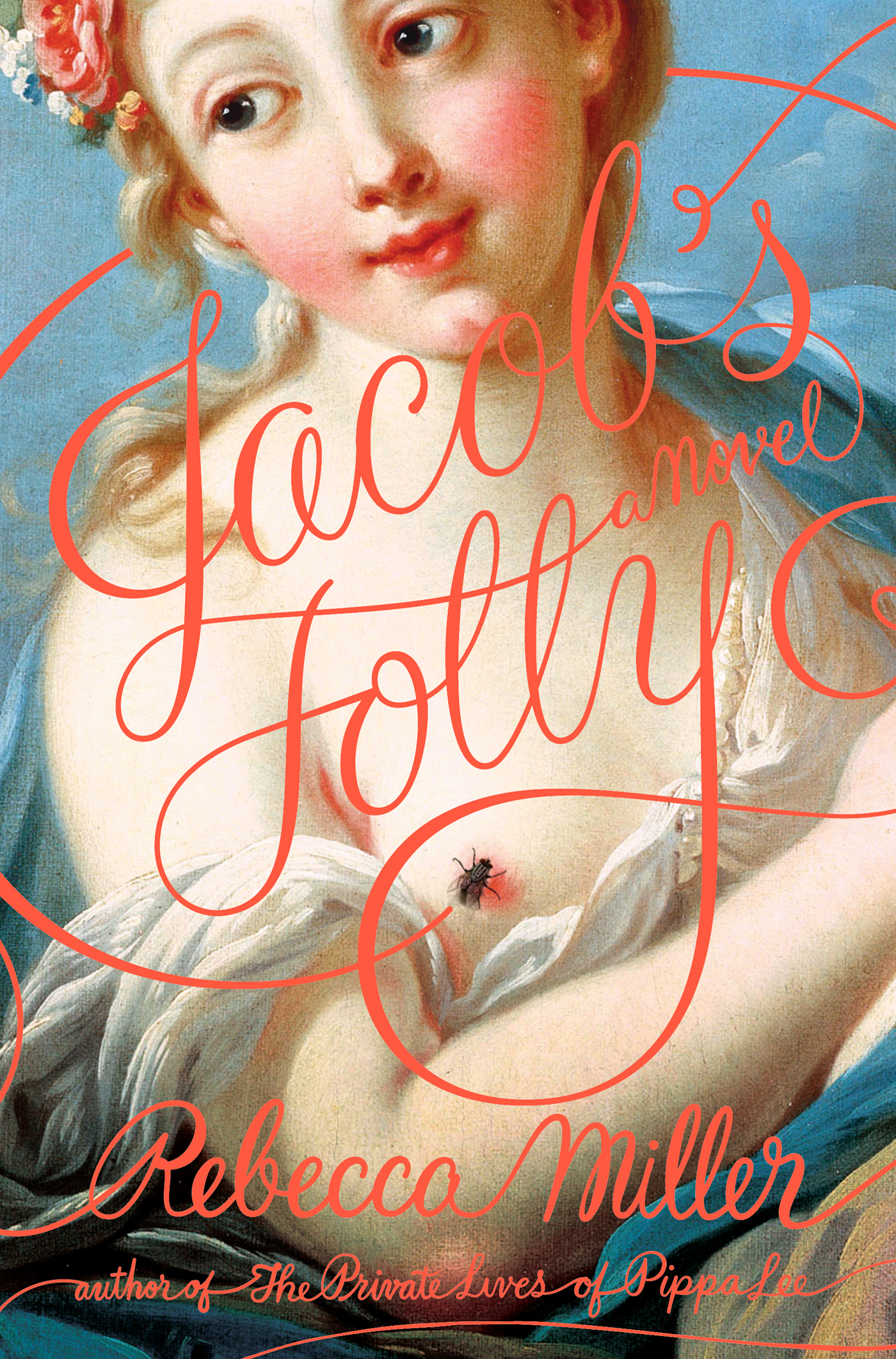
Jacob’s Folly by Rebecca Miller (2013)

A Hasidic Jew, born in the 1700s, is reincarnated as a fly in current day.  The story see-saws from his current day observations and his life in 18th century Paris.  Miller, who has in the past done a magnificent job of writing and directing from a varied female perspective, takes a stab this time at writing from the male perspective.  Her observations from the masculine gender’s point of view are entertaining, tawdry, and scintillating, thereby ever-changing your feelings towards the narrator.

RebeccaMiller

The Lady and Her Monsters: A Tale of Dissections, Real-life Dr. Frankenstein and the Creation of Mary Shelley’s Masterpiece by Roseanne Montillo (2013)

Author Roseanne Montillo describes the social thought and study leading up to the creation of Mary Shelley’s infamous story, Frankenstein.  To do this, Montillo details the very real history of grave digging for medical experimentation and the use of electricity as a possible re-animator of human life, both of which permeated both scholarly and pub conversations for hundreds of years.  She interweaves this history with Shelley’s feminist roots, being the daughter of women’s rights advocate Mary Wollstonecraft, and the subsequent publishing of the novel under an anonymous name due to the bias against female authors.

The conglomeration of the history of the human body, reanimation, electricity, and feminism are in itself a Frankenstein, being hobbled together to create the text that resulted in Frankenstein the story.

Montillo

[Listed in order by first to last book read]