Five French Films Worth an Hour and a Half of Your Time

Amélie
French: Le fabuleux destin d’Amélie Poulain
dir. Jean-Pierre Jeunet (2001)

Arguably the most mainstream of the five films, Amélie is the epitome of quirky and whimsical.  The main character, Amélie, decides to dedicate herself to helping others find a glimpse of happiness, if only for a brief moment.  Amélie, the movie and the character, is reminiscent of an introvert’s Sex and the City; she lives alone in an extremely attractive apartment on a waitress’ salary in a small diner and galavants around an ideal France whilst spending most of her time playing reindeer games with her neighbors and a potential love interest.  It’s chock-full of bright colors, quick camera movements, and mischievous little surprises at every corner.

If you’ve never seen a foreign film or even a French film, I’d recommend this as a reliable primer.

Amelie

Heartbeats
French: Les amours imaginaires
dir. Xavier Dolan (2010)

It’s astounding that someone so young, at the tender age of 21, could have written, directed and starred in a movie so entertaining, beautiful and complete.  Heartbeats introduces us to two friends, Marie and Francis, and the introduction of  the blonde, Greek God lookalike, Nicolas.  The crux of the story is that Marie and Francis are friends, both are attracted to Nicolas, and it is ambiguous as to which one he is attracted to.  The ambiguity of his attraction, if at all, is relayed through subtle queues that just seem to linger a little longer than they should, i.e. a gaze, a kiss, a hug.  Not to mention sleeping in the same bed as both friends and inviting them away (and together) on romantic weekends.

Though this may seem like the typical Hollywood type of love triangle, it has the benefit of not being produced in Hollywood and therefore isn’t expected to follow the prescribed romantic comedy script that pervades American cinema.  The trifecta of the characters mirrors that of the film: wonderful cinematography, a solid story, and a perfect ending.

Heartbeats

17 Girls
French: 17 filles
dir. Delphine Coulin & Muriel Coulin (2011)

Based on the real life events that took place in Gloucester, Massachusetts in 2008, directors Delphine and Muriel Coulin tell the story of 17 high school girls who all became pregnant during one year.  Though not a documentary, the directors hold true to interviews and news stories of the time.  The film begins with a group of tight knit high schools girls where the leader (she sits at the head of the table, she accepts or rejects others, has sex first, et al) becomes pregnant.  All we know about the male partner is that he is out of the picture, and a quiet slight is alluded to.  After she decides to carry to term, one by one, her friends and girls outside of their posse begin seeking out random guys to impregnate them.  The result is an ever-growing circle of pregnancy, social acceptance, comfort and inclusiveness.  The teenage angst genre has rarely been expressed so subtly.

This is definitely an onion of a film.  At the end, I was left with a faint aura of a Sofia Coppola film circa the Virgin Suicides.

17Girls

Paris-Manhattan
French: Paryz-Manhattan
dir. Sophie Lellouche (2012)

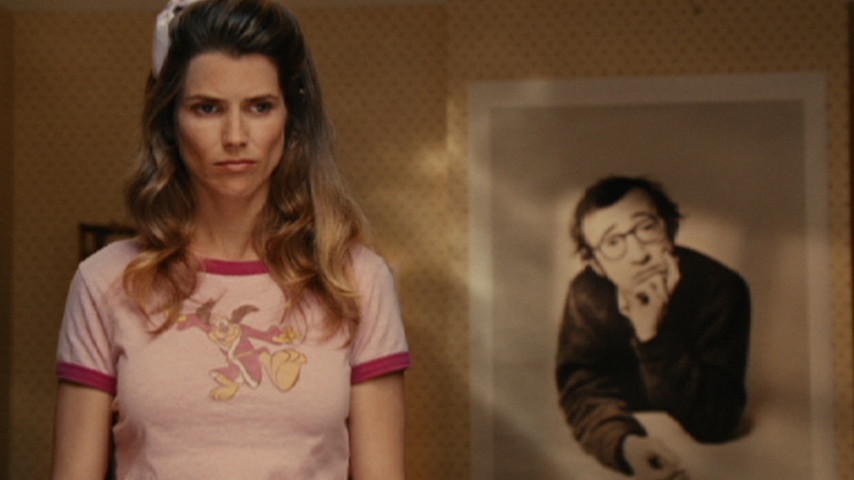
From the age of 15, Alice has not only been in love with the films of Woody Allen, but has also been corresponding with the poster of him in her bedroom.  Mostly taking place in her 30s, she is still being fed words of wisdom from God-like Allen who answers her questions about love, life and struggle through quotes from his films.  As the main character Alice grows into a woman, one can’t help but be drawn to her independence and confidence (yes, I do want to be best friends with her).  Whether that is a result of Allen’s guidance or not is for the viewer to decide.

Of course, the Woody Allen fan would adore this film, but its appeal spans that of his fan base.  The script is solid, the characters are well-developed and you end up caring for them at the finish line.

ParisManhattan

Queen of Hearts
French: La reine des pommes
dir. Valérie Donzelli (2009)

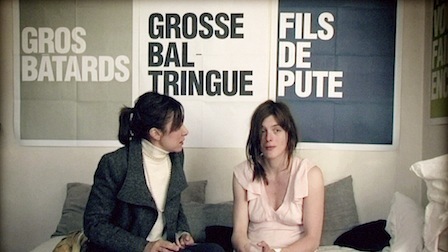
Queen of Hearts is about a woman who gets dumped by her boyfriend, and spends the subsequent weeks unable to financially support herself and basically makes horrible decisions in judgement by sleeping with unavailable men.  The character is basically an emotional mess and her actions left me screaming at the screen at how incredibly awful she was.  Definitely not a queen of hearts.

As the film came to a close, I was truly turned off.  So why spend an hour and a half of your time watching?  It’s because if you’ve ever gone through a break up, been single, or young, or made a bad decision, then this film is extremely uncomfortable to watch because it is a mirror into your own life.  The realism of the sex, nudity, lapses in good judgement and heartache are all so tangible that they require a level of introspection on the viewers’ part that may be off-putting, but it’s worth the experience.

QueenofHearts

Happy Birthday, Exploring Feminisms!

Exploring Feminisms is 3 years old today!

Thanks to everyone who has read and contributed to the conversation!

3YearExploringFeminisms

Top Ten Books Read in 2012

Exploring Feminisms’ Top Ten in 2012

10.  Eva Braun: Life with Hitler by Heike B. Görtemaker

EvaBraun

This book epitomizes the phrase, “there’s a lid for every pot.”  Little is known about Eva Braun, the woman who was romantically linked and died with Hitler, due to the fact that towards the end he ordered all existing documents to be destroyed, even ones kept by Braun.  However, author Heike B. Görtemaker has pieced together through existing documents and letters a plausible picture of their courtship.  Görtemaker gives us a tale that can be both gripping and questioning, leaving much open for the reader to gather his or her own conclusions as to the validity of Hitler and Eva Braun’s relationship.

9.  Shaken, Not Stirred by Tim Gunn100_2026

 In this Kindle-only short story, Gunn briefly describes his father’s physical deterioration due to alcoholism and Alzheimer’s disease towards the end of his career, and the subsequent effect on his family.  Holding true to steadfast Tim Gunn-style, he is candid, witty, and introspective, thereby recognizing the flaws in his past and kneading them into something fruitful for the future.

IsEveryoneHangingOutWithoutMe

8.  Is Everyone Hanging Out Without Me? by Mindy Kaling

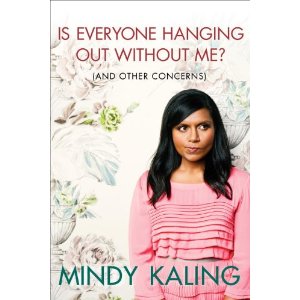
Mindy Kaling, also known as Kelly Kapur on the American version of the “Office”, has written an intelligent and introspective autobiography that offers us insight into the life of a truly funny woman.  Kapur’s writing is highly accessible: she’s sweet, silly, candid, and she possesses an incredible gift that makes you care about her, even though you’ve never met her.

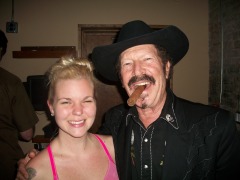
7.  Armadillos and Old Lace by Kinky Friedman
100_1915

If you don’t know Kinky, get to know Kinky; the best Jewish cowboy country singer turned Jewish cowboy mystery writer around.  Friedman’s body of work, both fiction and non-fiction is impressive so it may be difficult to find a starting place besides at number one.  If you are going to skip around, then Armadillos and Old Lace (next to Elvis, Jesus and Coca-Cola) would be a safe bet.  Though peppered with slight vulgarity and delinquent humor (mercy!), Friedman always manages to be tender.  The main character, aptly named Kinky, loves animals, old ladies, his cigars, drinking, and saving the day.  He’s a good old boy with liberal sensibilities and stands up for those without a voice.  It’s a light mystery and you know that when  you get Kinky, you always get a happy ending.

GirlsWalksintoaBar6.  Girl Walks into a Bar by Rachel Dratch

Saturday Night Alum Rachel Dratch has written an adorable memoir about becoming accidentally pregnant in her 40s to a man that she is casually dating.  If you need an uplifting true story, especially to do with having children past what society deems to be your “prime” years, then definitely give it a go.  Dratch is a rebel who doesn’t apologize for her life choices and relays her experiences with honesty and a gentle touch; she’s to the point, but doesn’t come down too heavy.

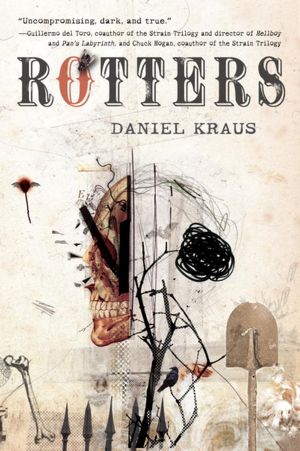
5.  Rotters by Daniel KrausRotters

This book was an accident.  As I was perusing the horror table at the Printers’ Row Book Fair in early 2012, I picked up this book whose appeal factors included grave robbing and corpses, and thinking it was adult fiction, bought it.  Little did I know that in all actuality, it was young adult.  Little did I also know is that teen/young adult novels can be as gory and poignant as an adult novel.  The great thing about this novel, and perhaps in many teen novels, is that little is open to interpretation because it’s messages are blunt; very little beating around the bush.  Sometimes, don’t we all just want to be handed a message that we can understand immediately?  I know that sometimes I do.

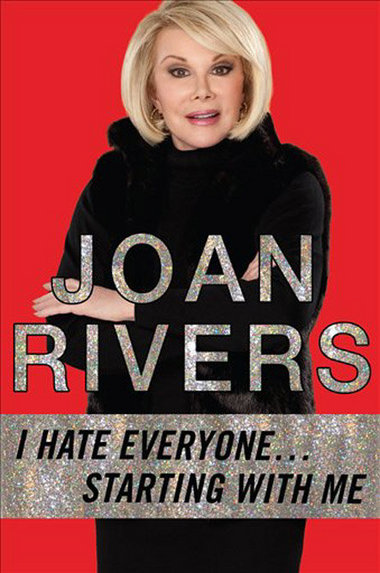
IHateEveryone4.  I Hate Everyone, Starting with Me by Joan Rivers

Women aren’t supposed to be funny without femininity.  It may sound archaic, but women are only allowed to be accepted into our society on a large-scale unless their mouth is paired with pretty.  Pretty looks, pretty hair, or pretty jokes intermingled with ugly ones.  Rivers tosses her jokes in the face of a society that is based on the consumption of pretty, feminine women.  She offends everyone to the most extreme degree, including herself, but it’s all one big joke.  Does she really hate mentally disabled children?  Of course not.  It’s all part of staying true to the purity of her craft.  She gets plastic surgery because she understands that no one wants to see an old wrinkled woman on television (isn’t that the ultimate paradox?), but then she uses her place in the spotlight to subvert what is expected of her as a female comedian.  In a nutshell, Rivers’ book is an offensive hoot.  Have fun.

3.  Amy, My Daughter by Mitch WinehouseAmycovers

Written posthumously by Amy Winehouse’s father, Mitch Winehouse pays the ultimate homage to his daughter–he writes her life.  Previous to picking it up, my knowledge of Amy’s life and music was limited to what the radio stations doled out, which was mainly negative gossip.  MW paints Amy as realistically as a father can, except he ups the credibility factor with fault.  He finds fault with himself and with Amy, and this is what brings the reader in because really, who wants to read 300 pages of praise?  If so, where can connections be made?  MW ultimately lets us grieve along with him, his family, and for the tragedy that was Amy’s death.

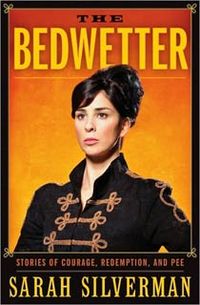
Bedwetter2.  The Bedwetter by Sarah Silverman

It’s jarring to hear a woman be so vulgar, compared only to the likes of Joan Rivers and a sprinkling of other female comedians who don’t give two shits about what mainstream culture says about them, but it’s also extremely refreshing.  Silverman’s no-holds-barred tongue is just the ruffling of the waters, much like Rivers’ book, that is needed to chip away at gender inequity, bit by bit.  Silverman’s book is a memoir of how comedy entered her life and how she has existed in that world.  Bedwetter is sometimes a tangled tale of inequality in the comedy arena that leaves you pissed off, intertwined with inspiration and gumption that makes you glad that there are women like Silverman out there who are disrupting at least one person’s sleep.

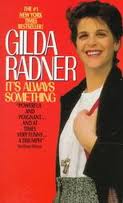
1.  It’s Always Something by Gilda Radnerit'salwayssomething

If you are seeking a solid story that leaves you feeling truly human and truly grateful, then read Radner’s autobiography.  In it, she hands us raw Radner on a plate and it leaves you completely changed at the end.  Radner’s memoir is one of cancer and her will.  She takes us on a journey that is the definition of bittersweet: getting cancer, its recession, fathoming her own possible demise, the ebbs and flows of hope, and her relationships and their own dealings with her cancer.  This book was written over twenty years ago and it reads as if it were written yesterday because love, friendship and struggle are (un)fortunately constants in life.


Chicago International Film Festival Overview-2012

Bound by Flesh
dir. Leslie Zemeckis

HiltonSisters

The documentary Bound by Flesh shines a spotlight on the first famous female conjoined twins, Daisy and Violet Hilton.  Given the current cultural popularity of what once were called Siamese twins, especially with the celebrity of Brittany and Abby Hensel and their television series on TLC, the release’s timing aids to illuminate their place in our collective history.

The way that Zemeckis presents the information is straightforward, using interviews of those who knew the twins and still photographs.  She gives us the facts without giving viewers a sense of her opinion and lets the research tell the story.  The film describes the twins’ lives from birth to death, their rise to celebrity and their humble endings in North Carolina, all peppered with moments of elation, fame, desperation, awe and sadness.  At the closing of the film, we are left to determine the tone of the documentary and also that of their lives.  In a strange way, I was reminded of the concluding scene in the Wrestler, starring Mickey Rourke; the interpretation of what remains is based upon each viewer’s outlook on life.  It is hopeful?  Pitiful?  Glass half empty, or full?

The Final Member
dir. Jonah Bekhor & Zach Math

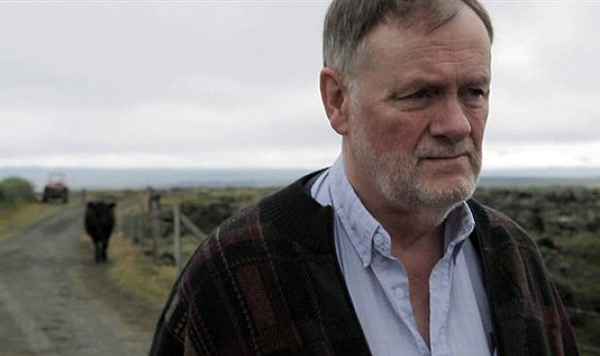
On paper, the Final Member is about the Icelandic Phallological Museum, or in layman’s terms, a penis museum.  The bare-bone facts are that the museum’s owner and originator has spent his life seeking out artifacts, aka the male reproductive organ, from every species on earth.  As you may have already begun to surmise, he seeks the final piece of the puzzle, the “final member,” the human penis.

The film, however, is not about penises.  True, you see a lot of penises, real ones and by way of art.  However, it is not a porno.  It does not titillate.  It does not glorify the male organ, portray it as grandiose or as the bringer of all life.  The film is actually about the curator’s life’s work; his family’s support and love; love of one’s country; Passion (with a big P) for one’s craft and even love for the preservation of native animal life.  It’s a true testament to the filmmakers’ ability to weave the facts into something beautiful that could otherwise be done so distastefully.

Holy Motors
dir. Leos Carax

HolyMotors

How does one exactly describe Holy Motors?  I’m reminded of a Real Housewives of Beverly Hills episode.  RuPaul was at one of Lisa Vanderpump’s restaurants and tells plastic surgeon Paul something to the effect of, “we’re all in drag,” much to Paul’s confusion.  In nine different “scenes,” the main character, by way of changing his hair and make-up in a limousine, transforms into varying personae, including a leprechaun, an old man, a hip father, and a man married to a species other than human.  With just a simple change of hair color or wardrobe, Mr. Oscar transforms into a completely different role in society.  The director does a fantastic job of expressing the numerous selves that easy of us play, or rather, the drag that all of us wear through even a single day.

The Jeffrey Dahmer Files
dir. Chris James Thompson

Jeff

If you want the gore and the gossip; pictures of body parts; descriptions of brutal murders; details of Dahmer’s demise and the like, then you’re in the wrong theatre.

The Dahmer Files documentary accomplishes several surprising tasks other than your typical murder-mystery roller coaster ride.  It first gives you the perspectives of only three people who were integral parts of Dahmer’s life towards the end of his murderous career, and does so with restraint and subtlety, unlike the typical half hour crime docu-drama.  The three people interviewed are the police officer who obtained his confession, Dahmer’s neighbor, and the Medial Examiner who exhumed the remains from his apartment.  The link between all three subjects is that their accounts were nothing if not ingenuous and in the case of the police officer and neighbor, vulnerable and tender.

The film also offers you a slice of humanity in the most dismal of circumstances.  Somehow you don’t leave the threatre hating Dahmer but instead leave with a greater understanding of human kindness and empathy.

John Dies at the End
dir. Don Coscarelli

johndies

Be ready to embrace the strange, the silly and the ridiculous; this film doesn’t take itself too seriously, and you should follow the same rule.  If you read any reviews during the film festival, you may have read the description, “Ghostbusters on acid.”  I would describe it as Ghostbusters injected with an absurd, adorable, and surprisingly solid story.

In a nutshell: two friends step into the paranormal world through happenstance and fight evil monsters that only they can see.  Again, the movie is goofy and little brain-work is involved, but that’s all part of it’s charm.  The story is fairly concrete and fleshed out for a horror-type of film, covering most of the whys and hows.  The two main actors are also perfect for their roles: the good-looking jock-type and the dark and somewhat brooding counterpart.  Mainstream comparisons could be to the gonzo comedy of the Wayans Brothers’ Scary Movie comedy series minus the cliche and flighty plots.

If you’ve ever caught yourself saying that you just want to see a movie that makes you feel good and laugh, then this one is for you.  If you’re a film snob sort, (eh, hem, White City Cinema) then this would definitely fall into the “guilty pleasure” category.

Happy Thanksgiving From Exploring Feminisms

Happy Thanksgiving from Exploring Feminisms!

With respect to all life and the environment, no animals were harmed during the production of this day!

My Top 10 Feminist Horror Movie Picks for 2012

In the Exploring Feminisms household, horror is one of the most common film genres playing on our television.  Of those out there, very little are what I would consider feminist, or at least having a feminist agenda of some sort.  So, why not find some for ourselves?

Here’s the straight dope: this task turned out to be a lot more difficult than I thought–there are about a million and one horror films out there.  While sifting through the plethora of bloody thrillers, teen screams, zombie flicks and vampire love stories, directed by both men and women, I came across a few that stood out as notable films ranging from masked and subtle to overt feminist themes.

Here is my 10 top list of films watched during 2012, in alphabetical order.

Enjoy you feminist sickos!

~

Alien
(Ridley Scott, 1979)

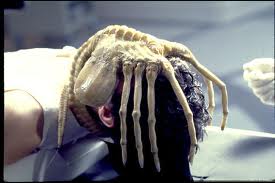
If you’ve never seen Alien, then you most likely are aware of the oh-so-popular cultural references, namely aliens exploding from chests, the large black shiny alien with the elongated head and of course, Sigourney Weaver, aka Ripley.  Alien is about a crew in the future who investigates a “save our ship” message on a foreign planet and while there encounter a new alien species.  The movie is shocking, suspenseful and at times, really gross.

What is so refreshing about the film is that Ripley is tough, pragmatic, independent and smart.  She isn’t overly masculine or a woman in need; she’s there to do a job and her character doesn’t fall into any overt gender categories, as many horror films tend to do with their female characters.

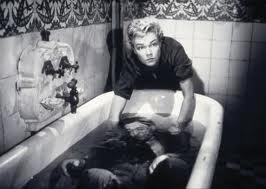
Diabolique
(Henri-Georges Clouzot, 1955)

A kind school mistress with a weak heart plots to kill her husband with her husband’s lover.  After the deed is done, his ghostly presence is presumed to be lurking around.  This French director’s style is often referred to as a precursor to Hitchcock and definitely lives up to its reputation as it brims with suspense and intrigue.

Because this film takes place at an all-boys’ school, is haunted by past demons and is run by both compassionate and cunning caretakers, it is comparable to Guillermo del Toro’s film, The Devil’s Backbone and I would recommend it to anyone who felt a kinship to this movie.

The Exorcism of Emily Rose
(Scott Derrickson, 2005)

Finally!  An original possession flick besides the Exorcist!  Director Derrickson puts a new spin on the genre by making it half exorcism, half court drama.  Starring Laura Linney, Tom Wilkinson, Campbell Scott and Jennifer Carpenter, the cast adds to the solid story by going all out for a horror film with not an ounce of ham, melodrama or condescension.  Linney is the defense lawyer for priest Tom Wilkinson and must reconcile the supernatural with the fact-based legal system.  Recommended for anyone who likes horror films that are devil/possession based but are tired of the constant regurgitation of unoriginal films of this genre.

Ginger Snaps
(John Fawcett, 2000)

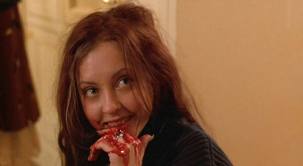
This coming of age horror story follows the lives of two outcast teenage sisters who are embarking on the threshold of the unknown, namely puberty, guys, and werewolves.  Directed by John Fawcett and written by Karen Walton, Ginger Snaps was a window into my own mid-teen youth: hating the popular girls, wearing clothing that was black and big enough to fit Dom De Luise, and having an open love affair with all that is macabre.  Having been a teenage girl once, this movie was a stroll down an anguish-filled brick road that was my teenage years and is a tribute to Walton’s ability to recall her past with such vivid accuracy, and presenting it in a new and original way.

May
(Lucky McKee, 2002)

The VHS of May sat on my VCR for probably over a year.  After much harassment from its cult followers I finally saw it and I can finally say, I get it.  It’s rare that you watch a film about a young woman whose only best friend is her porcelain doll that may actually be alive, may be committing murder and hacking people to bits and think, “wow, that was a really cute film.”  Mission accomplished.

Resident Evil Series (1-5)
(Paul W.S. Anderson: 2002, 2010 & 2012; Russell Mulcahy, 2007; Alexander Witt, 2004)

Rumor is that the Resident Evil franchise was originally a video game, and friends have said that the first of the five holds true to the game.  Having never played the game myself, I can comfortably recommend all of them to someone who is less than game-friendly.

The series is a mix of horror and action and Milla Jovovich as Alice shoots and kicks her ass off as the protagonist against both an evil corporation and zombies.  Though she is a formidable force with which to be reckoned, she still is a woman who contemplates marriage and children, though these subtle cues are merely hinted at.

Tucker and Dale v. Evil
(Eli Craig, 2010)

This may seem like a rather unusual pick for a feminist horror film.  It’s about two hillbillies, Tucker and Dale, and their dashed dreams of remodeling their newly acquired cabin in the backwoods when a group of frat boys and girls show up and ruin the fun.  Despite our ideas of Deliverance-style backwoods folk, this film turns these stereotypes upside down by showing a softer side of woodsy types.  Tucker and Dale respect women, care about animals and love nature.  On the flip side, the rich, educated and upper-class college kids are aggressive, violence-driven, right-wing conservatives who treat women like sex objects, and the women seemingly have no objections.

This film is filled with delight, whimsy, gore, blood and bones, combined with a dash of pleasant surprise.

Underworld Series (1-4)
(Len Wiseman, 2003, 2006 and 2012 and Patrick Tatopoulos, 2009)

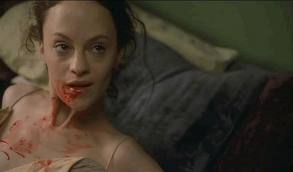
Much like Alien and the Resident Evil series, the four Underworld movies are led by a tough female lead who also happens to be a vampire.  The first, second and fourth films highlight Selene, a vampire whose family is killed by lycans (werewolves) and because of this, spends her life seeking revenge against the whole race (never judge a whole race by its worst specimens!).  In the third, and also the prequel, Selene takes a backseat as we are shown the history of the vampires and lycans and how the feud began.

What can I say, this year I’m into women who have huge…ovaries.

The Ward
(John Carpenter, 2010)

Carpenter picks up steam again with The Ward; a young woman is sent to an insane asylum that may or may not be haunted by a former “tenant.”  Not only is the lead terribly beautiful, but she’s also willful and possibly bat-shit crazy.  You be the judge.

The flick is classic John Carpenter with its female lead, gore, perfect music placement, suspense and a great surprise ending.

Witches of Eastwick
(George Miller, 1987)

Okay, yes, I’m going there.  Considering that this movie was made in the 1980s, by some standards it may seem old and younger generations may be completely oblivious of its presence.  But like major events in history, it would be a detriment to our society if this film was forgotten.

Basic plot rehash: three women live in a small town and the devil moves in.  Campy?  Yes.  Big hair?  Yes.  And yes, Jack Nicholson, who plays Satan in the film, not-so-ironically calls himself a “horny devil.”  Pretty corny.  But this film offers so much more!  It’s about sexual liberation.  It’s about the pressures of living in a small, conservative town where female sexuality and independence are seen as evil.  It’s also about Cher, Michelle Pfeiffer and Susan Sarandon all being awesome actresses who are willing to have sex with Satan and not giving a shit—at least at first.

This film could arguably be an amazing feminist horror film, or an incredibly sexist flick from the 1980s.  I leave it up to you to discuss.

~

Need more feminist horror film suggestions?  Click here to see my top 10 list for 2011 and my list for 2013

Book Review: Amy, My Daughter by Mitch Winehouse

As of a month ago, I knew very little about Amy Winehouse.  I remember when the song Rehab flooded the U.S. airwaves, forever imprinting her voice on our collective mind, whether we were fans or not.  When she died in July of last year, I, like many out there living much of our lives on the Internet, snickered at jokes made on Facebook, “she should have gone to rehab, yes, yes, yes” and other insensitive mockery.  All I knew of Winehouse was what the media fed us on a mass scale: a drugged up, anorexic mess with a tumultuous relationship with husband Blake Civil-Fielder.  When she died, the general consensus was that it was bound to happen given her drug abuse and lifestyle.

In June of this year, the biography Amy, My Daughter hit the stands, written by Mitch Winehouse, Amy’s father.  It was an intriguing concept, a book written from a father’s point of view on his deceased daughter.  Not knowing what exactly to expect, I gave it a go and found that it’s appeal factor would extend to a number of people in a number of directions.  It’s about love: familial, romantic, platonic and artistic.  It’s about passion.  It’s about God-given talent and creative output.  It’s about loving someone with an addiction and it’s about helplessness.  It’s about perceptions of addiction.  It’s about relapse and struggle.  It’s about the media and how they filter the truth.  It’s also about how one loser can really fuck up your life.

Mitch Winehouse’s writing is honest and accessible and doesn’t bog you down with self-pity or an over-inflated picture of Amy (besides what your typical father doting allows).  He begins with the end of Amy’s life, and then backtracks to her childhood through adulthood to the end again.  Much of the book describes her spunky personality and close-knit family unit.  Given all the negative press about Amy, it’s a wonder that she came from such a grounded and supportive family.  Even her parents, who divorced when Amy was young kept a friendly relationship thereafter.  When Mitch describes her addiction and his reaction to it, he holds nothing back, including the ugliness of Amy’s actions, and similarly the ugliness of his response.  His candid storytelling adds credibility to his point of view because he admits to situations where he may be seen as less than honorable, and dares to cast his daughter in a negative light for the sake of truth, whereas most parents tend to inflate their child’s persona.  He tells her life as he remembers it, and he remembers it well because he kept a diary throughout her years of stardom and addiction documenting their family’s highs and lows.

AMD carries you through her 27 year-old life and career, revealing details that allow you to gain a more thorough understanding of who Amy was as a woman and an artist.  For example, Amy wrote all of her own songs, which is surprising in this culture of mass produced, factory style music.  Because of her songwriting style, each song is a small window into a very personal and often painful time in her life.  Another surprising facet of Amy’s life was that she didn’t abuse drugs or alcohol until the met Blake Civil-Fielder, whom she later married and divorced.  Popular notions of the musician paint pictures of a hardcore addict who lived on the edge, but as her father reveals there were often spurts of sobriety where she would write and spend time with her family, but she always struggled daily with drug abuse, especially when using with Civil-Fielding.  After her husband was thrown in prison for bribery, Amy was able to get clean of hard drugs, which translated to alcoholism and was the ultimate cause of her demise.

Amy’s music acts as a bittersweet reminder of an extraordinarily talented young woman who suffered from substance abuse and died as a result.  It’s a sad wonder to think of what she could have done in the future, but luckily for us we are able to enjoy the three albums that she was able to create during her short life.  This book is a historical blueprint that enriches how we experience her music.  Mitch Winehouse’s biography on his daughter is essential reading in order to truly understand the woman behind the music.

He Said/She Said Director Profile: John Carpenter

This director profile of John Carpenter is yet another joint-venture of Exploring Feminisms and my spouse Michael’s film studies blog White City Cinema. This is our first time discussing the body of work of a filmmaker rather than a single film.

MGS: So we just finished watching virtually all of John Carpenter’s movies together and I guess I’d like to start off this “director profile” by discussing how we got on this particular kick. When I was a kid in the early to mid-Eighties I remember that HalloweenEscape from New York and The Thing were all a big deal to me. Those movies ruled cable television at the time and I watched them over and over. Then, when Prince of Darkness came out in the fall of 1987, I saw it in the theater as a budding 12-year old horror movie aficionado, fully aware that I was seeing the “new John Carpenter film.” I also saw They Live the next year and loved that too. Then, I started watching serious art films as a teenager and kind of lost touch with what Carpenter was doing until a couple years ago. I think the motivation for our retrospective was when we bought Halloween on blu-ray. I hadn’t seen it in years and probably never in its original aspect ratio and I was just blown away by how great it is: the suspenseful, brilliantly edited set pieces, the elegant camera movements and, of course, that incredible, minimalist synthesizer score. It made me want to see and re-see all of his films. Do you remember your earliest impressions of Carpenter and what exactly hooked you during our recent retrospective?

JM: I can honestly say that growing up, I didn’t know who Carpenter was and though there was an awareness of his cultural presence, didn’t link his films together. I knew that I liked Halloween, but didn’t like, or really didn’t understand, They Live or Big Trouble in Little China, for example. I didn’t see a connecting thread or appreciate his abilities as a director until we began our Carpenter-kick, and that is where my interest snowballed. When you picked out movies for us to watch in our Netflix and Facets queues, I was constantly surprised at the films that I was aware of, but never knew that he directed. Do you see an interconnected thread throughout his films that is indicative of his directing style, apart from his often 80s-sounding synthesizer music?

MGS: Absolutely. The most obvious thread would be his mastery of (and unironic love for) genre filmmaking. The critic Kent Jones said the best thing about Carpenter, that he’s the last straightforward genre filmmaker in Hollywood and the only one who doesn’t look at genres as “museums to be plundered.” In other words, unlike, say, the Coen brothers or Quentin Tarantino, who self-consciously mash-up different genres or run genre conventions through a kind of post-modern blender, Carpenter plays the conventions straight and true, as if he were making his films in the 1950s. Obviously, the genre he’s most known for is horror. But, in a way, a lot of his films can be characterized as modern-day or futuristic takes on the western as well; virtually all of Carpenter’s movies follow one of two basic western-style plots: the group of people who become trapped in an isolated, claustrophobic location who find themselves being menaced by an enemy from without, or the group of people who are forced to enter a foreign, hostile territory and must battle their way out from within. It seems that most aspects of Carpenter’s visual style flow organically from these archetypal stories (the use of cross-cutting to generate suspense, an expressive use of Cinemascope framing featuring geometric groupings of actors, etc.)

Kurt Russell, obviously, is the ultimate Carpenter actor and can be seen as the director’s alter ego: Snake Plissken in Escape From New York, R.J. MacReady in The Thing and Jack Burton in Big Trouble in Little China are all very similar and yet very distinct. They are all anti-authoritarian “lone wolf” types who nonetheless differ drastically in terms of personality and morality. Snake is Russell doing Clint Eastwood, Jack is Russell doing John Wayne (hilariously, I might add), and Mac is essentially Russell being Russell. This reminds me – it seems you and I agree that the real golden age for Carpenter was between 1978 and 1986. Everything from Halloween to Big Trouble in Little China is just incredible (with the partial exception of Christine, although that has its virtues too) and nobody really appreciated what he was doing at the time. After that, there’s a drop off in overall quality although he still does good work intermittently up through the present. So, my next question for you is what do you think Carpenter’s best and worst films are? More specifically, what do you see as Carpenter’s strengths and weaknesses as a filmmaker?

JM: Without a doubt, The Thing is his best film, followed by Halloween, thenThe Ward.

The Thing: very much ahead of its time. It’s shockingly scary, even for today’s standards of visual and gore overload.

Halloween: one of the first extended scenes from a murderer’s point of view and, though it was only his third full length film, it’s difficult not to appreciate how steadfast his style has been throughout the years.

Village of the Damned: let me clarify by first stating that this isn’t in my top ten, but it does a great job of being a classic horror film by making you feel really uncomfortable, and it’s difficult to make an audience feel so consistently out of control.

The Ward: an awesome comeback after a few not so inspired films and like a few of his other flicks, such as Halloween, it has a really strong female lead.

Regarding what I consider to be his less than perfect films, I can’t criticize them too vehemently because I think they all have their strong points. Ghosts of Mars, for example, is missing a more fleshed out story, but how can you not love Pam Grier? Similarly, Christine falls into the same category where large chunks of information are left out, jumping from scene to scene when there should be some meat in the middle. However, the car, especially when it’s on a rampage, is terrifying.

Another film that had such potential but fell flat was Pro-life from the Masters of Horror television series, which featured one of our joint favorites, Ron Perlman. Though I am pro-choice and did work at Planned Parenthood, I do try to keep an open mind when it comes to anything even slightly anti-choice in art. Given that this is a horror film, I was hoping that whichever way it went, pro or anti-choice, it was going to be entertaining. All in all, the film had a lot of holes in it; some scenes were gruesome to the utmost, and other scenes made it obvious that it was a TV movie. As the movie ended, though it did slant towards a pro-choice point of view, I kept thinking of ways that it could have been made better.

Overall, I think he has two strengths that attract me to his films. The first is that he’s really good at scaring the audience through gore, the unknown, and even downright creepy music. Two: even though their butts are often hanging out, he has a good amount of tough female leads, i.e. The Ward,HalloweenThe Fog, and Ghosts of Mars. I’m sure that you disagree with some of my picks, so what are some of your favorites and not-so-favorites?

MGS: Well, I agree Pro-Life is bad all around, which is interesting because it obviously carries the Carpenter stamp. It falls into that group-of-people-under-siege storyline that I brought up earlier. But, as Pauline Kael would tell you, just because a director’s signature is identifiable doesn’t mean the work is inherently valuable. I’m also in full agreement that The Thing is his masterpiece. Of course, we also saw it under the most optimum conditions imaginable: a 35mm ‘Scope print at a midnight show with a packed audience, which is not true of the other Carpenter films in our retrospective. And you’re right that the gore in that film is both shocking and unbelievably effective. I couldn’t believe how gory it still looks after all these years. A big part of that, I think, is realizing that you’re looking at good old-fashioned effects and make-up, which have a thick, heavy, moist presence on screen (in contrast to say, the thinness/cartoonishness of CGI). Halloween is also right up there for me, obviously. My other favorite is Starman. That’s a film I saw and liked as a kid but was just floored to realize how good it still is as an adult. I see it as kind of love story version of The Thing (in much the same way that Big Trouble is the comedy version of Escape from New York)! There’s a real sense of wonder to that film, a feeling of what it’s like to look at the world through truly innocent eyes that goes much deeper than the faux-innocence of, say, Steven Spielberg. The scene where Jeff Bridges brings the deer back to life made me want to cry and the ending of the film – the final interaction between Bridges and Karen Allen – is just sublime.

I’m surprised by your singling out Village of the Damned. I actually liked the first 30 minutes of it but, as soon as the children appear and the mystery becomes more concrete, I thought it became much less interesting. Also, Kirstie Alley’s performance strikes me as one of the weakest to be found in any Carpenter film. In general, I don’t think that he’s the best director of actors. I think he needs to work with strong actors who kind of already understand the spirit of what he’s doing, like, say, Kurt Russell. I’m glad that you like The Ward though. I too thought it was pretty great, a kind of b-movie version of Shutter Island centered on a female protagonist. I felt like he was really returning to his low-budget roots with that one and I think he directed the hell out of it. I’m also glad you brought up the female protagonists; Natasha Henstridge was a really appealing action heroine inGhosts of Mars and I liked the chemistry between her and Ice Cube. But that script was so lame; it was just one endless shootout after another and the whole thing quickly became noisy, monotonous and irritating. For me, it’s a toss up between that and Vampires for the title of worst Carpenter film. However, having said that, we saw a few Carpenter films that were very pleasant surprises for me. Chief among them is probably Memoirs of an Invisible Man. I always assumed that would be one of the low points of his career but, after finally seeing it, I was surprised at how well it worked as a light comedy thriller. There are a few set pieces in it that are really excellent, like the scene where Chevy Chase as the invisible man uses the body of a passed out drunk to hail a cab and catch a ride across town. I think of it as Carpenter’s version of North By Northwest. Any last thoughts you’d like to add?

JM: Now that our Carpenter-thon is over, I am left with a profound sense of respect for him as a director, writer and cheesy synthesizer musician, and possibly as someone who may even stick his toes into the feminist pond.

Jill’s Top Ten John Carpenter Films 
10. Christine
9. Escape from L.A.
8. Memoirs of an Invisible Man
7. Starman
6. The Fog
5. Escape from New York
4. Someone’s Watching Me!
3. The Ward
2. Halloween
1. The Thing

MGS’ Top Ten John Carpenter Films
10. Memoirs of an Invisible Man
9. In the Mouth of Madness
8. They Live
7. The Ward
6. Assault on Precinct 13
5. Big Trouble in Little China
4. Escape from New York
3. Halloween
2. Starman
1. The Thing

This Author Doesn’t Bite: An Interview with Novelist Rhiannon Frater

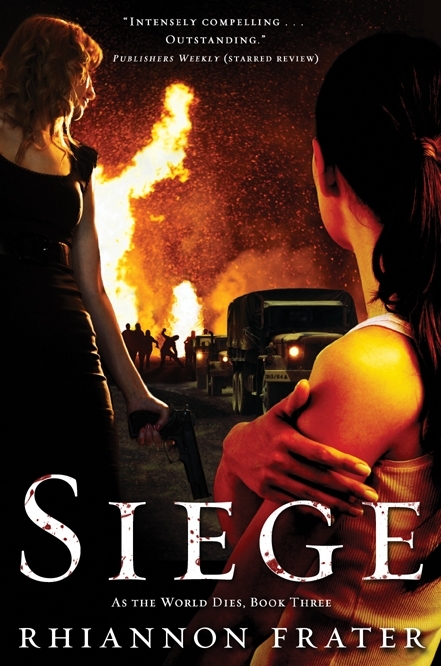
I ran across the As The World Dies trilogy, consisting of The First Days, Fighting to Survive, and Siege at the library, all snuggled together on the shelf, ostensibly innocent and unobtrusive.  The covers revealed allusions to women and zombies; little did I know that less than two weeks later, my life would be absolutely consumed and a month later, still reeling over the saga.
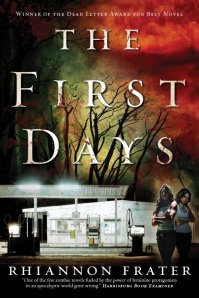
Written by author Rhiannon Frater, a Texas based author and zombie-survival aficionado, the trilogy outlines the lives of two women, Jenni and Katie, whose laundry list of to-dos in this new world infested with zombies includes surviving, love, wrestling with past and current demons, and an attempt to seek a glimmer of normalcy amidst it all.

Rhiannon was kind enough to take some time out of her busy day of creating kick-ass female protagonists and creative and gruesome ways to kill zombies to answer a few questions about the trilogy.

JM: Your characters often refer to George A. Romero’s zombie movies (director of Dawn of the Dead, Survival of the Dead, et al), as a guide on how zombies could act and events may unfold.  Have any other art forms or works inspired you during the writing of this trilogy?

RF: George A. Romero’s original zombie trilogy is a huge influence, of course.  I think any writer in the zombie genre would admit to being a fan of his works.  I wasn’t really influenced by any art forms or other works beyond Romero’s zombie movies. The people I met while traveling for my former job and the Texas landscape more heavily inspired me.  I love Texas and Texans as a whole.  I also did a lot of research about how people respond to natural disasters to ascertain how people would respond in a zombocalypse.

JM: Considering Romero’s films or any other inspiration, do you have an opinion on how women are typically portrayed, and how, if at all, did that influence the development of the female characters in the trilogy?

RF: Though I love Night of the Living Dead and regard it as my favorite zombie film, Barbara was a huge disappointment.  She spends most of her time on screen cowering.  When she finally starts to help defend the farmhouse, the dead pull her away.  That being said, Romero’s Dawn of the Dead gave us a fantastic female character in Fran.  Gaylen Ross did such a great job portraying her.  I was asked one time during an interview on a podcast who was the stronger female: Anna from the remake of the movie, or Fran from the original.  I had to say Fran.  It was the Seventies and she stands up for herself in a dynamic way.  She refuses to be a cowering female and joins the men in clearing the mall and defending it.  She also insists on learning to fly the helicopter.  I had the great pleasure of meeting Gaylen Ross this year and we spoke a lot about her portrayal as Fran.  She told me that she insisted on her character being strong.  I appreciate that tremendously.

But for a long time women in horror movies in general were just in the films to look pretty, flash their breasts, and die.  In zombie books, they had the same fate.  Women were also portrayed pretty negatively and were often just cannon fodder.

When I started writing the short story that birthed the As The World Dies trilogy, I never really consciously thought about the fact I was creating two female protagonists.  It was just a naturally occurring event in the framework of the story.  It wasn’t until later that I came to realize what a huge deal it actually was in the genre.

Now, happily, there are a lot more women in the genre and there are a lot of strong female characters filling the pages of zombie books.

JM: Creating strong female characters in all horror genres is important, and is slowly but surely becoming more apparent in our cultural consciousness, as evidenced by Selene in Underworld film series, and Alice in Resident Evil.  Regarding print media, literature specifically, I think that the idea that a woman can save the day is still carving out its place, and your trilogy is definitely helping to pave the way.

One aspect of the three books that struck me right away was how physically affectionate the characters are towards one another.  I think it’s safe to say that there is a high amount of cheek action, namely kissing and caressing, between characters of both the same and opposite sex.  What was your reasoning for including these interactions throughout the series?

RF: I guess because Texans are friendly?

We greet each other with hugs.  We wish each other goodbye with hugs and kisses on the cheek.  We’re a friendly lot.  Also, Jenni and Katie become sisters, best friends, and each other’s comfort. They treat each other like sisters.

Additionally, my research into how people respond to disasters revealed that people do cling to each other, even physically, for reassurance in difficult times. Just look at photos after a disaster. People literally hold onto each other.

JM: Given the amount of high tension that we absorb from the books, it definitely works by giving not only the characters, but the reader an extra layer of security and comfort as well.  The affection that they express is palpable by extension to the audience.

Throughout the three books, all natures of relationships are represented: bisexual, heterosexual, lesbian, mixed race, and varying ages.  To pinpoint the former three, many times they discuss stereotypes cast upon them from our homogenous society at large: bisexuality being questioned by both hetero and homosexual groups, an over sexualized view of lesbian relationships for the pleasure of heterosexual men, and my favorite, a man being a lesbian woman’s “beard”.   Given this, these discussions between characters never felt forced; they were always discussed very matter-of-fact or through humor, and the conversations always felt very fluid.  My question is: how do you tackle sensitive issues that could have been easily communicated in a ham-fisted manner with such finesse and ease?

RF: All those conversations happened pretty organically in the storyline.  I wasn’t trying to deliver a “message.”  I was just trying to portray the truth of those particular characters and their lives.  Society is in flux right now and a lot of people are discussing topics that were once taboo.  Sexuality is one of those aspects of the human condition that we struggle to understand in people who may not be like us.

Texans do tend to not care what their neighbor is up to as long as it doesn’t infringe on their personal space.  Because the survivors are living in such a small space, I think it’s natural that they would end up talking about subjects they might have not broached before.

JM: One of the aspects of this trilogy that impressed me was how real your characters were, ranging from spiteful to calculating, good-natured to grief-stricken, pragmatic to tenacious.  Your descriptions of their personalities often spread out throughout many chapters, as opposed to a one-paragraph summary.  This kept the characters fresh and ever-evolving and made it really difficult to not feel a kinship towards many of them; so much so that I was rooting so much for certain characters as if they were a close friend of my own.  As the book ended, I found myself grieving for the lost and when I turned the last page of the last book, I felt myself grieving then as I did throughout the next few weeks.  How do you create characters that are so life-like and complex?

RF: I don’t feel I create characters.  I feel I discover them as I write.  I see my stories as movies on the screen in my mind.  I try to translate to words the images I see on that screen.  The characters just kind of appear.  I have to sit back and ask, “Who are you?”  Sometimes characters end up challenging me in unexpected ways. I had to educate myself on bisexuality when Katie revealed her sexuality.  For Jenni I had to do research on her psychological issues.  Sometimes characters just pop up fully formed and ready to go.  Other times, I have to slowly unravel them.  It’s always a challenge.  They surprise me, too!  A well-developed character tends to do that a lot.

For example: Jenni’s impulse control issues really created some harrowing scenes in the trilogy.  I wasn’t always sure what the outcome would be!  But she’d go off and do something whacked on the screen in my head and I’d just mutter to myself and hope she’d come out of it somehow.

JM: In the final thoughts of your last book, you touch on how you believe in the good in people during times of crisis.  Throughout much anxiety and hardship, it was a comfort for me as a reader that no matter how much tension there was, I always knew that it would be okay because as a whole, the characters would always be there for each other.  Can you touch on this a little more for those who haven’t yet read the books or your final thoughts?

RF: I think the media has a huge impact on how people regard humanity.  There is a lot of evil in this world, but there is also a lot of good. Every day we live our lives by agreed upon rules that allow most of us to have rather good lives.  The hardships we experience as a modern society are nothing compared to our past.  The news shoves at us the worst of the worst, so we tend to be pretty gloomy about the future.

Yet, we survive in community.  We always have.  Great cities are born out a couple of hovels grouped together.  Nations rise because of people working together.  We advance ourselves because we work together as a community.

During disasters, we survive in groups.  For some reason it became the trope in the zombie genre to have humanity killing each other and being more monstrous than the zombies.  Yet, this wouldn’t be the reality.  Survivors would group together to survive.  They would fight to retain a semblance of society.  It’s our natural inclination. It’s who we are as a species.

Therefore, it seemed only natural that the people in Ashley Oaks would work together to survive and build a new community in a dead world.  That this shocks people is rather sad because it is the actual natural instinct of humanity.

Besides, Texans love the story of the Alamo.  They’d love the idea of making a new stand, but hopefully winning this time around.

JM: Well if there ever is a zombie-apocalypse, you’ll be one of the first people that I invite into my fort.

You can visit Rhiannon Frater’s website at: www.rhiannonfrater.com for tour dates, books, and even obtain a signed bookplate.

He Said/She Said Review: Turn Me On, Dammit!

He Said/She Said Review: Turn Me On, Dammit!

Turn Me On, Dammit!
dir: Jannicke Systad Jacobsen (Norway, 2011)
MGS rating: 7.2
JM rating: 9.0

This “dialogue review” of Jannicke Systad Jacobsen’s Turn Me On, Dammit!, a new Norwegian teen-sex comedy, is a joint-venture of Exploring Feminisms and my spouse Michael Glover Smith’s film studies blog, White City Cinema. Funny and refreshingly honest, Turn Me On, Dammit! centers on Alma, a sex-obsessed teenage girl who becomes a pariah in her town after she claims that Artur, a popular boy at her high school, poked her with his dick at a party. The film opens Friday at the Gene Siskel Film Center.

JM: This film was written and directed by two separate women. Given that you are a writer and director, what is your take on a female voice/female voices?

MGS: This is a provocative and complex question. I have to say that most of the time I don’t think about such things but when I was watching Turn Me On, Dammit! I certainly did. For instance, I thought it was totally bizarre that a fifteen year old girl would call a phone sex line. My first reaction was “There’s no way a fifteen year old girl would do that!” But then I remembered that the film was written and directed by a woman and based on a novel by another woman and then thought “Aw, hell, I guess they would know better than me.” I also thought that the scene where we see Alma masturbating was interesting. I’m sure you agree that there was nothing titillating about the scene. It was just there to establish her character and yet . . . if we watched the exact same scene believing it had been directed by a man, it would have been disturbing, no? On the other hand, I suppose one could argue that the reason why Helene Bergsholm gave such a convincing performance as Alma is because she felt more comfortable being directed by Jannicke Systad Jacobsen than she would’ve had she been directed by a man. Also, it’s possible that only female writers/directors would feel that confident portraying a girl that young as a sexual being. What do you think?

JM: What puts my answer into perspective is that I have no idea what is involved in a young man’s coming-of-age life. The concept of what a guy goes through when he becomes a man eludes me, and I think that only someone who has walked in those shoes knows the answer. Alternately, a man cannot know what a young girl goes through, even if he has daughters or sisters, though that would give him a little more insight than if he hadn’t. A man knows a man’s body, and a woman knows a woman’s body. She can remember her own experiences and tap into that firsthand knowledge.

To answer your question concerning a man’s take on the masturbation scene, I can only imagine it failing miserably. In sex scenes, or even nude scenes, where women are directed by a man, I feel that the vast majority of them are from what a man desires, or what he thinks a woman wants or needs, which pretty much always leaves me shaking my head because they are so opposite of what I find to be even somewhat believable. To illuminate my point further, during the filming of your second movie, At Last, Okemah!, you were filming a fight between the main character and his girlfriend. The girlfriend was supposed to act frustrated because she wasn’t getting the attention that she believed she deserved, and you were having some trouble getting her to react appropriately. One of the male crew members blurted out, “act like you haven’t had sex in months and you really want to get laid.” It took about every fiber of my being to keep from saying, “man, you don’t know anything about women.”

Going back to your station as a male director, do you feel that you have a particularly male perspective when writing and/or directing?

MGS: I’m sure that I do but I don’t think it plays that big of a role. I mean, I’m sure I also bring to my work a white male perspective and an American perspective and a thirty-something perspective and so and and so forth. I try not to think about those things when I’m working because that kind of thinking can be crippling for an artist. I think it’s best to operate more instinctively and not think about how your background might be manifesting itself when writing and directing. Same thing for writing a blog post, actually.

I think that you, Jillian, probably bring a more explicitly gendered perspective to your blog because of your women’s studies background and also because “teasing out feminisms” is the theme of your blog. Or would you disagree?

JM: My background definitely shapes what I think and put out on the page and I write from all those points of view. I agree that we are all a conglomeration of different selves: gay; lesbian; mother; father; high school education; etc., and I do pull from my own given the occasion, just as the writer and director of Turn Me On, Dammit! pulled from different areas of their past lives, such as being a teenage girl, being a girl growing up in a small town, et al. I can also say that I don’t write for a particular audience but for myself, what interests me and is on my mind, as opposed to writing for a particular audience in mind.

Do you think that a mirror of this movie could have been made by a male writer/director about young, coming of age boys?

MGS: Absolutely. I think that kind of movie has been made many times in America (that’s how I’d describe a lot of contemporary teen-sex comedies, of which Superbad is a prominent recent example) but it has rarely, if ever, been done well. What’s great about Turn Me On, Dammit! is its frankness about teenage sexuality, but I don’t think that necessarily has anything to do with a male or female perspective. I think Noah Baumbach’s The Squid and the Whale is the closest good male equivalent that is coming to my mind right now but, on the other hand, that movie does a lot of things aside from explore adolescence. For instance, even though Jesse Eisenberg and Owen Kline are great, the scenes with Jeff Daniels as their novelist/professor father are probably the most interesting in the film. Turn Me On, Dammit!, by contrast, doesn’t show much interest in the adult word, which is not necessarily a bad thing.

JM: When watching Turn Me On, Dammit! I thought back to when I was in high school and I could definitely identify with a lot of what the girls, especially the main character, were going through. Specifically, life during high school and the “mean girls,” awareness of my own developing body, inflated and unrealistic ideas about love and sex, to name a few. Watching this movie as a man, did you feel any sense of alienation or could you identify with what these girls were going through?

MGS: I didn’t feel alienated at all. The film evokes a lot of emotions that I think cross gender lines – adolescent boredom, loneliness, sexual frustration, wanting approval from the cool kids, etc. Having said all that, no one ever poked me with his erect dick at a party! But there were moments where I could relate to Artur as well – like when he pretends not to be interested in Alma and lies to her about having another girlfriend. He was afraid of taking an emotional risk and I could relate to that.

JM: The girls in this film were born and bred in a small Norwegian town. Given that we both grew up in small towns up until after high school (me Villa Park, Illinois and you, Charlotte, North Carolina), do you see any parallels?

MGS: Well, Charlotte had a population of about half a million people when I was growing up there (and it’s gotten considerably larger since) so I think my experience was different than the characters in the film. They live in a truly rural area. However, I could relate to the desires the characters had about wanting to move away. I certainly never had the hostility towards Charlotte that they do towards their town. I wouldn’t flip off signs of my town like they did, but I did feel like I needed to get away and move to a bigger city and expand my horizons a bit. I guess I felt a bit like Saralou wanting to move to Texas. You’ve always stayed close to home though so I’m assuming your experience was different.

JM: It is true that I’ve always wanted to stay close to family, but suburbanites in Illinois are lucky enough to be able to move to Chicago, which is as different in many ways from Villa Park as you can get. It’s amazing how, though it’s so close, how far to the right, politically speaking, towns can be right outside of larger cities. My own experience is almost identical to what Alma experiences as she takes a trip to a bigger city, and seems somewhat of a small town/big city universal.

MGS: I’d like to conclude by saying that even though Turn Me On, Dammit!‘s focus on sex is going to be the main thrust of every review written about it, I think it also does a few other things extremely well. It feels very real and evocative in its portrait of what it’s like to be a kid working a dead end job in a small town grocery store, to ride the same bus to school with the same kids every day, and to escape for a magical weekend to a big city to hang out with college kids who have their own apartment. Finally, in Saralou’s anti-capital punishment crusade, which is arguably the funniest part of the movie, Jacobsen absolutely nails the very specific way in which teenagers can get overzealous about something. I thought Turn Me On, Dammit! was a very pleasant surprise when we caught it last year at the Chicago International Film Festival and I’m glad that its getting a fairly wide release now, even if, absurdly, it was recently banned in Tuscaloosa. Any final thoughts you’d like to add?

JM: If you were ever to make a movie that was the male bookend to this, would you have had the same “poking” story as the young man in the movie? Let’s hope not…

MGS: My male bookend to this would involve a nice guy like me receiving the equivalent of a “female poking” from a feisty gal like you.