A Year of Unknown Books: The Forest Lover

*Project Recap: For one year, I will read one book per month that I know nothing about that was recommended to me by a stranger; friend; family member, or co-worker; and I will write about that experience.  God help us all.

The Forest Lover by Susan VreelandForest Lover
Book #3, read during January, 2015

Susan Vreeland is one of those authors in the library world where you know of her popularity from the vast amount of books on the shelf, much like your everyday Lee Child, James Patterson, or Louise Penny.  I could decipher the genre from a glance–historical fiction–and Caucasian women seem to be the main protagonist.  The Forest Lover is what I typically refer to as a “book club book,” meaning that I would recommend for a general audience, probably women, and it has a lot of elements that would make up a good discussion: Native Americans, Native American women, a white, middle-class woman’s role in the early 20th century, artistic freedom, et al.  It’s not particularly controversial, it’s well-written, and there’s no sex or direct violence–it’s a nice book.

Written as historical fiction, where one creates a story using sprinkles of fact, TFL is about an artist in the early 1900s in Canada who chooses to stay single and childless, eschews religion, loves animals, painting nature, and hangs out with Native Americans at at time when whites were in full-swing Christian colonization mode (yes, nothing much has changed; just wait, there’s more).  At first, I wondered if reading a novel written in that time period instead of reading a modern-day interpretation would be more effective, such as books by women who lived what Vreeland writes about, such as Kate Chopin or Virgina Woolfe.  However as I delved deeper into the impetus for the creation of the novel, I read that this book’s main character, Emily Carr, was indeed an actual artist and that the book is loosely based on her actual life.

Vreeland creates Emily Carr’s world by weaving social and personal (to Carr, and probably Vreeland as well) threads that reveal the complexities of social injustice concerning gender and race.  Throughout the book, and Emily’s real life, she frequently receives the underhanded compliment, “You’ll be a fine woman painter” or that she’s a “woman artist”; woman being the operative word here.  This reminds me of a Twitter entanglement in 2014 when musician Neko Case was called a “woman in music” by Playboy Magazine, striking back, “Am I? IM NOT A FUCKING ‘WOMAN IN MUSIC’, IM A FUCKING MUSICIAN IN MUSIC!”  Though this book takes place in the early 1900s when Carr lived, was written in 2004, you’ll be delighted to know that zero has changed in over 100 years concerning the gendered nature of art–men are the norm and women are the outsiders.

Another curious discrepancy that stood out as I read TFL, especially after reading Vellum by Hal Duncan as my last Stranger by the Book: A Year of Unknown Reading selection was the difference in the description of sex scenes written by men and women.  From my own empirical reading observations, there are some marked differences between a man’s description of sex from what I’ve read from Hal Duncan, Joe Hill, Stephen King, and John Updike to name just a few.   From what I’ve read, they use basic physical language, “my penis feels and looks like this and this is what I did with it, and this what I saw,” and these authors, like many other male authors, just love to use the word “cunt” in their sex scenes.  To me, it seems like showing off; feeling like rebels, using a word that seems “naughty.”  In others that I’ve read, including feminist and lesbian erotica, the sex scene is very different in this story, describing Carr’s emotional well-being and psychological process mixed with issues from her past.  She ties in unsettling memories from childhood and here, I feel like Vreeland has a unique handle on how the complexities of the past can impede on a woman’s growth as a healthy–sexual or otherwise–adult.

To contextualize my reading experience a bit more, it’s written from the point of view of someone who reads horror, sci-fi, independent fiction, books where it’s necessary to extend your belief, science and biographies, and therefore mainstream NY Times best sellers are typically off my radar.  This being said, I appreciated this type of general reader, thoroughly fleshed out and full of good “issues” to talk and think about book.  Unless recommended, I probably wouldn’t have read this, labeling it too much of a Lifetime Television flick in book form.  Thankfully, Vreeland gives the reader enough historical fact to keep us slightly appalled and friendships to emotional invest us.


A Year of Unknown Books: Vellum by Hal Duncan

*Project Recap: For one year, I will read one book per month that I know nothing about that was recommended to me by a stranger; friend; family member, or co-worker; and I will write about that experience.  God help us all.

Vellum: The Book of All Hours by Hal DuncanVellum
Book #2, read during December, 2014

Before I began Vellum, it was recommended to me with the warning, “most people don’t like it, but I loved it.”  When I Tweeted the author that pages 1-2 were great thus far (haha), his response was, “Hopefully it’ll hold up for you. I’ll admit it’s bit of a love-it-or-hate-it book. (Most seem to know which by pg. ~50.).”  Obviously, my interest was piqued and I broke my own rule by looking up reviews about the book before I read it, having sworn that I would read each book with no previous knowledge.  This book is the epitome of divisive–half of all of the reviews I read were written by people who just hated it, and half were from people who completely loved it.  I have to say, the drama made it all the more intriguing, and scary because I didn’t want to be one of the ones who hated it because a) I would still have to read it and b) I wanted to be someone who “got” the difficult book.

From the get-go, I can understand why the casual reader may have been put off; it jumps around throughout the entire novel from this place in time to that, from this angel to that creature, and to archaic names that I had to repeatedly look up.  Needless to say, the book keeps you on your toes.  The structure is consistently non-linear and its story (or really, stories) are steeped in mythology, demons, angels, and world religions, while exploring issues of romantic relationships (homo/hetero), trust, deception, faith, and war, and that’s just a sprinkling.  It’s not a beach read, but one that requires attention, time and interest.  Each story line constantly jumps from time, space and character and is told from varying points of view, which, let’s be honest, is confusing on the whole.  As you read on, the threads begin to connect slightly, so the author gives you at least a little to hold on to.  Though this book may not be for every reader because of its experimental nature, its structure is really a mastery of writing, and its obvious that the construction was a labor of love.

Oh yeah, what is the story about?  It’s about a book call the vellum, which contains all hours of all time, and people can hide in it, in this parallel universe.  There are angels, humans, and beings in-between that are hiding from demons and angels who require that they take a side.  Within the larger story, there is a group of friends that you meet in the beginning, and we follow the friends and other connected characters throughout unspecified periods throughout time, and as varied incarnations.  Here, the style and content reinforce one another; as the writing structure jumps around, it mirrors the larger and individual stories as they morph into an array of time and place.  The actual book that you are reading is written in a way that reflects the vellum.

Aside from the content of the novel, I listened to it on audiobook, narrated by Bernard Clark and it was excellent.  Thankfully, he didn’t try to mimic women’s voices, which so often fall short and are unnecessary, and his angel, British and Scottish voices were manifold.

In all, if it wasn’t part of this project, and I didn’t listen to it on audiobook, I don’t know if I would have gotten through it.  It’s a difficult book due to its structure, the male author likes the word “cunt,” which I always find a little suspect, as if by using this word the author is trying to evoke a strong reaction, and it’s time consuming.  However, as a librarian, I really do believe that every book has its reader, and this book has its reader; one that is buckled in for a challenge, and is intrigued by the unconventional.

A Year of Unknown Books: A Mountain of Crumbs

*Project Recap: For one year, I will read one book per month that I know nothing about that was recommended to me by a stranger; friend; family member, or co-worker; and I will write about that experience.  God help us all.

A Mountain of Crumbs by Elena Gorokhova
Book #1, read during November, 2014

When I began A Mountain of Crumbs, I gleaned from the summary that it was a memoir about a Mountain of Crumbswoman living in Russia.  I’ll admit, the stupid American part of me knew the following about Russia: Putin; homophobia; I once worked with a Russian woman that I couldn’t stand, and I once worked with a Russian woman that I liked; it’s cold; and Sarah Palin can see it from her house (it never gets old!).

The book is indeed a memoir about the author’s childhood through early adulthood in post-Stalin Russia, and is a fascinating first-hand glimpse into an era and country so different from my own as a 30-something American who came of age in the late 20th century.  The author begins by laying the groundwork of her grandmother and mother’s lives in communist Russia under Stalin’s rule. Many writers often fall down the rabbit hold when describing a person’s history by delving out too much detail, which can disillusion the reader, but Gorokhova gives you just enough details to keep you interested.  You are introduced to strong women during WWII who scraped lice from wounds on the front and existed among such extreme poverty, whilst being trained as doctors and physicists.  Reading this seemed shockingly progressive for the status of women in the world in the early 1900s when women in America could barely vote, and this glaring discrepancy between capitalism and communism reflects Gorokhova’s own questioning of right and wrong throughout the book.  Growing up in a communist country filled Gorokhova’s youth with stories of war, extreme nationalism, and duty to country.  Her history lessons in grade school consisted of cautionary tales against hoarding food from your fellow comrade, sacrificing friend and family alike for the cause.  At first, I felt a sense of oppression on the author’s behalf that their thoughts and actions were so controlled by their government.  However, on further examination, the U.S. is in many ways not so dissimilar from that “other” country and time; for example, we still recite the Pledge of Allegiance where we reaffirm our devotion to the U.S. as children on a daily basis, which is not altogether different from the allegiances made in communist-Russia.

Adding to the content of the author’s life is how she expresses her experiences; though in first person, she writes with the voice of whatever age she is throughout any given period in the book.  When she’s a young child, she writes about her father and with only a young girl’s admiration, describes him as an invincible, larger than life character.  As she enters puberty, she romanticizes relationships with boys in her class with flowery fantasies bordering on the melodramatic that I could immediately pinpoint as the thoughts of a girl just entering her teenage years, mainly because my childhood was filled with those inclinations as well.  Concerning writing style, I found myself attracted to the way that Gorokhova uses restraint, dabbled with bits of the most sobering realities of early to mid 20th century Russian life, enveloped in an overall softness that lets you know that you’re in good hands with a narrator that is just trying to figure things out, as most of us are.

The experience of reading this book was (thankfully) pleasurable.  My life of what I know about Russia has expanded far beyond my opening paragraph, and I understand why it was recommended to me with such gusto.  Once my spouse told me that the reason he loves movies so much is that they let you experience other cultures and times, and this book does just that.  It also is a bridge of a book; it enables you to make connections between the then and now, and reduces the oh so tempting tendency to other people of disparate times and places.

Feminist Short Stories: Horror & Sci-Fi (Part 1)

Spotlight on Five Feminist-Minded Short Stories with Elements of Horror  

Joyce Carol Oates once so perfectly wrote, “One criterion for horror fiction is that we are compelled to read it swiftly, with a rising sense of dread, and so total a suspension of ordinary skepticism, we inhabit the material without question and virtually as its protagonist: we can see no way out except to go forward.”  It is this very reason that I so love the horror genre; it transports its reader to another world where one can observe, and be an entirely new entity, whether person, monster, witch, or troll.  When you combine horror with the feminist short story, you enter a whole new realm that’s even more terrifying than any Pinhead from Hellraiser or Damien from the Omen.  The horror delves into reality, where much can be hidden beneath the façade of such vanities as a life of wealth, the perfect marriage, or an idyllic community.

The tales below are a sampling of five feminist short stories that do indeed leave us with a “rising sense of dread” because sometimes, the horror is too personal.

The Giant WistariaCPG
Charlotte Perkins Gilman

It’s shocking once you’ve finished The Giant Wistaria to realize that it was published in 1891, when it seems as if it were written not so long ago.  The story takes place during two time periods, the 1700s and the 1800s.  The former century begins with an English family and we’re dropped into the middle of the most scandalous of family dramas–their daughter has just given birth out of wedlock, and the parents are fleeing to England to escape any disgrace to their family name.

Fast toward to the late 1800s; the house from whence they fled is now decrepit and has been virtually swallowed by a gigantic Wistaria vine.  A wealthy young couple and their friends happen by, completely enchanted by what they interpret as rustic charm, they assume that it must be haunted and rent it immediately.  As the three couples drink, eat and laugh, they describe the prospect of an eventful summer chock-full of ghosts that hopefully inhabit the house.  After the first evening, their fantasies come to fruition as half of the group awakens to find that they’ve had the same dream of a young woman with a mysterious bundle in her arms and a red cross around her neck.  They soon find that their collective dreams were more than a mere case of indigestion (to quote A Christmas Carol).

The Giant Wistaria is chilling for several reasons.  First off, the punch that is delivered is done so in only a few pages; not only is CPG a feminist, but she’s also a powerful storyteller and is able to intertwine the two seamlessly.  Another sobering facet of the story is the juxtaposition of the two time periods, the people who exist in each one, and finally, the full-circle of tragic events.  CPG was a master of collective human emotions and is able to make you feel guilty and sickened by indirectly referencing class and gender inequality.

A Good Man is Hard to Find
Flannery O’Connor
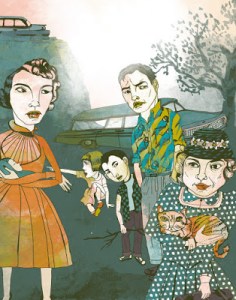
Good Man is Hard to FindI knew very little about Flannery O’Connor when this collection of short stories was recommended to me.  I knew that O’Connor was Irish Catholic, and that the stories were written in the mid-20th century.  Needless to say, as I finished the first story, which is also the namesake for my particular edition, I was completely taken aback.  “The person who suggested that I read this should have warned me!” I thought.  Like so many of the other stories in this article, it’s thrilling to read a gem so subversive that it still shocks nearly 70 years later.

As the story begins, we meet a family comprised of three young children, their mother and father, and the paternal grandmother.  Like many of O’Connor’s other writings, A Good Man is Hard to Find is set in the South, and as the family embarks on a road trip to Florida we learn that a murderer is on the loose by the nickname, “The Misfit.”   From start to finish, the grandmother is a pill.  She believes the past was best, children should be quiet, women should always be ladies, and her opinion is always right.  Basically, she’s the southern queen of unsolicited advice.  O’Connor is a master at tapping in on a personality type that annoys most people because they are in everyone’s lives in some form.  Because of that, we as readers are extended participants in this very long road trip.  In addition to being an expert character study, O’Connor takes us on a trip through 1940s/50s Georgia in the summer.  It’s hot and dusty with a killer on the loose.  They are alone on the road in a deserted part of the state where gas stations come only intermittently, setting a tone that leaves us unsure of our surroundings and insecure about the future.  As the trip goes on, the grandmother sends the family on a wild goose chase, seeking out physical proof of a misplaced memory.  This dirt detour sends the family into a downward spiral that puts them face to face with what the grandmother hoped to avoid from the outset–the Misfit.

At first read, A Good Man… could seem like nothing more than a story about an incredibly annoying grandmother and a gang of psychos.  However, this is one of those great stories that unfolds a multitude of onion-like layers that encompasses race, religion, class and poverty, region, crime, place in history, Civil Rights, and gender roles, amongst others.  However you choose to read this story, as one of good old-fashioned murder, or a story of murder inextricably bound with issues of class, race and religion, you are left with comparable sense of dread, and maybe just a hint of schadenfreude as the grandmother finally gets her lips zipped.

The Joy of FuneralsAlix Strauss
Alix Strauss

The Joy of Funerals differs from the other titles in this round-up because it is a collection of short stories that end up connecting in the end, which also packs a great ah-ha as the tales come into the final braid.  Similar to Strauss’ most current book, Based Upon Availability, each story is unique in its own right, and the culmination of all the interlaced stories is an extra cherry on top.

Each story is about how women, whether individually or in a group, deal with the grief they experience over the loss of a loved one in New York.  Strauss plunks us down smack dab into their lives by crafting mournful imagery and offering variety of well fleshed out characters.  Each character, in only a few pages, is described in such thorough detail that you feel like you not only really know them, but can completely empathize with what they are experiencing through their grief.  In one story, a woman burns a photograph of her husband and eats it on her breakfast cereal, and while reading it, you are eating the ashes with her–you can smell it, taste it and feel the loss as if you’ve been punched in the belly.  In another story, a woman’s behavior is so deceitful that it leaves the reader with a personal sense of betrayal, but also left me to unfortunately identify with the character’s insecurities.  To me, only a true master of art can make you identify with the flawed characters, al la the films Spring Breakers and Happiness.  Full disclosure, I found myself crying throughout the majority of the book because the stories are crafted in such a way that they strike the core of shared human experience with concern to love and loss.

Barbara GowdyWe So Seldom Look on Love
Barbara Gowdy

The short story collection, We So Seldom Look on Love is truly a forgotten treasure.  Reading it nearly seventeen years ago, it has remained implanted in my mind, and the physical book has stayed with me through every move of my life because of it.  The short story that I’d like to hopefully introduce you to, which is also the title for the book, is the reason why banned and challenged books are so important for the youth.  Decades ago, this creepy, gross and arguably offensive story exhilarated this gal as a fifteen-year-old and helped to make her the liberal bitch that she is today.

The story is told from the point-of-view of the main character as she reflects on her childhood as a blossoming necrophiliac and fast forwards to current day when she is publicly disgraced as her sexual proclivity becomes mainstream knowledge.  As a child, she realizes that her infatuation with dead animal corpses: the smell, the blood, their energy, et al, will prevent her from attracting and sustaining any form of friendship.  As she gets older, she accepts her sexual attraction to male corpses, admitting that she is unable to fall in love with any living man, and that plenty of corpses have broken her heart.  Naturally, she enters medical school as a means of gaining access to these potential and cadaverous love interests.  Though the idea of engaging in oral sex with dead tissue may seem unattractive to most of us, I give kudos to Gowdy for her character’s unflinching acceptance of her sexuality at so young of an age.  Teenage girls, and really, most women, have mixed emotions regarding their sexual bodies, and it’s refreshing to read about a young woman who doesn’t deny herself those inclinations.

The White CatJCOates
Joyce Carol Oates

The White Cat is one of those great stories where the plot may not be as it seems, and its interpretation can be fluid depending on its reader.  Ostensibly, we’re reading a tale about a WASP of a man, his younger wife, and their evil Persian cat, Miranda.  As we delve deeper into the mind of Julius Muir and his family life, the storyline thickens as we are fed bits of information that make Julius’ home life seem less than perfect, though he would have you think no other way.

It can be argued that the story is a portrait of the building and collapse, aka psychological break-down of the main character, Julius, and since much of it is from his point of view, it’s not exactly clear where the truth lies.  We are to believe that Miranda the cat is evil because of said evidence: “…as the cat grew older and more spoiled…it became evident that she did not…chose him.”  His subsequent reaction contains a crumb of hilarity as he reconciles that he will handle this situation by killing the cat because her ambivalence of him is an affront to this man who “knows who he is.”  Because Mr. Muir purchased the cat for his wife, he believes himself to be her sole master and therefore has the right to end her life since he brought her into being (at least into this own house).

As we read on, the facts become murky.  We wonder, what has happened for the past ten years?  There is no indication that their contemptuous relationship has built over the decade of co-habitation, and seems to be a relatively recent occurrence.  An occurrence that has also surfaced with the advent of his wife making more decisions independent of Julius, perhaps.  Is the quirky Persian evil, living to cause Mr. Muir a life of anguish?  Is he simply ignoring characteristics are inherent in the sometimes fickle feline species?  Or, is he attributing his wife’s human characteristics to his cat instead of facing up to his own troubled family life; a life that is seemingly so perfect in every way?


Part 2 can be viewed here

Stranger by the Book: A Year of Unknown Writing

In 2013, I completed a year-long project titled, My Year of Water in which I saved all excess water for a year.  Since then, I’ve been itching for another project, and it’s time to unveil!

This will be my project: beginning November 5, 2014 and ending on November 5, 2015, I will read one book per month that I’ve never read, wanted to read, and probably have never heard of.  Some of them will be awful, some wonderful (hopefully) and all will certainly leave me with something to say.  The end-result of this project will be to learn something about myself, and the world around me by reading books that I wouldn’t choose myself.

I aim to read 12 books, both fiction and non-fiction and will post every month to report on each one.  Doesn’t sound too challenging?  Let’s just hope that I don’t get stuck with any Ann Coulter or Joel Osteen–it’ll be hell for both of us.

The methodology regarding the selection of the books is still being teased out.  Given that I work in a library, one method is to randomly walk through the library, reach out, and there’s my book.  Not very scientific, but it would work, namely with the fiction.  The problem with this “method” is that I know the Dewey numbers for the non-fiction, and therefore would know what general section I’m pulling from.

Before this kicks off, I’d like to invite anyone to recommend a book(s) to me to add to my list of my unknown books; just complete the form below.

I look forward to your recommendations!

← Back

Thank you for your response. ✨


The Last Five Books

Wish You Were Here
Rita Mae Brown (1991)

This is the first in Rita Mae’s Mrs. Murphy mystery series, where a cat and dog can communicate amongst themselves, and help their human-mama, Mary “Harry” Haristeen solve murders in her small town of Crozet, Virginia.  Yes, this can be considered a “cozy mystery” due to its lack of sex and any real violence, but who needs it when you’ve got a sassy divorced cat, an independent, hard-working post mistress and an author who in real life is a kick-ass lesbian who infuses her characters with what is obviously her personal brass and love for all creatures, great and small.

Wish You Were Here

There’s More to Life Than This
Theresa Caputo (2013)

If you watch Long Island Medium on TLC, then you’re already picking up what she’s putting down.  Likewise, if you think that LIM Theresa Caputo is a fake, then obviously this book is not intended for you.  This writer is the former, and if you watch her show and consistently find yourself sobbing like you’re watching the end of Steel Magnolias during each episode, then you’ll love the book.  It’s extremely well written, rounded-out and thorough.  Even if you aren’t a believer in Theresa’s abilities to speak with spirits, angels and God, you have to give her respect for tackling subjects that may be seen as taboo, including abortion and reconciling her “gift” with being a Catholic.  It’s one of those books that you read to experience, rather than get to the end, and it reminded me of The Dude and the Zen Master because it offers tangible lessons on how to interact with one another more kindly.

There's More to Life Than This

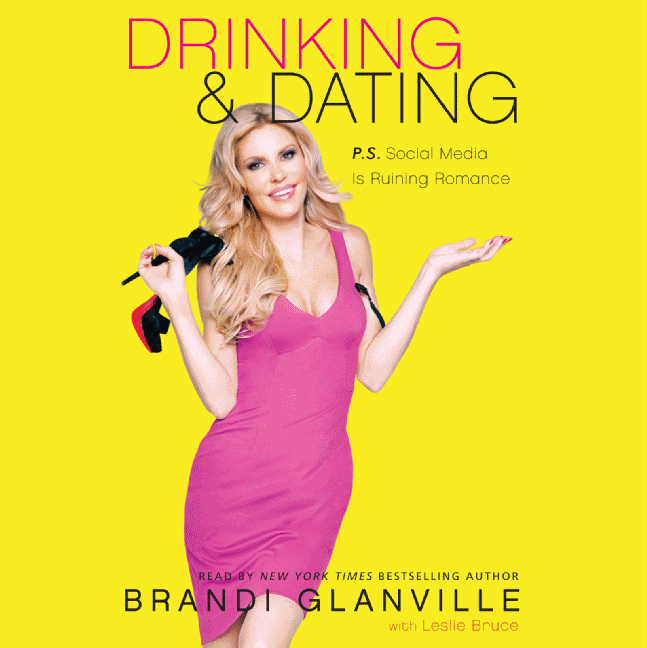
Drinking and Dating
Brandi Glanville (2014)

Drinking and Dating by Real Housewife of Beverly Hills Brandi Glanville may not stand the test of time in the annals of canonical dating tomes, but is a perfect example of a piece of pop culture that is here and now, and it’s completely entertaining.  The book stations the reader as that proverbial fly on the wall and lets us see all of her sexual escapades.  You can read this book several ways: you can get a kick out of her blatant enjoyment of sex, you can leave feeling bad about your own sex life, or you can let Brandi’s experiences empower you to get a little risque in your own bedroom–or top of your car.

Drinking and Dating

It’s audience is exclusively for fans of the Real Housewives franchise and when the Housewives have ended, most likely so will the popularity of this book.  But, like spending lots of money on wine, or eating a delicious doughnut, some things you can just enjoy for the moment, knowing that they are fleeting.  Such is Drinking and Dating.

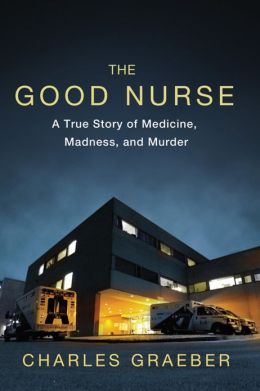
The Good Nurse
Charles Graeber (2013)

This is the unbelievable and completely shocking true story of Charles Cullen, ICU nurse who for over a decade (during the 1990s and 2000s) worked at a plethora of hospitals in New Jersey and on the east coast killing hundreds of patients.  His method was quietly delving out lethal doses and improperly mixing medications.  Throughout his spree, he was let go of at least five hospitals for suspicious patient deaths, and up until his final arrest was dubiously sent off with stellar references.  Given the heinous nature of the story in and of itself, the author lets the facts do the talking while he organizes them in a cohesive manner, and narrates in a careful and respectful manner.  It follows in the traditions of In Cold Blood, Helter Skelter and Manhunt where the author weaves a true story like a piece of fiction.

Good Nurse

Anne of Green Gables
L.M. Montgomery (1908)

“The more things change, the more they stay the same” should be an alternate title for Anne of Green Gables, which was written over 100 years ago.  The reason this book has stood the test of time is because Montgomery was able to extract the steadfast nuances of human nature, making it seem as though it could have been written yesterday.

 Throughout the novel, Montgomery shines a light on gender inequality and via the actions, conversations and internal monologues of her characters she subverts gender roles during a time when it was definitely prohibitive.  Some examples include Marilla Cuthbert (who adopts Anne) living with her brother as an unmarried woman; Anne discussing women’s suffrage in Prince Edward Island when women were decades away from the right to vote; Anne, educated, opinionated and chatty, puts her own education at the forefront of her focus instead of concentrating on men and getting married; and though debatable, one could possibly argue the plausibility of Matthew Cuthbert’s (homo)sexuality.

Anne of Green Gables

Pretty racy for 1908, huh?

Exploring Feminisms’ Top 10 Books of 2013

It may seem unusual that not every book on Exploring Feminisms’ top 10 list of 2013 was published in 2013, but some are just so timelessly fantastic that they deserve to be kept on our socially conscious radar.

1. Rubyfruit JungleRubyfruit Jungle
Rita Mae Brown (1973)

2013 is Rubyfruit Jungle’s 30 year publishing anniversary and because it’s just so damn good, it makes #1.  While reading Rubyfruit Jungle, I couldn’t help but think of the 19th century novel The Awakening by Kate Chopin: down to earth, subversive-by-nature female lead characters who challenge social norms in times where women received the short end of the stick (even more than now, one could argue).  RJ details the life of Molly Bolt as a child in the south through young adulthood as she moves to New York, and we follow her journey as a blossoming lesbian.  She is a rough and tumble character, and the book is filled with hilarious and brutally honest thoughts on womanhood, the life of a wife, and lesbian stereotypes.  Completely entertaining and thought-provoking.

2. The Dude and the Zen MasterDudeandtheZenMaster
Jeff Bridges and Bernie Glassman (2013)

The true testament to any great piece of art is its permeability and stickiness-does it get it and stay in?  Having read The Dude and the Zen Master in June of 2013 and even in the swirling catalog of my own brain, I still often think back to the novel-long conversation between actor Jeff Bridges and Jewish Zen Master, Bernie Glassman, where they discuss the art of living a more meaningful life. There are times when I feel Sartre’s timeless words, “hell is other people,” were written just to describe my plight in life, and it is especially during those times that I can easily manifest the Dude’s Zen teachings.  The manner in which the authors communicate coping mechanisms has saturated so thoroughly that I often find myself imagining my many enemies in clown noses, leaving the often imagined assaults on my character disarmed.

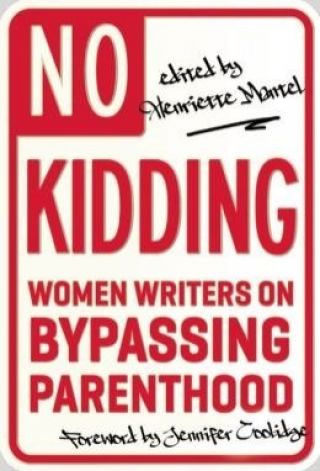
3. No Kidding: Women Writers on Bypassing ParenthoodNo Kidding
ed. Henriette Mantel (2013)

It takes a lot of gumption for a woman to make the conscious choice to not have children, especially in a world where childless women continue to be looked upon with suspicion.  The writers in this collection consist of a group of women with diverse life experiences, all of which have shaped their views on “bypassing” biological motherhood.  They share their varied stories as to why they chose, or life chose for them, not to have children.   Because of the plethora of viewpoints, the reader really gets the full gamut of opinions, thereby neither damning nor exalting child rearing.  This book wouldn’t be called food for thought, but rather feast  for the heart.  No Kidding is filled with comedy, tragedy, wit and even some schadenfreude to keep you on your toes.

4. If It’s Not One Thing, It’s Your MotherIf It's Not One Thing
Julia Sweeney (2013)

Being a parent only to two cats and not an actual human baby, there was some hesitation to pick up this book.  Reading a lecture about how wonderful parenting is and those adorable trials and tribulations of raising a child and how those without children couldn’t possibly even begin to understand…it just didn’t seem appealing.

Luckily, this book isn’t about any of that.  What this book is about is insight and the threads that connect us all by inevitable shared life experiences. We all have families who actually annoy us; we date, we break up; we knit actual and proverbial sweaters as proof of our love; we face stereotypes, either our own or others; we eat cupcakes or candy bars and then feel eater’s remorse, thus perpetuating the cycle of how no one will ever love us because we are fat and ugly, et al.  Sweeney, by describing what is probably a sprinkling of her major life moments, has an amazing gift to pull out the teensiest emotion or observation and tease it out into something that we can all recognize as being personal in our own lives.  I often found myself stopping and thinking, “That’s how I feel!  How come I’ve never thought about that?”  Plus, the appeal of this book could be attractive to many audiences.  Have a kid?  Bam!  This book is for you.  Have a mother?  Bam!  This book is for you.  Are you a sentient being?  Bam!  This book is for you.

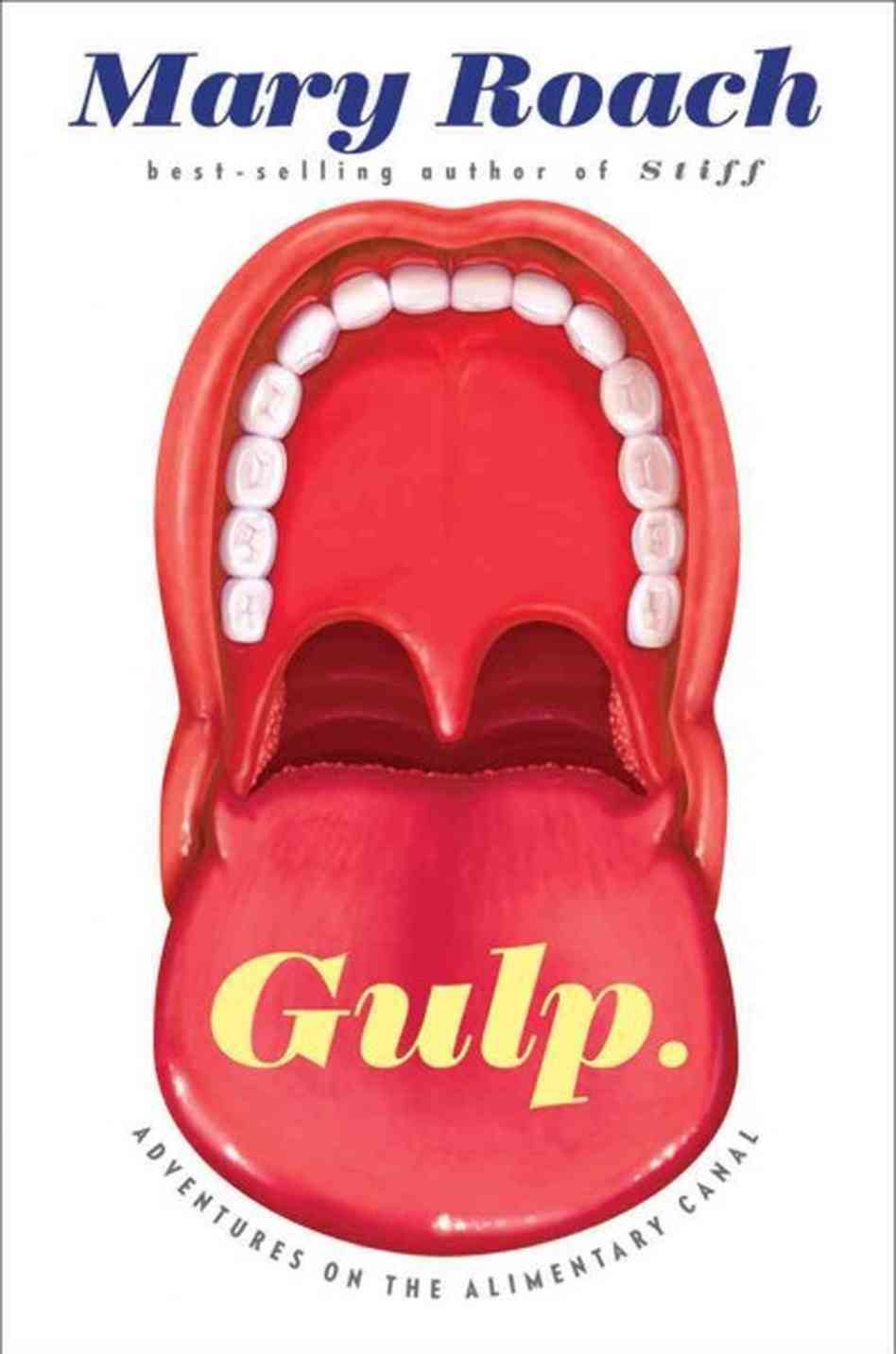
5. GulpGulp
Mary Roach (2013)

Gulp is about the digestive system, from start (mouth) to finish (guts, and then you can guess).  Why would you want to read about the digestive system, you may ask?  Because she goes in deep: smelling and tasting what we cringe to even read about and relates it back with humor and tact.  In essence, she skins herself for us, the reader, by diving into the world of cat food sampling, Elvis’ mega colon and a thoroughly gripping description of the nose/tongue connection. Roach chooses a topic, researches it, and pulls out the most interesting parts; in essence, she does the dirty work for us, while keeping the gross-out factor completely classy.

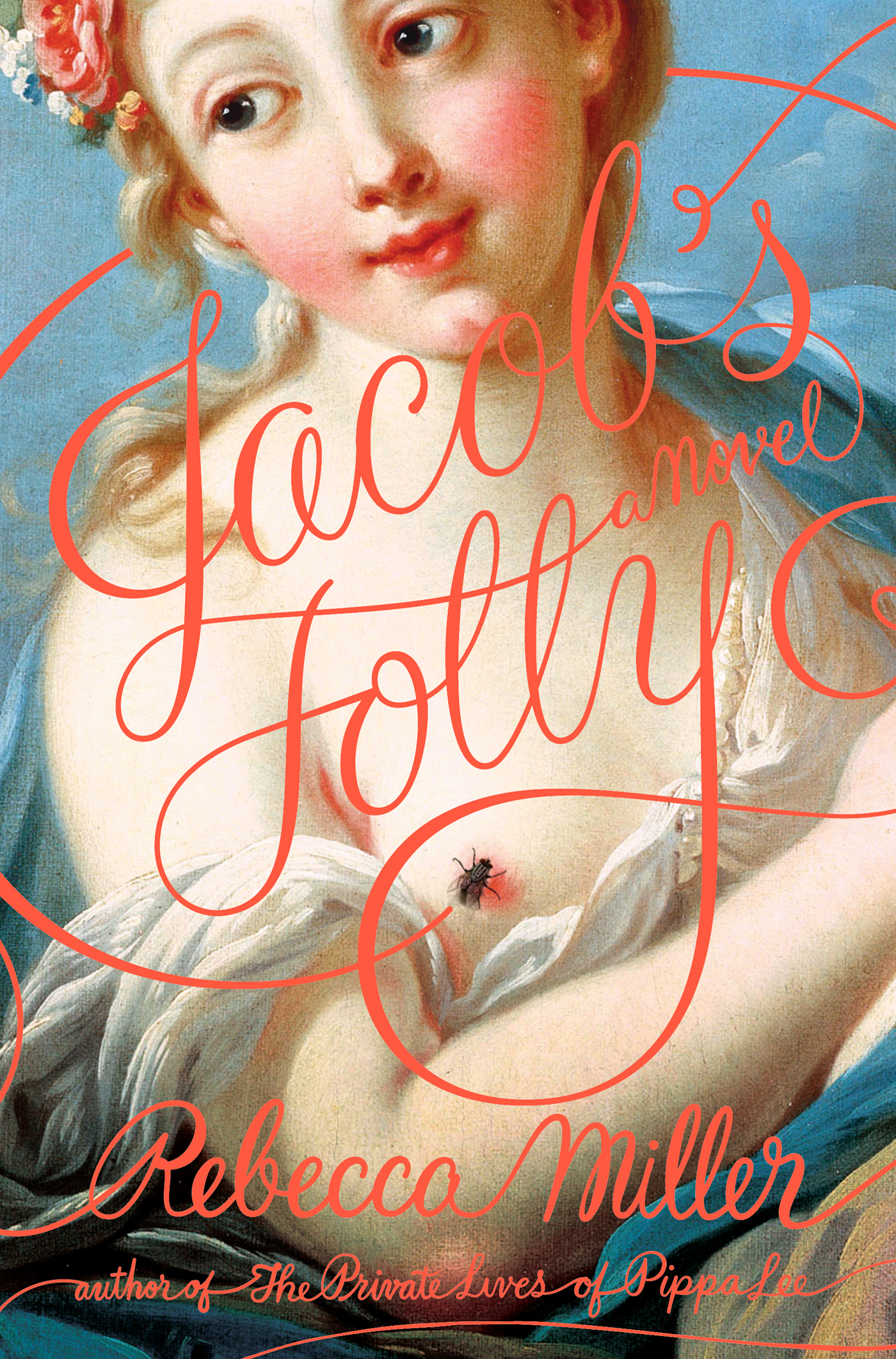
6. Jacob’s FollyRebeccaMiller
Rebecca Miller (2013)

The premise of Rebecca Miller’s third book is truly original: a Hasidic Jew, born in the 1700s, is reincarnated as a fly in current day America who has the power to control the minds of humans.  The story see-saws between his current day observations in the U.S. as a winged insect and his life as an 18th century Parisian.  Miller, who has in the past done a magnificent job of writing and directing from varied female perspectives, takes a stab at writing from the male perspective.  Her observations from the masculine gender’s point of view are entertaining, tawdry, and scintillating, thereby ever-changing your feelings towards the narrator.  While reading, I was sometimes appalled by the hyper-sexualized inner-workings of the main character, and as many of my male friends have informed me, her insight in the male psyche is not so far off, which is both engaging and gross.

In all, JF is a fun book with an amusing storyline that paints some interesting portraits of Hasidic communities, 18th century Europe, and of what many men are usually thinking.  Excuse me as I reach for a full body condom.

7. It’s Not Really About the Hair: The Honest Truth About Life, Love and the Business of BeautyTabatha Coffey
Tabatha Coffey (2011)

I really don’t like to accept advice from those who haven’t been through some shit in life, and Tabatha Coffey, she’s been through some shit. She grew up in Australian strip clubs worked by transgender dancers, her father left her and her mother in the most heinous manner, she was an overweight child who endured the torture that only other children can deal out, and like many of our gay and lesbian brothers and sisters, had to endure a little piece of hell while coming out to her family.  Given all of this, she’s surfaced on the other end as a successful business woman who has a firm grasp on what she wants and who she is.  Much like Julia Sweeney’s book, Coffey has taken a fine tooth comb to her life and has given us a guide on how to empower ourselves so that we can live a more authentic life.

8. Woman Rebel: The Margaret Sanger StoryWoman Rebel
Peter Bagge (2013)

With my formal Women’s and Gender Studies lessons years behind, I find it necessary to take additional strides to keep feminist fundamentals close at hand, especially if my work or home environment may be somewhat lacking from time to time.  Woman Rebel: The Margaret Sanger Story is an amusing graphic novel that highlights the more monumental and even titillating details of the life of the Planned Parenthood founder.  Thanks to writer and illustrator Peter Bagge, Sanger is presented to us as a real person, though in graphic novel form, by illustrating (pun intended) such enumerations as her famous sexual escapades, to her more unflattering personality prejudices.  In turn, we are reminded that extraordinary people who accomplish extraordinary feats often embody a sliver of the ordinary, sometimes making our own extraordinary feats seem tangible after all.

9. The Last Girlfriend on Earththe-last-girlfriend-on-earth-by-simon-rich
Simon Rich (2013)

It’s so rare that one comes across a book that can only be described as truly original, and after reading a plethora of books over the past year, The Last Girlfriend on Earth remains steadfast as one of the most original books that I’ve read.  It’s short stories are sweet, simple, surprising, and don’t take themselves too seriously, which is especially refreshing in a world where many authors neglect to relate any sort of elasticity and fun.  I mean really, what other books have you read lately that make you sympathize with a sad condom?

10. Ocean at the End of the Lane
Neil Gaiman (2013)

Ocean at the End of the LaneNeil Gaiman is a man who communicates his respect for women through his stories, and in this case, by dreaming up a cosmically strong lineage of three women (grandmother, mother and daughter) whose bond with each other spans time and space.  The three woman, along with a little English boy, fight an evil witch-woman in a small English town.  This book is beautifully written, a quick read and a great primer for any Gaiman novices.

The Last Five Books

It’s Not Really About the Hair: The Honest Truth about Life, Love, and the Business of Beauty
by Tabatha Coffey

There are few modern day Bibles that are published today, one of them being Tim Gunn’s book, Gunn’s Golden Rules, and hairdresser, entrepreneur, TV celebrity, and really, goddess, Tabatha Coffey’s book earns a way onto the bookshelf, next Mr. Gunn’s.  Tabatha’s insight into personal growth, loving others and yourself is truly insightful.  Yes, she is a television personality and a celebrity, but unlike so many celebrities today who earn their stardom through their family lineage or their plump posteriors, Coffey has earned her recognition because she is full of sass and moxie, makes pragmatic life decisions and truly respects herself.  Her philosophy is honest, down to earth, and she preaches complete self-acceptance.  True, easier said than done, but she has the amazing gift to make it seem as if she’s holding your hand throughout the book, encouraging you to live an authentic life.

Tabatha Coffey

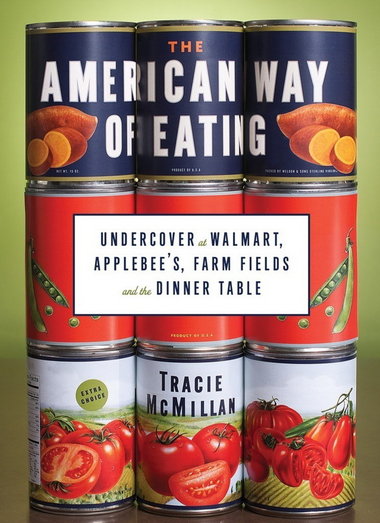
The American Way of Eating
by Tracie McMillan

Journalist McMillan goes undercover from west to east as she picks produce with Latino (il)legal immigrants, works at a Walmart in Detroit, and finally an Applebee’s in New York to see where our food comes from, and how it is disseminated to the public at places whose mission is to deliver mass amounts at a low cost.  What she experiences is truly eye opening; whether you are pro or con immigration, what she hears and sees firsthand regarding how immigrant workers are treated, i.e. dying from heat exposure from picking Charles Shaw aka “Two Buck Chuck” grapes, can’t help but make you feel a little queasy buying garlic from the grocery store.  Her undercover examination of where our food comes from, how it is harvested, and the costs to those who are on the front lines makes you question everything that you put in your mouth.

AmericanWayofEating

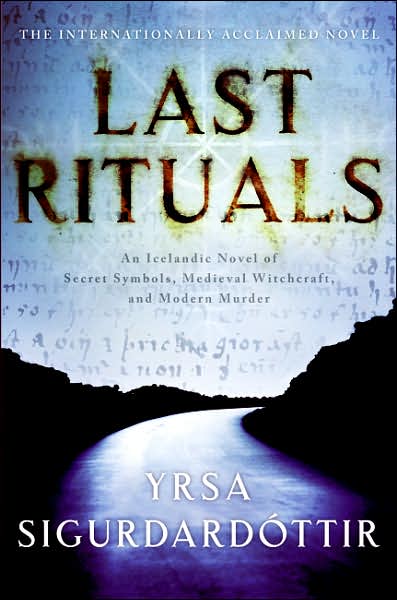
Last Rituals
by Yrsa Sigurðardóttir

Last Rituals is the first in a series by Icelandic writer Sigurðardóttir that pulls together mystery, witchcraft, and a little bit of lovin’.  Main character, Thora Gudmundsdóttir, is single-mother and lawyer turned amateur private investigator with two children who has been created by Sigurðardóttir with restraint and wit.  If you’ve ever been to Iceland or its capitol Reykjavik, you’ll be transported back to the chilly country as you walk the streets with Thora as she investigates murder and explores the world of Icelandic witchcraft and folklore.

Last Rituals

Manhunt: the 12 Day Hunt for Lincoln’s Killer
by James L. Swanson

Let me begin by saying that I completely abhor dates, facts and especially, lineage.  Not only do my eyes glaze over with boredom, but the thought of reading a book filled with all of these makes the thought of cleaning my toilet seem really attractive.

However, thanks to James J. Swanson’s fresh writing style, we are saved from rubber-gloved servitude this time.  Swanson gives us dates, times, historical detail and characters, but does it in a way that is written more like fiction.  And though everything in the book is 100% fact, he details what the killers most likely saw, felt and smelled.  He describes relationships and friendships, disagreements and love all with such candid detail that it feels as if you are living the story firsthand.

Manhunt

No Kidding: Women Writers on Bypassing Parenthood
edited by Henriette Mantel

A group of women with diverse experiences share their varied stories as to why they chose, or life chose for them, not to have children.  This book wouldn’t be called food for thought, but rather feast  for the heart.  Filled with comedy, tragedy, wit and even some schadenfreude, this book left me completely satisfied from beginning to end.  The real tragedy about this book is not that all of these women haven’t had children, but that most of them have left us with a lack of further writing to latch onto now that the book is over.

No Kidding

The Last Five Books

The Dude and the Zen Master
Jeff Bridges and Bernie Glassman (2013)

The Dude and the Zen Master is the transcription of a conversation between actor Jeff Bridges and Jewish Zen Master Bernie Glassman on their life experiences, and how we should all strive to be more relaxed like “The Dude,” the main character in the Coen Brothers’ film, The Big Lebowski.  The two men offer very different perspectives based on their professions, which lends the perfect balance.  The book is filled with easy to absorb, practical examples that can be practiced on the spot during tough situations throughout life and work.

DudeandtheZenMaster

It
Stephen King (1986)

I listened to It on audiobook for 44 hours.  Yes, 44 hours.  If you’ve never read Stephen King, his writing is extremely descriptive; It goes on and on, chock-full of vivid, minute details.  King’s style is also written from a very male, masculine point of view.  The descriptions are told through the voice of someone who obviously idolized his boyhood youth and all of the experiences therein–a lack of sexual insight, friendships in youth, silly and base teenage boy insults, et al.

All in all, if you are a reader to who craves an intricate portrait of a community, mixed with a killer clown alien, then this book is for you.  However, if you are someone who often finds yourself skipping pages when said author puts the phrase ad nauseum to shame, then pass this one up.

IT

Ocean at the End of the Lane
Neil Gaiman (2013)

A cosmically strong lineage of three women (grandmother, mother and daughter), along with a little English boy, fight an evil witch-woman in a small English town.  This book is beautifully written, a quick read, and the way in which Gaiman describes the home life of the female characters makes you want to live with them and eat their homemade jam.

Ocean at the End of the Lane

Rubyfruit Jungle
Rita Mae Brown (1973)

While reading Rubyfruit Jungle, I couldn’t help but think of 19th century novel The Awakening by Kate Chopin; honest female lead characters who challenge social norms in times where women received the short end of the stick (even more than now, one could argue).  RJ details the life of Molly Bolt as a child in the south through young adulthood as she moves to New York, and we follow her journey as a blossoming lesbian.  She is a rough and tumble character, and the book is filled with hilarious and brutally honest thoughts on womanhood, the life of a wife, and lesbian stereotypes.  I haven’t read a book this entertaining and thought-provoking in a long time.

Rubyfruit Jungle

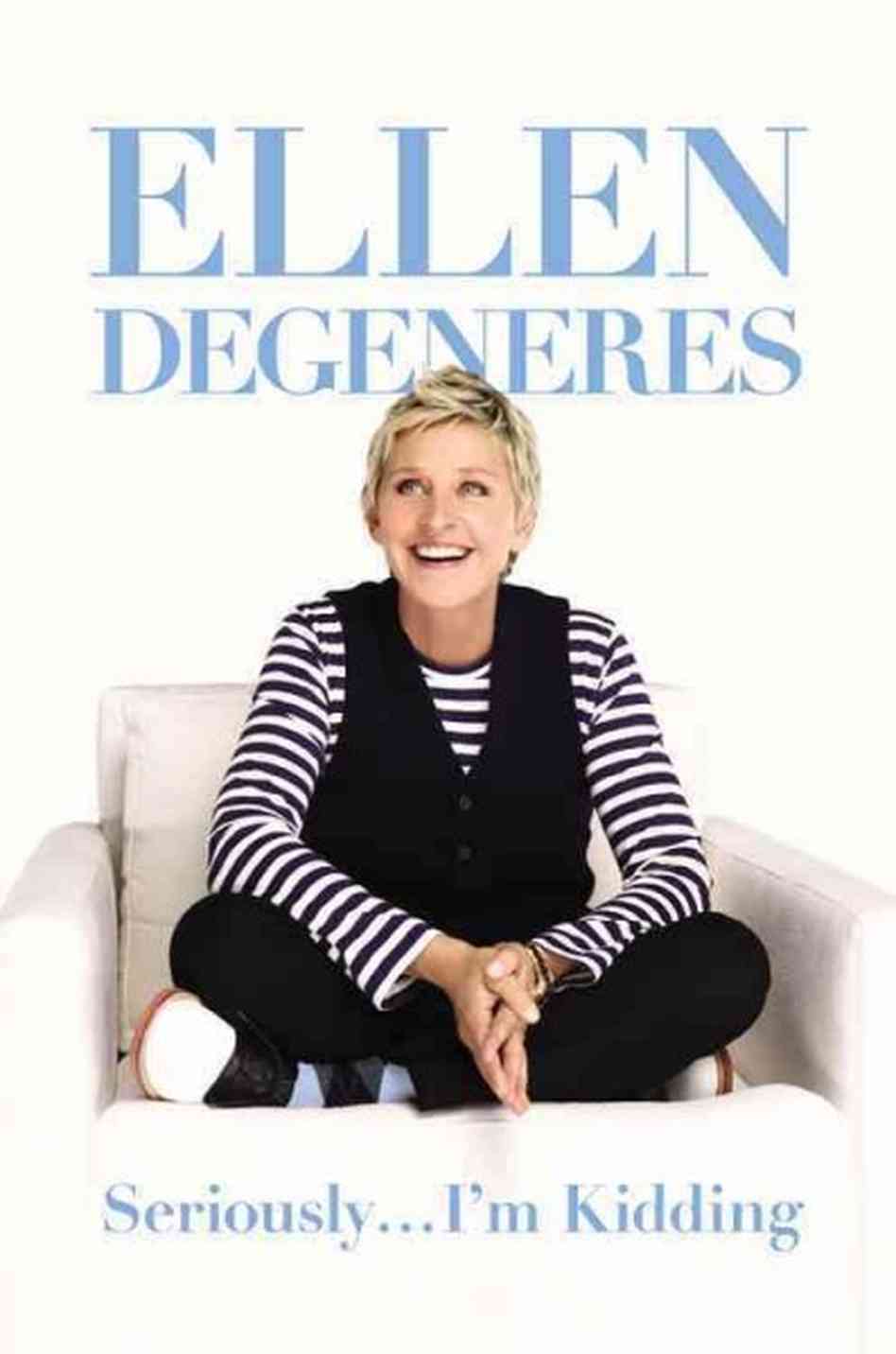
Seriously…I’m Kidding
Ellen DeGeneres (2011)

You can read this book in about 3-4 hours, and one could compare it to the likes of a more airy Bossypants by Tina Fey.  DeGeneres shares almost stream of consciousness tips and life experience on lofty subjects such as gardens and dinner parties.  Luckily, there are a few leftist niblets to keep the average liberal reader interested, such as a shout out to female inventors and addressing her sexual orientation, thereby fighting the good fight to normalize same-sex relationships in American culture.

Seriously...I'm Kidding

The Last Five Books

Gulp
Mary Roach (2013)

I first read Mary Roach’s work when I came across her first book, Stiff: The Curious Lives of Human Cadavers.  Since then, she’s written a number of non-fiction, research based books and Gulp: Adventures on the Alimentary Canal continues to live up to her tried and true style of putting herself out there, essentially skinning herself for us, the reader, and relating it back with humor and tact.  Let me explain.

Gulp

Gulp is about the digestive system, from start (mouth) to finish (guts, and then you can guess).  She goes in deep, smelling and tasting what we cringe to even read about, such as cat food in its many flavors, to interviewing Elvis’ doctor and an examination of his little known “mega colon.”

Roach chooses a topic, researches it, and pulls out the most interesting parts; in essence, she does the dirty work for us, while keeping the gross-out factor classy.

Every House is Haunted
Ian Rogers (2012)

Pun not necessarily intended, each story leaves you feeling haunted.  At the end of each tale, Rogers leaves you in want of each one to be a full novel because the characters and stories are so intriguing. He takes the essence out of a full length novel and gives you just the exciting parts through the short story format. Highly recommended to anyone who likes quirky short stories with a bit of an edge, and fans of Neil Gaiman.

Boy Eating

The Last Girlfriend on Earth
Simon Rich (2013)

Saturday Night Live writer and son of New York Times columnist Frank Rich, Simon Rich writes witty, extremely amusing and poignant stories.  I’ve never read a story where someone can make the life from the point of view of a condom seem poetic.

the-last-girlfriend-on-earth-by-simon-rich

Jurassic Park by Michael Crichton (1990)

I am a huge fan of reading a book, watching the movie, and comparing the two.  I find that when people ask, which is better, the film or the novel, it is an impossibility to offer a straight forward answer because they are two completely different mediums.  One is visual, and the other is cognitive.  You can’t watch a movie and know a character’s internal monologue, nor can you recreate the soundtrack of a film that gives a movie its energy.

Jurassic Park as a book, when compared to the film, makes more sense, and the characters possess a lot more integrity.  Though as far as comparison goes, you can compare the lightness of the content; the book is a beach read as much as the movie is an entertaining film without any real depth.

JurassicParkBook

NOS4A2 by Joe Hill (2013)

Joe Hill’s (son of Stephen King-hey, I’m sure it’ll help sell more books) fourth book and third novel has proven him to be one of the contemporary horror writing greats.  Though not in a strict Bram Stoker sense, NOS4A2 is about a Nosferatu of sorts who drives a bad-ass car and loves Christmas.

Joe Hill (compared to the likes of Steve Martin) writes surprisingly well from a female point of view and resists the all too popular urge to write about sex from a woman’s point of view though really coming from a supposing man’s point of view.

NOS4A2