|
Don’t Be Afraid of the Dark
This “dialogue review” of Don’t Be Afraid of the Dark is a joint-venture of Exploring Feminisms and my spouse Michael’s film studies blog White City Cinema. He Said/She Said will be a semi-regular feature on both our sites. MGS: Don’t Be Afraid of the Dark was written and produced by our old buddy Guillermo del Toro but was directed by comic artist Troy Nixey. My first question to you is to what extent do you think it can be classified as a “Guillermo del Toro film”? In other words, where do you see GDT’s fingerprints on it and what do you think Nixey brings to the table? Also, how do you think the film might have been different had GDT actually directed it? JM: Great question, and yes, I definitely do see GDT’s influence in this film, and that’s probably why I stuck it out for the while hour and a half. The first GDT calling card that stood out was featuring a child as the main character (Pan’s Labyrinth, The Devil’s Backbone and even possibly Geometria) and, further, telling the story through a child’s eyes. The difference between this film and his others is that with this film one of the adults begins to buy into the child’s fantastical story whereas in GDT’s own films the fantastical elements are usually exclusive to the child characters. A second aspect where I noticed GDT’s trademark – the creatures. The creature being a tooth fairy in Don’t be Afraid… is a direct throwback to the tooth fairies in Hellboy II. I know that we’ve talked about this many times, Mike, but to reiterate, GDT is in love with his monsters and makes them sympathetic (at least I know that we find them to be so), and in this film I don’t side with his monsters at all. One last GDT influence that I noticed was the blending of the child’s world (whether made up in his/her own mind or not) and the natural world. In this film, there’s a scene where Sally walks into a garden full of falling snow, but the snow almost seems to be floating around her. This is very reminiscent of the scene in Pan’s Labyrinth where Ofelia explores the labyrinth. As for what Nixey brings, I think that answer can be summed up in one word: Hollywood. GDT brings in actors who are good for the part, not for their name (besides Ron Perlman). I am a fan of Guy Pearce but the film seemed beefed up with him and Holmes to make up for a bland and formulaic storyline, though I will say that the little girl who played Sally was great and I appreciated that she didn’t look like the typical American female child star. What kept me interested throughout the film was to seek out and identify those glimpses of GDT but having seen all of his movies, including Blade II, I feel that the overall direction of this film lacks the heart of a GDT project. To answer your last question, I think that I’ve pretty much described what this film would be had he directed it but again there would have been more care paid to his creature-characters and more of a focus on quality as opposed to quantity – that is, the quantity of big name actors.
MGS: I agree that Guy Pearce was wasted. He should be getting the kind of roles that Brad Pitt, Viggo Mortenson and, now, Michael Fassbender are playing. He is just too good for this kind of thankless, one-note role. The Katie Holmes part had more substance but I couldn’t see past the “Katie Holmes-ness” of her performance, if you know what I mean. You raise an excellent point about the creatures being more sympathetic in GDT’s own films. I suspect the fact that they aren’t depicted that way in this movie is one of the reasons he decided not to direct it himself and farmed it out to someone else instead. I don’t think he is capable of making a monster movie that doesn’t express a love of monsters! Also, it seems like GDT isn’t really interested in making “pure” horror films. The Devil’s Backbone and Pan’s Labyrinth mix horror with the melodrama and war film genres and also have a lot of interesting things to say about history, politics, fascism and moral choices. Don’t Be Afraid of the Dark on the other hand is just a simple ghost story – a kind of Pan’s Labyritnth-lite. Speaking of the differences between del Toro and Nixey, something that bothered me about the visual style of this movie was the extensive use of moving camera. GDT loves to have frequent but subtle camera movements in his own movies; I think this lends them a sense of creeping dread and the feeling that he’s depicting a world off-balance. But Nixey’s use of elaborate crane shots was overkill. The camera was constantly swooping around the rooms of that mansion in such dramatic fashion that the movement ended up quickly losing its effectiveness. But I would also like to say a few words in favor of the movie (I do after all think it’s slightly above average for a contemporary Hollywood horror film.) As you mentioned, Bailee Madison gives an exceptionally good performance as Sally. She conjures up and sustains extreme emotional states, such as terror and depression (as opposed to merely looking sad or scared), which child actors aren’t often asked to do, and she’s always believable. I also found the set design of the house impressively spooky. Finally, I would argue the best way to measure the success of any horror movie is in the effectiveness of its scares. I counted two good ones here: the opening scene where Mr. Blackwell obtains the teeth and the scene where Sally finds the monster under the covers of her bed. Anything else you’d like to add? JM: If I were to say anything in this film’s favor, it would be that GDT worked on it. Haha, only semi-kidding. But seriously, I did like Guy Pearce, though he wasn’t as sexy as he was in Ravenous. MGS: Since you write a feminist blog I would like to know if you think Don’t Be Afraid of the Dark, which centers on the relationship between two female characters, lends itself in any way to a feminist reading. JM: Well let me just remind you that there are many feminisms, and I don’t claim to have the definitive answer. I just have my answer. That being said, I do find it to be a little tiresome that the female adult character (played by Katie Holmes) is the one who begins to believe Sally and her character is emotional and nurturing, even though she doesn’t have a child of her own. The male adult character (Guy Pearce) is pragmatic and reasonable, and even though he is Sally’s father, he doesn’t believe her that there are little killer monsters in the basement. Though I hesitate to discuss too much about what this film isn’t, I will say that it would be refreshing to see the male character/father sensitive to his child’s needs. I think it plays too much off of the stereotype that the female characters are inherently mother-like and are more susceptible to accepting the world of the fantastic. In Devil’s Backbone, for example, GDT subverts this normative gender assumption by making Dr. Casares, the elderly male teacher, emotionally available to his students and he himself buys into magical theories. MGS: Good point. You also just reminded me of the refreshingly original and touching relationship in Cronos between the little girl and her vampire grandfather. Del Toro’s own movies always have those unique touches that make them so endearing and put them in a league of their own. I had a lot of fun doing this. We should do it again sometime with a movie we totally disagree on! JM: Like the sex/rape scene in A History of Violence? We’ll keep those worms canned up for now.
|


Cat People
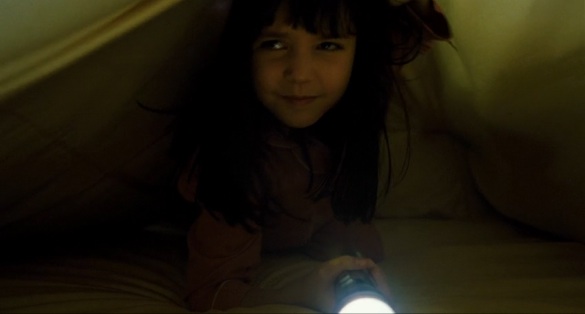
Sometimes described as a “B-Movie” because of its low budget, I would argue that Jacques Tourner’s Cat People (1942) transcends the genre of the low quality, often ridiculous and hokey films that most times are associated with those on a budget.
Basically, the story is one of a young Serbian woman named Irena who fears that when she becomes immensely jealous, angry, or kisses a man, she becomes a black cat and attacks the offending party, whether male or female. Any day of the week she can be found at the local zoo’s panther cage, sketching the cats with large swords being stabbed through them. Irena, hating and rejecting her ability to transform draws the sword in a literal hope that the cat part of her will be slain (why she wouldn’t want to embrace this awesome power is beyond me). During one her daily sketch sessions, local mapmaker Oliver is intrigued by her beauty and pursues her, later stating that though he did not love her, he was drawn and intrigued by her.
The two quickly get hitched and are married for several months without even the hint of physical activity, including kissing on down. Irena fears the transformation into her powerful cat self and I’d venture to bet that this is a metaphor for the fear of female sexuality, both from a male’s point of view and also the taboo of women having and recognizing their own sexual urges.
As time rolls on, Oliver becomes increasingly frustrated by Irena’s lack of physical affection–although Irena is upfront with him from the beginning that she needs time and he assures her that she can have all the time in the world. Unfortunately for Irena, to Oliver “all the time in the world” translates to a few mere months before he finds himself in the embrace of a female co-worker, with whom he quickly leaves Irena for.
But let’s not argue that little Ollie didn’t try to salvage the marriage, he did after all send her to a male shrink to “cure” her irrational fantasies. Her therapist, Dr. Judd believes that Irena can be cured by kissing her against her will and as a result she becomes a cat, and in this case I’d wager more of a defense mechanism and kills him. And why shouldn’t she defend herself when forced upon by her doctor? Though this film was written, directed and produced by men who probably weren’t attending any feminist rallies, this revenge fantasy does resonate with my blood lust for attackers and rapists, which is essentially what this doctor was.
While watching the somewhat incestuous relationship between Irena, Doc Judd and her husband Oliver, I kept thinking that I had seen this scenario before. And then it hit me–The Yellow Wallpaper, the short story by Charlotte Perkins Gilman! It almost seems verbatim–a woman who is deemed by her husband too high strung and emotional and is physically and/or emotionally locked up from society (in the short story’s version in a child’s room). In both stories, the female lead is patronized by her husband and doctor, who discuss “the patient” amongst each other while skipping over the middleperson–the patient herself. Both women’s cures are discussed and prescribed, and the medicine is the inhibition of personal expression and/or creativity. Again, I think it is safe to call both of these scenarios fairly textbook–that women’s bodies and minds need to be analyzed, explored, controlled and cured.
 Another point of note that struck me while watching is the idea of the “other,” which Irena inherently is as she is not only a woman, but foreign to New York. And why wouldn’t a foreigner have a family history of crazed, emotional women who turn into killer cats because of some sort of Turkish curse or something of the like? Because Irena is “other” to the main characters, she is mysterious, deadly and comes from uncivilized and archaic roots. Even the American female lead, when juxtaposed to Irena’s outlandish story is portrayed as rational and believable, even when she indulges in fanciful, irrational stories.
Though I probably wouldn’t describe Cat People as a feminist film per se, I would say it can be analyzed with a feminist lens, especially as a cultural artifact of the 1940s. Through it all though, and even though she was the villain, I sided with Irena and for the first time ever, I sided with the bad guy, or in this case, bad gal. What can I say? She’s one tough pussy.
Being Their Own Women: Self Discovery & Independence in Women’s Personal Lives

Set in the late 19th century, The Awakening spans two pivotal seasons in Edna Pontellier’s life as a young wife and mother. Having never felt truly alive during the entire span of her life, Edna “awakens” during a summer of spiritual liberation, leading her to reflect on her life as someone’s wife and mother. The story results in a woman who subverts the conventions of her time by defying filial and maternal expectations by focusing on her life as her own woman.
Personal Velocity
by Rebecca Miller

Miller’s book consists of seven short stories that describe the lives of seven very different women. They are bound by their grit, strength, incredible struggles, and their will to survive amidst their personal tribulations. Despite each of their uphill struggles, each character finds solace the minute details of life uses that to persevere in their own ways, revealing the complexity of women’s reaction to struggle.
A Spy in the House of Love
by Anais Nin

In this semi-autobiographic work, the lead female character, Sabina, struggles to develop her sexual and artistic expression. This work is known for its erotic language and strong themes of a relationship with the self and passion.
The Story of Avis
by Elizabeth Stuart Phelps

Avis is an artist who decides to marry who she thinks is a “modern man,” believing (and being led to believe) that once married she can continue to express her creative self. However, the traditional gender roles that suppress(ed) women and elevate men take their hold over Avis’ artistic expression.
Orlando
by Virginia Woolf
by Virginia Woolf

Born as a man, Orlando transforms into a woman as (s)he lives over several centuries, experiencing the gamut of gender norms, restrictions and suppositions that are forced on men and women. Seeing the treatment of Orlando as both a man and a woman by society, though (s)he is the same person, highlights the inequities that both men and women have faced throughout the ages.
The Bell Jar
by Sylvia Plath

Though sold as fiction, The Bell Jar is an autobiographical account of Esther (some argue Plath), a young woman working for a summer as an employee of a major magazine away from home. There, Esther suffers a mental breakdown, and the reader is taken down with her into the depths of her insanity, so much though that it is difficult to distinguish insanity from reality.
Nightwood
by Djuna Barnes

Taking place in Paris, Nightwood tells the story of two women romantically involved and the deterioration of their relationship. This novel highlights both hetero-sexual and lesbian relationships that are expressed through dark, thick and lyrical language.
Selected Writings of Gertrude Stein
by Gertrude Stein
by Gertrude Stein

This collection features non-fiction essays, anecdotes and fictional stories about Stein’s female partner, and artists of the day. This book is a perfect sampling of Stein’s well-known fragmented and unique writing style. It also features the well-known short story “Miss Furr and Miss Skeene,” who we assume to be two romantically linked women who strive for their own fulfillment in life and relationships.
HERmione
by H.D. (Hilda Doolittle)

Perhaps the most obscure of all her titles, this autobiographical account and coming of age story, written by Hilda Doolittle, commonly known as H.D., details her unsure and tumultuous life during her twenties at Bryn Mawr. H.D., known in the book as Hermione Gart, battles to transition between her old, obedient self that her parents once knew and the new identity that she begins to forge now that she is away at school and exposed to people who help to foster her true self.
The Yellow Wallpaper and Other Stories
by Charlotte Perkins Gilman

Most known for the short story, The Yellow Wallpaper, a woman is denied creative output by her husband and is treated as psychologically weak and incompetent, which ultimately exacerbates to her mental deterioration. This collection also features Gilman’s non-fiction prose, Women and Economics and an excerpt from her novel Herland which illuminates a peaceful, all female utopia without the presence of men and that of a patriarchal, capitalist system.
Coffee Talk with Gretchen Jones
Okay, so we didn’t speak over coffee, but I did get clothing and jewelry designer Gretchen Jones to let me pick her brain  a little. As a refresher for those of you who haven’t yet had their morning or even afternoon caffeine, Jones is a designer who hails from the Colorado/Oregon regions and also happens to be the winner of Project Runway, Season 8. She also has a kick-ass design aesthetic, which is derived from nature, a bend towards what I would label a good old-fashioned feminist spirit and a fire in her belly that must be derived from that Southwestern sun.
JM: Let me begin by saying that I’ve seen every episode of every season of Project Runway and by far, you are one of my favorite designers. I really admired your unwavering confidence and you never, ever apologized for what you believed in. Now, you are designing and selling your own clothing and jewelry line. What do you attribute to your success?
GJ: To be honest, really honest…I think what has made me ‘successful’ [cough, successful I do not think of as being where I am at. I’m just getting started and have a LOT to do to be healthy- career wise and personally!] or what I would attribute my recent successes to, would truly be my persevering character. Somewhere inside of me, a place/thing I could not describe feeds my ambition. I just do what I do. I don’t try to be successful, I just keep moving, as though there is no other option for me but to put my next foot forward.
JM: Right now, as far as I can glean off the Internet, you design clothing, jewelry, run a website, a blog (which is full of amazing photos and art), promote your brand and I’m sure much more. How to you manage everything and do you still fit in Gretchen time?
GJ: Good question, perhaps I should ask myself that?! I manage everything by taking things day by day [sometimes hour by hour.] The fact of the matter is I have a lot on my plate and right now, I’m just starting my business and any entrepreneur can tell you, your business takes everything from you. It’s important for me to understand that the industry has and will continue to change, connecting to your customer/demographic means not just making dresses, but creating a connection. Creating a world people want to be a part of. In order for me to successfully accomplish launching a label, I have to juggle all these things, I kind of have no choice. I am a Creative Director, not just designer. I have to manage the world according to Gretchen by painting the picture and then delegating out the work. Trusting those around me and only surrounding myself with those I trust and love. And…in the end, letting go. I have to let go in the evenings, let go on the weekends and live the life Gretchen Jones wants to lead, not just the life of the Creative Director. The world will not stop if I don’t send that last e-mail, or sign off on that last paper…and in the end, my label is about quality of life. And I should first and foremost lead that, not just preach it! I do yoga 3 times a week, I walk my dog Lilly early in the morning and at sunset around the park, I ride my bike as often as I can, I try to leave the city on the weekends on little adventures and…I try to surround myself with loving, funny friends who appreciate me as much as I appreciate them. Staying grounded when in this industry, this world is really all about those you share this experience with.
JM: Do you think there is such a thing as a female design aesthetic and if so, does it affect how you design?
GJ: Absolutely! I heard a quote that YSL said to DVF once- “Female designers make clothes, male designers make costumes.” And I totally agree with that. I think female designers think about clothing in a different way, they connect to it from the inside out. I make clothing because I want to give women the power of feeling pretty. I think women have gotten away from that. The feeling you get when you put on something that makes you feel feminine and unique, it gives you back your power. Your day is better, you connect to others more intimately, you stand taller…I think, a female designer understands and taps into that more authentically.
JM: When you create, would you say that you do so from a feminine or alternately, masculine point of view?
GJ: I think I start with a [my] female perspective, incorporating masculine elements for balance. Feminine = flow/drape/nuance. Masculine = linear/architectural/tailoring.
JM: When you design your clothing, do you think of a specific type of woman when doing so?
GJ: I design for a type of woman sure, but in a broader sense. I design for the 25-45 year old, the educated woman, the romantic at heart, the organic in nature and nurture, the thoughtful, the individual. I make identity pieces that are timeless enough to integrate into your wardrobe for years, not months…I design for women who want to look as beautiful as they feel.
JM: On your website (www.gretchenjonesnyc.com) you state that your inspiration is drawn from “…fashion, art, music, literature, architecture, and nature.” You list that with concerns to your current collection, such artists Kurt Cobain and Frida Kahlo influenced your work. Which writers and/or artists have influenced you in the past?
GJ: Oh gosh! I read at least one book at a time while designing each collection, using their words to inform my collections. Barbara Kingsolver was heavily influential in my early work. Tom Robbins always reminds me to be clever and satirical, not so serious. More recently Carlos Castaneda and Jack Kerouac have taken me.
JM: In your collection you use natural fibers, such as organic cotton, wool and wood. Why is it important to you to utilize natural materials? 
GJ: I grew up in the high plain valleys of the Rocky Mountains in Colorado. The natural is inherent in how I see beauty. Craft will always reign supreme. I like working with these kinds of materials because they have been used for hundreds of years and have a soul.
JM: For your Fall/Winter 2011 Collection, I read that a song that you listened to throughout the design process influenced you. Is this a common practice for you?
GJ: Every collection is designed around [and titled after] a song/album that I listen to while designing it. I like to incorporate both the lyrics/song and the literature I choose to read into my work. It’s a way of giving you more a piece of me and my own story each season. They typically have to do with what I am going through personally. I like to think of it as a way for me to download my pieces with my process, loading it up with the love and labor it took to bring it to you. After all, my work is my love and meant to be shared.
JM: How can my readers purchase your clothing and jewelry? By the way, I will be rocking the prairie skirt as soon as I can get my mitts on it.
 GJ: My A/W 11′ collection will be available for purchase late August online at francesmay.com + tobi.com + stevenalan.com. I too will be rocking the prairie skirt!
JM: And finally, if you could meet any designer or artist who ever was or is, who would it be?
GJ: Earlier in the 20th century I would have died to meet Georgia O’Keefe & Frida Kahlo, and if I could have a moment with Christo & Jean Claude I’d pee my pants with excitement!
JM: Awesome.
Monsoon Wedding (Directed by Mira Nair)
When I finished watching Monsoon Wedding, directed by Mira Nair of Amelia and New York, I Love You fame, I said out loud, “I loved that movie, how come I’ve never seen it before?!” Let’s admit it, sometimes we think that we’ve tried all the delicious food in the world and have seen all the good movies ever made, so as the movie ended I felt thankful that movies like this one are still being made.
Monsoon Wedding is essentially about an impending arranged marriage with the bride-to-be as the central character, though the cast is really an ensemble which encompasses her mother, father, little brother, female cousin and branching out further into her extended family. This movie addresses a plethora of issues that include familial relationships between female cousins, father and daughter, uncle and niece; discovering love; sexual abuse (and somehow Nair presents the issue with such delicacy, conviction and honesty that you are left feeling empowered by its confrontation); falling in love; blooming hetero/homosexuality in a young boy; the fluidity of tradition, including Hindi women and tattoos; arranged marriage as a positive; and sex in midlife, to highlight only a few.
Visually, the movie is stunning; it brims with vibrant reds, oranges and greens. The wedding is decorated with thousands of bright orange flowers that also seem to punctuate the film. The wedding tent (set up to shield the wedding party from monsoon rains) is bright red, eschewing the traditional white. The tent is actually originally white and the father of the bride asks the wedding planner if the occasion is a wedding or a funeral. The women are dressed in primary colors, gold, silver and with glittering beads and accents. Suffice it to say, these women are not afraid of color.
After thinking back over the film, I was reminded Kasi Lemmons’s movie Eve’s Bayou in that both of these movies lack racial stereotype–both families are just families, and that is where the story lies. By doing this, the story transcends being about black people, or a movie about Indian people, to a movie about the relationships between family members and the intricacies of romantic relationships. And let’s admit it, this is human condition stuff; things that we all have in common.
 Another great facet to Nair’s directing is how she presents India amidst popular notions of it being overpopulated, hot and a land of outsourcing and while all of these may be true, they don’t make the country synonymous with an ill place to live. The film included shots of the country itself: a shabby looking outdoor cafe; people soaked during the monsoon, being taxied around in rickshaws; some houses without indoor plumbing, along with lush green golf courses; amazing chai tea; and expansive views of ancient architecture. Like all countries in the world, you take the good with the bad and by presenting several views of Indian life, Nair offers us as viewers a more fair approximation of the country.
Admittedly, previous to this film I have only seen Deepa Mehta’s films and don’t have much familiarity with Indian directors in general, so I hesitate to say that Nair’s style is indicative of all female Indian directors. Looking at this film as its own entity, even days later I am left with a swelling in my heart when I think of a father affirming his love for his children; the power of kindness changing even the most miserly into a lover; the tradition of arranged marriage being a choice and if chosen, evolving into a solid, respectful, loving and romantic union. If this film suggests even the smallest aspect of Indian families and marriage, then throw me in a sari and serve me some samosas–I’m there.
Herland by Charlotte Perkins Gilman
Years ago, I bought Herland after reading Kate Chopin’s The Awakening, craving that same satisfied woman-centered feeling that I was left with as I closed Chopin’s book. As I read the first few pages of Gilman’s Utopian text about a land of only women, I noticed that it was from a man’s point of view and immediately lost interest. I had very little interest in a man’s perspective, even if it was written by a woman. Recently, Herland has been on my mind and decided to pick it up again. This time around, I decided to read the preface, which is what I hear adults do and was delighted to learn that it was satirical in nature and thought I’d give it a go. Within a first few pages, I was hooked and looking back, maybe at 21 I just wasn’t ready.
Herland begins with three American men exploring through an unknown continent and during their travels, they hear of a land where only women, female children and babies live and additionally, men go and never come back. While there, the men are discovered and imprisoned so that the two cultures can learn from one another. The men are in the aptly named, “Herland” for over a year and we go on this journey with them as the narrator describes their interactions with the women, the land, and how each one of the three men navigates and adjusts to their surroundings. One of them comes to idolize the women, one acclimates but always keeps a critical eye, and the third rejects the customs of a gender-neutral land completely, feeling himself without identity if he cannot exude masculinity.
The writer of Herland is a woman, but the story is told from a man’s and therefore a masculine point of view and through him, CPG (Charlotte Perkins Gilman) relays her own social commentary on America in the early 20th century. When the narrator describes his own country and what he thinks of women, much of what he relays seems comical. Here, Gilman takes the liberty of poking fun at how she believes men to view women. For example, when the three men discuss what lies ahead in this woman-only land, uber-masculine Terry fantasizes that he will be fawned over and doted on by the women, and that he’ll “be elected king”. In this instance Gilman critiques patriarchy by suggesting that all women need a man to take charge. The narrator and also the more scientific of the group suggests that it will be a savage and undeveloped society. His point of view is that women need to be studied as objects, and this mirrors Gilman’s, The Yellow Wallpaper, which is semi-autobiographical. Gilman’s husband sent her to a doctor after she gave birth who subsequently prescribed her a “rest cure” where he eschewed any creative expression. What’s interesting about the three men’s fantasies is that they reinforce the old saying, “the more things change, the more they stay the same”. When I read this, I immediately thought about the modern-day equivalent of men thinking women only pillow fight in their brassieres when they get together, or otherwise they are inherently meek and helpless. CPG’s interpretation of the masculine and feminine gender has not changed over the past 95 years and proves that it’s not so far from the gender assumptions that persist today.
 A major theme in this text is an indirect analysis of masculine and feminine gender, which is analyzed via the comparison of American society to the women-only society. This is expressed through the observations of the narrator and in conversations between the three men and the women. One of the earliest comments that Terry, the most traditionally masculine of the male characters exclaims at the continual absence of men as they walk through the new country is, “this is a civilized country, there must be men!” As the three walk further through the land and first encounter three young women, they motion for the men to leave forever and instead of doing so, Terry pulls out a piece of jewelry in order to try and entice the women, believing that all women are inherently drawn to material possessions. After the men are captured by a horde of strong women, they couldn’t believe that the beautiful house they were imprisoned in was built by women, which convinced them that men had to be living on the land because women could not be natural or even learned architects and builders. In early descriptions of the physical attributes of the Herland women who kept them in captivity, some of them had short hair that was only a few inches long. This particularly irritated masculine Terry because the women looked “unfeminine”, and were also described as plain looking as opposed to being “femininely beautiful.” He wanted to be back by the “feminine women…the mothers” and younger and more beautiful women previously seen upon arrival. He additionally hated that they were being taught things that they (the men), had no choice of whether or not to learn. This again resonates with Gilman’s real life when she was forced to adhere to a treatment that she didn’t agree with. Another gendered aspect of modern society present in 1915 America is gender exclusive language. When the men refer to “men”, or “man” as an all inclusive term, such as “a dog is man’s best friend”, of which I will discuss later, the women ask them about the women outside of Herland, and the men always have to backtrack and explain that they are referring to both men and women.
When the men finally learn the native language, they ask the women about the lack of the male sex, as well as where their animals were (besides cats and birds). The women explain that there are none and women give birth on a schedule. Birth is also their own choice through a process similar to what Christians call Immaculate Conception. With regard to animals, one of the women replies that cows and horses use up too many resources and they need the land to grow food. Here, we can assume that they are a vegetarian culture, though it is not explicitly mentioned in the novel. The men are shocked to learn that there are no cows used for milk production and the women assure them that they do have milk in plenty-their own. The men scoff and explain the importance of cows’ milk for mass production to feed people and for profit. This leaves the women stunned with the concept that a cow gives birth, the baby is taken away, and the milk is distributed for human use when women themselves produce milk.
In addition to CPG’s feminist ideals, you can see the presence of her socialist beliefs as well. In a conversation between some of the men’s tutors, they exchange information about the society of the “bisexual” men. The men glorify industrialization and competition, while the women question its usefulness with regard to educating only some while many suffer. When certain groups of people are favored in a society and others are not, such as the poor, then everyone suffers; all groups of people should be working as a cohesive unit for the benefit of all people who live within the same society.
The women also inquire a good amount as to the role of the women in their society, and they ask if the women work as well. The men assure them that women are glorified and protected in their society, to be kept to the home to watch the children. They then follow-up with the fact that some women, “wage-earning women” do work, but are usually poor. The women of Herland are confused by the idea that the women who work are poor and alternately, the women who are “praised…protected” and don’t work to earn a wage, also known as the “housewives”, are the ones who are wealthy. This leaves the women confused, as it is confusing today with the prevalence of unequal pay between men and women. We can further witness this paradox today through the idolizing celebrities who gain fame and fortune not through work, but from having excessive amounts of children, or from gaining fame via antics similar to “Snooki” Nicole Polizzi.
Another critique on an capitalism that CPG makes through her comparison of Herland to America is that the residents of Herland believe that education should not be withheld from any person; it is taught to all with specialization in specific fields. The women explain that it is for the good of their community that everyone is educated and further, that they learn new skills in specialized segments of science, for example, as they age so that parts of their minds do not atrophy.
CPG also addresses issues of early composting. The three men are amazed that instead of a barren plot of land being fenced off to fall into disuse, the women take materials from other parts of the earth, such as fruits and other organic matter and till it back into the soil. This process makes the land fertile and able to bear fruit. Obviously, the process of composting is fairly commonplace today, but in 2011 it seems all the more important given the lack of not only land space, but also the lack of nutritious food for children that comes from the earth.
One of the main focuses of Herland is that of motherhood, and the residents respect it above all because it means the continuation of their race. As stated earlier, a woman has a choice whether or not she wants to give birth, though all work together in raising and educating the children. However, not all women, like in a “bisexual society”, are fit to be mothers and the women of Herland recognize this. In this society though, they have worked out a system to remedy this; if a woman is known to go against the principles of Herland, she is persuaded to not give birth and instead become a worker. If she insists on having children, then they are raised and educated by other women so that the baby doesn’t inherit its mothers bad habits and perpetuate the negative cycle as she grows.
When the three men discuss the many dissimilar aspects of the two societies, the women often point out that there is little functionality to their methods. The female society is based on reason and pragmatism, which is typically seen a masculine trait. Here, CPG flips this gender assumption by making the all-female society seem reasonable and the industrialized society seem wasteful and illogical. For example, when the men discuss animals and praise dogs, referred to as “man’s best friend” and discuss how some dogs are mean, carry disease, and don’t serve a work purpose. The women question as to why they would keep breeding such animals that have little positive influence in their society, leaving the men unable to think of a justifiable reason. Here, we also see early animal rights activism when the women discuss how they breed only cats and condition them to be docile and loving towards children. The men ask them if they drown their kittens at birth because there are so many and the women reply with horror, questioning why people wouldn’t control animal breeding and then make the animals suffer as a result.
Perkins Gilman was way ahead of her time when she wrote this book and her insights were as such that we are still battling all of them today. One could easily transplant this book into the 2000s and it would not feel antiquated in the least. The issues that strike me the most are the ones concerning gender assumptions and relationships between masculine and feminine personalities. When I reflect back to Jill at 21, I think one of the reasons that I could not enjoy this book is that I didn’t have enough life and dating experience, and therefore did not get to experience those large and small battles to figure out who I was as a female in our society. Unlike in Herland, women and men in our “bisexual” culture grow up with these labels assigned to us. Given this, when women and men act like People instead of feminine women or masculine men and make the conscious choice to identify as one or the other, they are truly exercising a feminism and to quote the movie Frida, “is truly revolutionary.”
Rye-Bread
I picked the lint off your shirt as
your head, deep in my lap, lay
with breath boozy and pores permeating
the smells of my childhood.
I yearned for that cryptic mix of
sud and ash-will you carry
with you those old humiliations and
fire-start new years of insecurity, absence
and tired, overworked clothing? Will you
love me so tight that my mother’s bones will
ache with the promise of release? Tonight
we’ll sleep, and I’ll ignore the nausea in my
gut and the fizzle and crackle in my brain and
convince myself for this one flicker in time to
inhabit the moment and wish, just wish, that my
feet could forever be touching your feet-and in
the morning, when you move your thigh from
between mine, we’ll notice that we’ve been sweating.
Women as Scribes Throughout History
*I wrote essay while in graduate school, majoring in Library and Information Science around 2010/2011.
Introduction to Women as Scribes
Throughout the course of my studies on the history of writing, professional or otherwise, I have heard many ways to describe scribes and their lives: professional writers; sometimes mundane and uncomfortable working conditions; monks; the mastery of the stylus; educated men during the Roman Empire; the colophon… and given all of these aspects, I have never once heard them in relation to a woman. The illumination (pun intended) of a scribe’s being is always inherently understood to relate to a man’s life, a man holding the instrument—of course whose actions will set words or pictures into creation. So my question is this: were there female scribes?
In order to carry my research out, I looked at the history of the major periods of writing or copying, with a spotlight on Mesopotamia, Ancient Egypt, The Roman Empire and Europe in the Middle Ages, extending approximately to the 1500’s (roughly stopping at the advent of Gutenberg in the mid-1400’s to the printing press). Despite the information contained concerning the specific geographic areas and periods, I will remind the reader that my research is not exhaustive, and that I have left out certain groups, a more thorough look at non-Christian religions, such as Jewish scribes during the Middle Ages and studies of Asian and Middle-Eastern female scribes.
It will be plain to see that the majority of documentation known about female scribes comes from the Middle Ages through a Christian context. This as it may be, the aim of this research is to report women’s presence in as many locations and times during the major periods of writing and the transmission of written or drawn expression, no matter how little records may exist today.
Mesopotamia
As early as 3,100 B.C., there is documentation of career scribes writing for business and legal purposes, but to whether these were men or women is more difficult to determine in some instances. In early Mesopotamia, there were no gender exclusive terms, such as he/she, o/a, therefore making it difficult to distinguish from male and female scribes (Meier, 541). The use of colophons (which will be discussed during the Middle Ages section) was non-existent in cuneiform on clay documents and therefore it is more difficult to decipher whom, or which sex, wrote any given tablet. Also, with regard to handwriting or formatting style, the male and female writing is also the same and therefore cannot be distinguished by feminine or masculine differentiations (Meier, 541). In some cases—putting deciphering and analysis aside—there is actual documentation of women who were scribes, such as the presence of nine women that was written on an “oil ration list” or a “personnel list that mentions six female scribes” and in Sippar, there is a record of fourteen female scribes working and living in an old Babylonian city (Meier, 542).
The education of these Mesopotamian women is slightly blurred and is not explicitly spelled out for us. There is proof that some form of structured education was present, but it was left for an elite group due to educational costs (Meier, 544). Through the analysis and editing of a Mesopotamian document named In Praise of the Scribal Art the author points out that both mothers and fathers are credited to dispense education. We can either read this as metaphor or in a literal sense since we have no concrete proof citing either argument (Meier, 542) and it can be debated that since mothers were involved in the learning process of their children, both boys and girls could have been included. In early Mesopotamia, (in the latter half of the period the figure of this goddess changed to that of a man instead) Nisaba is the goddess of scribes and “superintends the scribes and their craft” and she is depicted with a stylus and tablet in her hand (Meier, 543). This fact can also be argued as further support that women possibly carried out education and that women or girls were the recipients. The reasons why the figure of the goddess turned into that of a god toward the latter half of Mesopotamian culture are not entirely known, however the turn to a more patriarchal structure could have effected the way in which female members of society were educated and also the documents that were valued and consequently preserved.
Ancient Egypt
In ancient Egypt, the overall literacy rate is presumed to be low based on existing inscriptions (Taylor). Of those who were considered educated, there seems to be categories of literary: those who could read or write and were of an elitist class (which included majority men but also some women), those who were considered professional letter writers (usually priests), and scribes. Of the women who were educated, there is no proof of schools exclusively for young girls (Taylor) and it is thought that they were most likely educated in religious institutions. Though there may not have been any educational institutions set forth directly for girls, there is proof that they were educated in playing instruments and dancing, but not explicitly for that of writing (Williams, 220). In existing records, some women were depicted as being literate, but the level of literacy when compared to men may not have been as up to par (Taylor). Despite this, through vague references there is some proof that a select number of women may have written or even have been scribes. Of this small amount of information, there is a statue of “Hatshepsut’s daughter Nofrure together with Senenmut her tutor” who signifies that one particular young girl had some educational instruction, but again there is little direct proof (Williams, 220). Existing documents further show that upper-class women in ancient Egypt are said to have “managed their own properties” and that of their husbands in their absence (Taylor). However, as literate as some women may have been, here is no proof of women being actual scribes who profited financially from existing records or carvings. Knowing this information, it is a wonder then that the Seshat, the goddess of writing, historical records and accounting, and is a woman, (comparable to Hasaba, the goddess of scribe in Mesopotamia). Her name is even transcribed as “female scribe” (Rice). Given that there is no proof of women being trained to be scribes, it is up for debate as to why a female goddess is worshipped as the expert, so to speak, on scribal work.
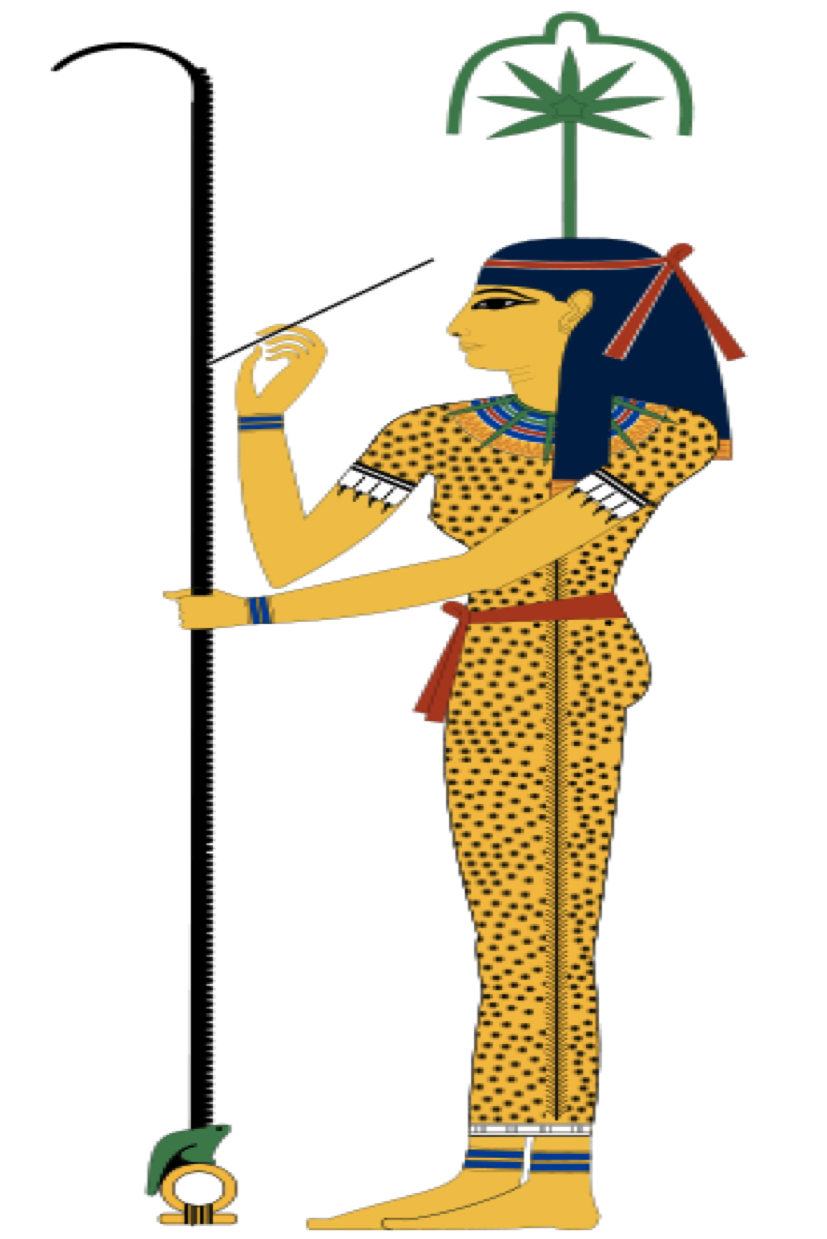
Seshat: the Egyptian Goddess of Scribes
Roman Empire
The Romans consisted of two very distinct classes, the common people who were uneducated and the upper class, who had the money to afford an education and could read and write. Women, like men, made up both of these classes. This seemingly elitist class was made up of literary circles where the exchange of ideas—namely literature and poetry, took place. Of the most popular throughout history were Scipio Africanus (235 B.C.-183 B.C.) and Terence, the son of a slave. Women could also find themselves in these circles if they were educated and could read and write. In order to gain access to circles of educated people, you had to have been educated already (Martin, 99) and could contribute intellectually to the group.
During Cicero’s time, there were two notable women, Precia and Lesbia who participated heavily in these learned circles. In addition to being included in the groups, the two women held unique positions because they were known to be leaders of these intellectual circles and due to their leadership roles, we can assume that they wrote and read. However, it is unclear to what extent they wrote, but it is said that they aided in the men’s careers and “helped authors to win fortune” (99). Whether the two women themselves wrote or copied works for professional reasons or record keeping, it is not directly known. There is little information documenting any works that bear their names or male writers who credit them participating in scribal work.
Middle Ages
The time of the highest level of scribal activity put out by women was during the Middle Ages, especially by nuns. As Christianity spread, monks and nuns (or abbesses), as required by The Rule of St. Benedict (De Hamel, 5), wrote, read and transcribed religious texts in their monasteries, which included scriptoriums on site. The rule specifically required the Benedictine nuns to employ an occupation of “the transcription of manuscripts” (Putnam, 52), though it is believed that those who set forth these rules rigidly controlled the advancement of female religious education (Wilson, 6), namely what they were permitted to learn and study in particular. There were three basic types of religious houses during early Christianity: all male, all female, and double monasteries, or dual-sex (Beach, 4). During the 12th century, monks made up the majority of the residents, but in double monasteries nuns were also present and their inclusion gave them more benefits as opposed to say the smaller, poorer and more traditional all-female convents. This is due to the fact that scriptoriums were expensive and smaller, all female convents didn’t receive as many funds as those run by men and therefore could benefit by expanding their own educations (Beach, 4) through this inclusion. It is also possible that if you were at an all-female convent, you may not have had scriptoriums or a library, which was determined by their male superior (Beach, 4). Despite this, there were many benefits of being at a convent, and that was that a woman could literally have a voice. Previous to the 4th century, many women were allowed a voice, literally, in early Christian churches, through singing in the choir. Unfortunately, towards the late 4th century, members of the Roman Church felt that women should “…keep silence in the churches” and “they should speak with their lips alone so that nothing is heard” (Music, 1) and further, women were discouraged to sing when in private in their own room. The common thought was that the Roman Church wanted to disassociate themselves from other, more liberal churches (namely the Gnostics) who let women sing, and also the thought that musical women were associated with prostitution and sexual desire (Music, 2), which made singing seem sinful.
Even with the religious intellectual control set forth on women of the Christian Church, the Middle Ages was a defining period for women—if you were a nun, chances are that you became a scribe for the benefit of your own monastery or convent’s literature, and may have even excelled at the craft. And though you were a woman, you were given the opportunity (as an alternative to marriage) to be creative, learn, write, read and may have even learned to paint and illuminate books. There is a plethora of notable scribal nuns and/or work during the Middle Ages and the times of note began roughly in the 5th century all the way through and beyond the 12th century. At the start of the 5th century, it was required that all nuns could read (and write) so that they could devote at least two hours a day to study (Putnam, 5). The work in their convents/monasteries needed to be disseminated and copied as well and again, given that many convents were lacking funds of all-male monasteries, the nuns were required to copy their own texts. The presence of these early nun-scribes can be traced throughout these early years of Christianity in Europe in the countries of Germany, France, Italy, Switzerland, as well as Alsace, Bavaria, Munich and Austria.
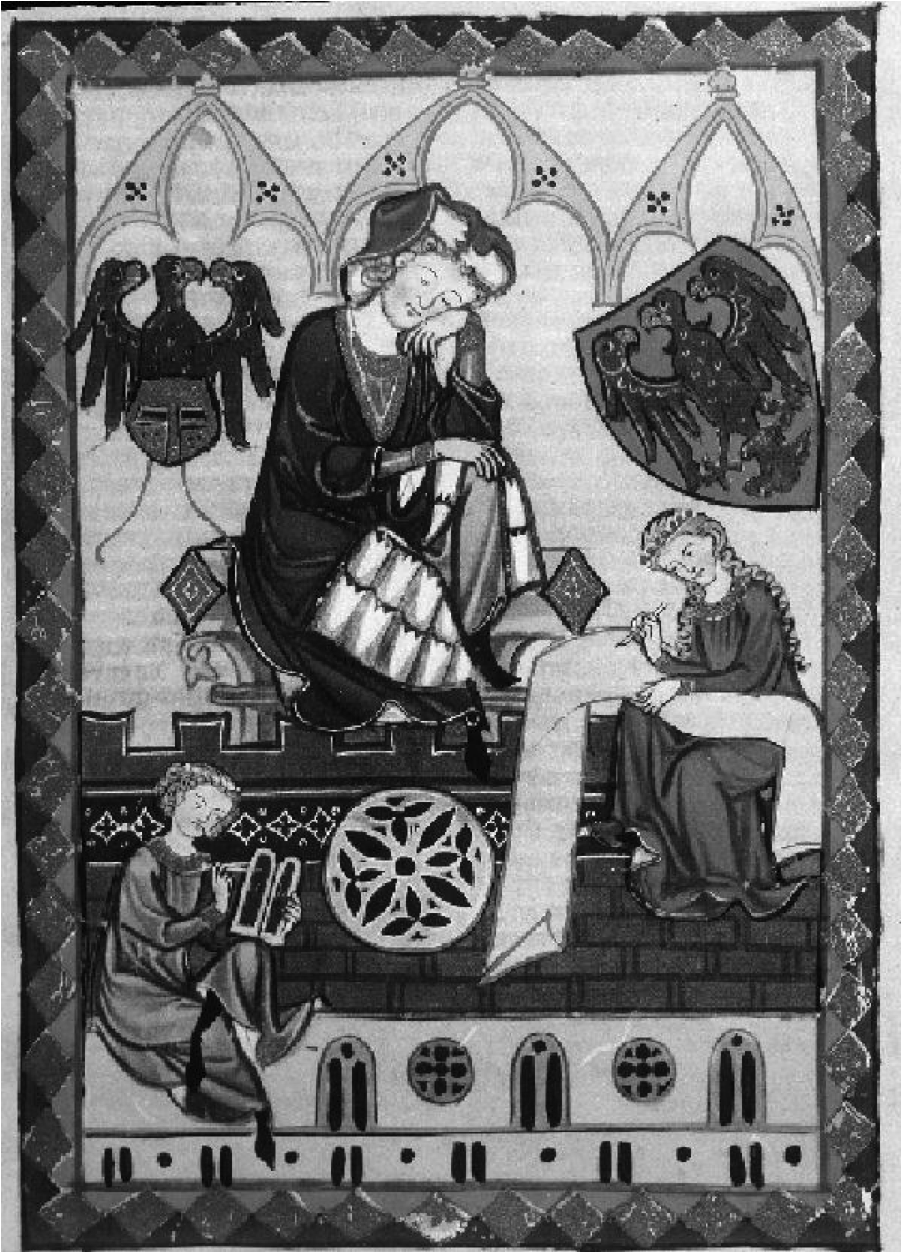
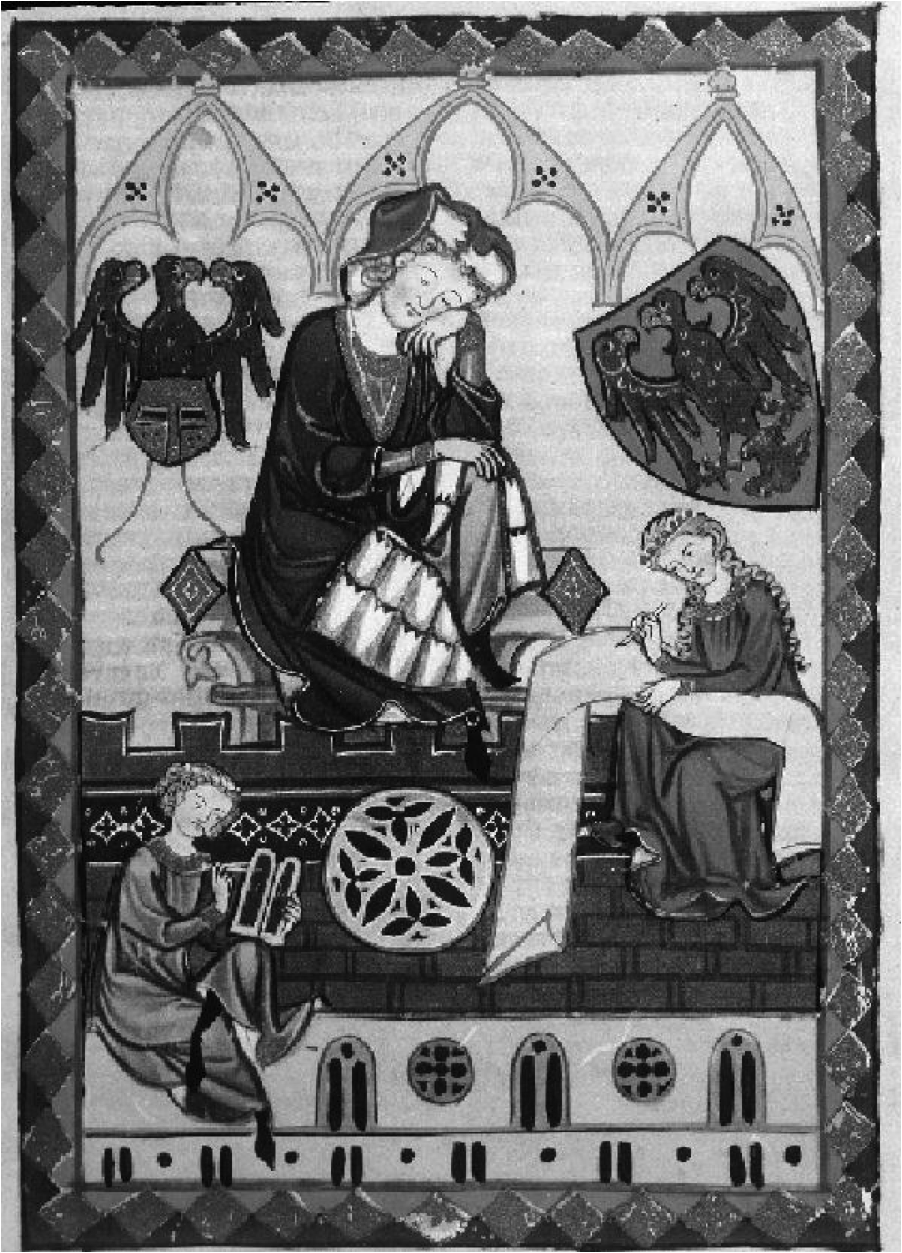
Remman von Zwet dictating his poems to a female scribe, 1305-1340 (Wilson)
Of the earlier known nuns, Hroswitha (d. 997) wrote poetry and plays for the other nuns at her convent (though her documentation attests to her writing abilities, but not necessarily that of a professional writer). During the late 3rd century, it is documented that Eusebius (an early male Christian scholar) refers to men employing women as copyists (Putnam, 53). In the 8th century, St. Boniface asked an abbess to write out for him “in golden letters the Epistle of St. John” (Putnam, 53). There is also further proof through existing letters that Boniface formally thanked these female scribes in personally written, individual letters and that the nun Eadburga had sent some of her works to him for editing (Wilson, 3). In the 9th century, two notable nuns named Harlinde and Renilde were also known to be exceptional writers and illuminators whose work “seem[ed] laborious even to robust men” (Artists, 3). Another (Scottish) nun in Mallesdorf worked so tirelessly and diligently in her scriptorium that she caught the attention of a well-known male scribe, the monk Laiupol (Putnam, 54). In the 11th century, nuns in all female convents would copy and illuminate the music that they would sing in their choirs (Music, 3). As late at the 15th century, a Dominican friar documented over twelve convents with “skilled copyists…scribes [at] active scriptoria” in Alsace, and an existing document quotes him praising the work of a copyist, Sister Lukardis, “she busied herself with writing, which she truly mastered as we may see in the large, beautiful, useful choir books which she wrote and annotated for the convent and causes astonishment among many fathers and priests who has seen the missal…” (Music, 4).
In 12th century Bavaria, a well-known recluse nun/scribe by the name of Diemut, also known as Diemudis, became the first woman to join an all-male monastery in Wessobrunn, and consequently was one of the only ones in the area to have a nun in attendance. This presence ended up prompting other women to travel to the location and join, and thus to become reclusive, or hermit-like in nature themselves (Beach, 35) and as a result the house became so large that they were able to open a second location whose residents were a majority of women, outnumbering the priests by 12:2. What is also interesting about her is that one theory supposes that when she showed up to the monastery in Wessobrunn, she already was a skilled scribe and could benefit them in exchange for spiritual guidance and a place to live and worship. Since there is no biography detailing her life before her stay at the monastery, there is only speculation as to how she received this education previous to her stay, and some believe that she may have received education during an inhabitance from a double-monastery or some sort of a women’s religious house (Beach, 38). During her time there, she was documented as have transcribed a series of religious texts that filled an entire library, totaling around forty-five books (Artists, 4), giving reason to believe that scribal work was the main focus of her stay in Bavaria, aside from the other daily required religious routines.
One of the difficulties of researching female scribes during the Middle Ages is that previous to the 12th century, many scribal nuns and monks didn’t write their own names on the colophon due to religious discretion (pride as sin ideology) and therefore it was difficult to determine who the writers were. Post-12th century and on though, the trend of women signing or leaving more direct clues are to their identity increased. For example, in Munich a nun named Irmingart with the go-ahead of her superior writes, “This book which sister Irmingart wrote with the permission of Prior Henry, belongs of the monastery of Saint Dionysius, Schaftlarn” and she is known to be one of the earliest religious scribes (nun or monk) who wrote her own name on her work. As in Munich, in Italy during the 11th and 12th century there is also proof from colophons that a noticeable number of nuns were copying books, as well as illuminating manuscripts in addition to writing them in the mid to late 1400s (Wilson, 5).
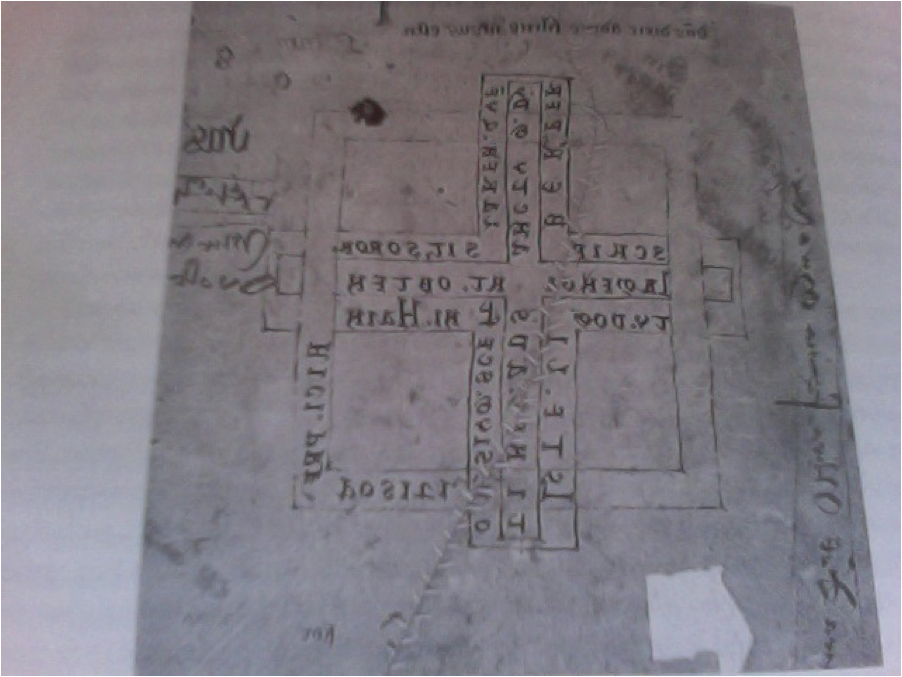
A colophon written around the 11th or 12th century by a female scribe
Of the women who did dare to leave a mark or signature identifying themselves, they often did so in the most discreet ways possible, and most of these are also to be found of German nuns. In 1180, a nun named Guda signs “Guda, a sinful woman, wrote and decorated this book” (Wilson, 5). Sinful as she may admit to be, by writing her name she does do herself and future studies a service by helping future scholars to document the movement and visibility of female scribes. There is also evidence that scribes and illuminators themselves did realize their position in society and the risk of obscurity. In the late 14th century, early 15th century, Christine de Pizan defends a painting of Marcia painting a self-portrait and that she does so, “in order that her memory survive (Marcia, 2), and also, both de Pizan and painter Marica signed all of their works.
In addition to analyzing colophons and signatures, some have entertained the idea of deciphering the handwriting style of men and women, on which there are also varying schools of thought. Some believe that women wrote with more “dexterity…elegance…beautiful calligraphy” (Putnam, 53), whereas others believe that analyzing handwriting as feminine or masculine is impossible to determine (Beach, 5). Besides the colophon, there were other ways that the names of the scribes were documented, and that was through the documentation of others, such as in the 12th century when a number of nuns’ names appeared on “the transcripts of the codex written for the Domini Monasterienses…and it was prepared by nuns” (Putnam, 55). In the article, Scribes and Scriptoria (c. 400-1500), the authors Katherine M. Wilson and Nadia Margolis argue that the most effective ways to document women’s role in medieval book production was to look at the manuscripts themselves and also the studies of monasticism, with “reasonable suppositions from…historical record (Wilson, 1).
As the thirteenth century arrived and Christianity as well as the dissemination and popularity of manuscripts were spreading, non-secular scribal work was already beginning to evolve into a social profession. Though monasteries and convents were still producing texts, the work began to move out and into the hands of non-religious professionals. These artisans copied, decorated, bound and illuminated manuscripts, and there are records that these also included women (Wilson, 7). During the late 13th century in Italy, two of the 139 scribes were women; in the 13th and 14th centuries, seven women were documented as being illuminators and in Germany, a woman named Tula was documented to be a rubricator in 13th century Germany (Wilson, 7). The ways that women were documented to perform commercial scribal work was when they were married to men who were scribes and they continued their scribal work after their husbands’ deaths, or if their family had a business of copying and then they could work within that business. In the late 1300s, a woman named Bourgot worked as an illuminator with her father, whose patrons included Countess Yolanda of Barr and King John II (Artists, 5).
Even though much scribal work was becoming secularized, some convents were still copying and creating written work. For one, nuns still not only created their own work, but also needed to make copies from exemplars of other works within and out of their convents. In addition, they still were commissioned to copy work for others. In the late 14th century, a well known, all-female run scriptorium was documented to have still been commissioned by other churches to copy texts. And as late at the 15th century, a nun named Maria Ormand (Ormandi) signed her ornate manuscript “handmaid of God…writer of this book” (Artists, 6). Towards the latter half of the Middle Ages in Germany, two nuns collectively copied a bible in 1443 by the names of Margareta Imhoff and Margaretha Cartheuserin, who also illuminated a “winter missal” in 1452 (Artists, 6). Additionally, in 1478, a Franciscan nun wrote and illustrated a biography of St. Bonaventure, which still exists today in the British Library (Artists, 6).
In addition to nuns and monks in Christian religious institutions and commercial, secular artisans carrying out scribal work, there was also another sect of society carrying out this work, and those were Jewish scribal women. These women did have a presence during the late Middle Ages in Germany and Italy, and worked mostly from their homes and were trained by their fathers (Riegler, 10). Given the nature of Orthodox Jewish traditions, women were not to be as educated as men were, but instead there was a focus on domesticity. Within a domestic realm, bookkeeping and helping with the family business were customary, and many families took up an occupation in money lending activities, thereby making it essential for women to know how to do math and write in ledgers (Riegler, 10). From those times, there remain existing manuscripts containing colophons that indicate that women transcribed them. And since women were required to learn Hebrew, they were able to copy religious texts (Riegler, 11). Pola is one example of a Jewish female scribe who let herself be known via her lengthy colophons in the late 13th century. She copied at a minimum three manuscripts, which included hundreds of “parchment folio pages” (Riegler, 11). What makes the colophons on her works unique is that they talk little of the experience of writing itself, but go on to praise her family and “the Lord” and ask repeatedly for her writing abilities and her family to be blessed (Riegler, 12-14). Similar to the other female—secular and otherwise—scribes, Pola recognized the importance of writing her name on her work, though it is not known if she knew the effect it would have on posterity.
Conclusions
Were women able to write and disseminate their work throughout history, whether it is on clay tablets, papyrus, parchment, vellum or paper? The definite answer is yes. There are many reasons that women’s role in scribal work throughout history has been downplayed, and the role of men documented as the norm. With early writing in Mesopotamia, the Roman era and even Ancient Egypt, we just lack the documentation. The writing may be too far from our grasp today and we cannot decipher it, or that too many documents have perished over time. With the advent of Christianity, many religious leaders wished to suppress the female voice. As one last concrete example, around the 8th century, a male Christian reformer did not provide a scriptorium or library for the nuns of Nursia and was “[disinterested] in the intellectual activity of religious women” (Wilson, 4). The Roman Church specifically, wished for anything but an egalitarian organization by controlling what women learned and also I would argue the lack of funds for all-women run convents. Considering that scribal work was anything but pleasurable, both physically and mentally, one would think that the grit of these scribal nuns, or those who wished for the burdens of a scribal life, would make the Roman Church patriarchs think more positively about their education. Given all of this, it is difficult to suppress the will of any being, and as much as others may have tried to control the actions of women’s lives, they couldn’t control their thoughts and further, their motivations to educate themselves and to create timeless works.
Works Cited
Beach, Alison I. Women as Scribes: Book Production and Monastic Reform in
Twelfth-century Bavaria. Cambridge, U.K.: Cambridge UP, 2004. Print.
De, Hamel Christopher. Scribes and Illuminators. Toronto:
University of Toronto, 1992. Print.
“Egypt, Ancient: Literacy.” Encyclopedia of African History. London: Routledge,
2004. Credo Reference. Web. 13 December 2010.
Martin, Henri-Jean. The History and Power of Writing. Chicago: University of
Chicago, 1988. Print.
Meier, Samuel A. “Women and Communication in the Ancient Near East.”
Journal of the American Oriental Society 111.3 (1991): 540-47. JSTOR. Web.
28 Sept. 2010.
Putnam, George Haven. Books and Their Makers during the Middle Ages; a
Study of the Conditions of the Production and Distribution of Literature
from the Fall of the Roman Empire to the Close of the Seventeenth
Century,. Vol. 1. New York: G.P. Putnam’s Sons, 1896. Print.
Putnam, George Haven. Books and Their Makers during the Middle Ages; a
Study of the Conditions of the Production and Distribution of Literature
from the Fall of the Roman Empire to the Close of the Seventeenth
Century,. Vol. 2. New York: G.P. Putnam’s Sons, 1896. Print.
“The gods of Egypt.” Who’s Who in Ancient Egypt, Routledge. London:
Routledge, 2003. Credo Reference. Web. 13 December 2010.
Williams, Ronald J. “Scribal Training in Ancient Egypt.” Journal of the
American Oriental Society 92.2 (1972): 214-21. JSTOR. Web. 15 Nov. 2010.
Wilson, Katharina M., and Nadia Margolis. “Artists, Medieval Women.” Women
in the Middle Ages: An Encyclopedia. 1-4. Credo Reference. Web. 12 Nov.
2010.
Wilson, Katharina M., and Nadia Margolis. “Marcia in the Middle Ages.” Women
in the Middle Ages: An Encyclopedia. 1-4. Credo Reference. Web. 12 Nov.
2010.
Wilson, Katharina M., and Nadia Margolis. “Music, Women Composers and
Musicians (c. 300-c. 1450).” Women in the Middle Ages: An Encyclopedia. 1-
16. Credo Reference. Web. 12 Nov. 2010.
Wilson, Katharina M., and Nadia Margolis. “Scribes and Scriptoria (c. 400-
1500).” Women in the Middle Ages: An Encyclopedia. 2004. 1-10. Credo
Reference. Web. 10 Dec. 2010.
Kenmore Street
I clicked my tongue at your last week,
pregnant woman with glass tube ablaze
in the alley below my apartment window;
belly fat with cheated life, misguided intentions,
the Christian Right and that gray fog. You scattered
like a bug when I wanted you to go away,
when I couldn’t stand to look at you anymore-
when I couldn’t stand my own inertia.
I thought of the dead pigeon last winter
whose feet were stuck in a frozen puddle,
standing erect, the walking dead. I felt the bird deep
in my stomach as I felt you last week. For a moment,
you and Chicago were one again as two breaths-
one warm, one cool, exhaled into the still summer air.
Chicago, 2005-2006
You call me and tell me to be careful,
fretting over the fact of your daughter living
alone in Chicago. Images of me, my big purse-
sitting alone on the train. You call to inform me
that another girl has been raped in Lincoln
Park. Just Be Careful, as if Villa Park were
any different, or safer. I know the threat,
the inclination of my naked body from men
of all colors and economies who eye
and yelp. You tell me to be careful
as your 26 year old son sits
like a god, the power of his years
on his skin and between his legs.
Do you tell him to be careful, too?
 Exploring Feminisms