Hot “Girl” Bummer Summer

If you’ve ever daydreamed about what it would be like to be a newly divorced 42 year-old woman, it can potentially feel awful, awkward, and like you’re slightly losing your mind, akin to the madwoman in the attic, à la Mr. Rochester’s wife in Jane Eyre. She’s fucking lost it, but to quote something I recently read online, “I’m sorry I acted crazy while you were treating me like shit.” You can have that one, Bertha Mason. I see you, girl.

Within the span of nearly a year, my then husband of nearly two decades moved out, most unceremoniously; my most, good lord, my most, beloved cat of 17 years died; my refrigerator died; my dishwasher died; I sold my car; I packed up my home, sold my home, moved out, moved in; and divorced. My therapist went on maternity leave.

The internet tells me that I should have a goal, a dream, a revival. That this should be my hot girl summer; party until my liver begs for mercy, explore the yet unknown nuances of my personality, fit into those size two jeans (my ass would NEVER) due to the copious amounts of iced Matcha (#basichotgirlsummer #icedmatchaforever) and hot yoga (it’s called doing laundry with no air conditioning during Chicago summer). Along with my excess adipose tissue, sweat out all of the anger and regret.

What the interwebs fails to reveal is that a completely 180 degree change in a short time does not leave one in the most productive state of mind. Come to think of it, or really, to not think of it, the contents of my mind felt dulled, like a chalkboard whose writing lingered too long and when erased, blurry smudges remained. A world of thoughts, now gone but still somewhat there and illegible. Reading was difficult, concentration was difficult, movement was difficult. Whatever sharpness was there had been buffed out by the rock tumbler of life, leaving me dull and round.

I tested myself, my fortitude, and went on a solo vacation to another state. I romanticized my trip – lounging at the pool, journaling every day, a love affair with catharsis. I’d come home a changed woman, ready to cut carbs, ready to finally embrace that hot girl summer with flourish.

I was annoyed by the children at the pool who kept splashing my paperback novel. I felt sorry for myself, seeing all of the couples, scantily clad, embracing in the water. I ate too much and felt sick. I drank too much and felt guilty. I missed my cat. I spent too much money. I posted happy photos on Instagram to prove I was having a great time. Sometimes I was.

When I arrived home, I again ate too much and slept too much and was happy to see my cat. It took a week to unpack. 42, single, divorced, with fat, senior cat. I still can’t manage to keep my apartment clean for more than two days. I now wear progressives, and still needed to make the screen 110% while writing this (just kidding, 120%).

When I returned, I soon discovered that the ants had made a home of my kitchen floor, and as my blood pressure skyrocketed, I paused. I took a breath, and reminded myself that ants are gonna ant. I called my building’s handyperson, and he sprayed. It was over.

I have been left dull and round. The extreme edges that I’ve always lived with are gone, or are at least smoothing out. Ants will come and go, my home will have piles of laundry, and sometimes I will put them away. I drink less alcohol (and sometimes I drink more alcohol) and many times, get ready for bed when the sun is still up, flossing an hour before. I take CBD gummies with melatonin most nights. When I gain weight, I buy a bigger pant size. I try to remember that it’s a “them” problem, not a me problem, and let it go. Sometimes not.

I have a year until next summer beings, a year to prepare for the possibility of a “hot girl summer.” Though as time goes on, I think I may opt for a chubby, warm woman winter.


What To Do When You Get Dumped: A Guide to Unbreaking Your Heart (2025) by Suzy Hopkins and Hallie Bateman

If you’ve read through this post and thought, wait, where are the books?! I’ve got you! This graphic novel was published shortly before my divorce was finalized and I found it to be extremely help, not to mention timely.

If You Aren’t Voting on November 6, Especially for my White Friends and Family

Talking about privilege is a topic so many avoid, we as white people often feel a punch in the chest when someone accuses us of having privileges that other people don’t have.  We say, “we worked our butts off!” and no one is saying you didn’t.  In fact, you did, through the blood, sweat, fears and tears of your ancestors who were brutalized, jailed and harassed, fighting for the right to vote, unless you hail from the dubious past of the anti-suffrage movement of yore, akin to today’s female Donald Trump supporters.  But, if you have decided not to vote this November 6 and you are white, you are displaying your privilege to the highest degree possible.

“Governments derive their just powers from the consent of the governed.”

When you refuse to vote, you believe that you face no discrimination in your life, and that is privilege.  If you don’t vote, you are saying that the lives of those around you don’t matter, because even if you don’t face any sort of prejudice for living some facet of your life, by not voting, you are saying that the struggles of your fellow humans don’t matter enough for you to go vote on their behalf.  When you refuse to vote, you are also throwing your privilege in the face of those who don’t have access, and you’re shitting on the women fought so hard for that right.  White women (who the 19th amendment mostly benefited) couldn’t vote until 1920.  It hasn’t even been 100 years since we fought to vote.  Many African American women couldn’t even vote prior to 1960 in many Southern states.  Vote for them.  Be part of the democracy that is being threatened, vote with love for yourself and vote for the love of your neighbor.

If you’re not voting, my guess is that you’re probably heterosexual, never had an abortion, don’t think black lives matter, (and let’s add non-Christian religions to that as well), you don’t think everyone is entitled to food, proper healthcare, school supplies, and don’t think the earth is dying and worth saving.  Not true?  Prove me wrong.  Consider yourself so lucky that you have the privilege to have a voice in our world.

~~~~~~~~~~~~~~~~~~~~~~~~~~~~~~~~~~~~~~~~~~~~~~~~~~~~~~~~~~~~~~~~~~~~~~~~~~~~~~~~
Photo: Helena Hill Weed serving a 3 day sentence prison for carrying a banner with the above quote.  Source for photo above: https://www.loc.gov/resource/mnwp.275034/

Banned Books Week-Charles Bukowski

What is Banned Books Week anyway? “Banned Books Week is an annual event celebrating the freedom to read. Banned Books Week was launched in 1982 in response to a sudden surge in the number of challenges to books in schools, bookstores and libraries. Typically held during the last week of September, it highlights the value of free and open access to information.”*

In 1985, Charles Bukowski’s book, “Tales of Ordinary Madness” was challenged and asked to be removed from a public library due to it being, “‘very sadistic, occasionally fascist and discriminatory against certain groups (including homosexuals).'”  Who is in the right?  How does one, or one group, deem art to be worthy or unworthy?  How does one group decide the level public exposure?  Does one person’s subjective resistance to a topic deem it suitable for termination?  Have you ever wanted to challenge a piece of film or literature?  Below is Bukowski’s response, which holds true today, over 30 years later.

Dear Hans van den Broek [journalist]:

Thank you for your letter telling me of the removal of one of my books from the Nijmegen library. And that it is accused of discrimination against black people, homosexuals and women. And that it is sadism because of the sadism.

The thing that I fear discriminating against is humor and truth.

If I write badly about blacks, homosexuals and women it is because of these who I met were that. There are many “bads”–bad dogs, bad censorship; there are even “bad” white males. Only when you write about “bad” white males they don’t complain about it. And need I say that there are “good” blacks, “good” homosexuals and “good” women?

In my work, as a writer, I only photograph, in words, what I see. If I write of “sadism” it is because it exists, I didn’t invent it, and if some terrible act occurs in my work it is because such things happen in our lives. I am not on the side of evil, if such a thing as evil abounds. In my writing I do not always agree with what occurs, nor do I linger in the mud for the sheer sake of it. Also, it is curious that the people who rail against my work seem to overlook the sections of it which entail joy and love and hope, and there are such sections. My days, my years, my life has seen up and downs, lights and darknesses. If I wrote only and continually of the “light” and never mentioned the other, then as an artist I would be a liar.

Censorship is the tool of those who have the need to hide actualities from themselves and from others. Their fear is only their inability to face what is real, and I can’t vent any anger against them. I only feel this appalling sadness. Somewhere, in their upbringing, they were shielded against the total facts of our existence. They were only taught to look one way when many ways exist.

I am not dismayed that one of my books has been hunted down and dislodged from the shelves of a local library. In a sense, I am honored that I have written something that has awakened these from their non-ponderous depths. But I am hurt, yes, when somebody else’s book is censored, for that book, usually is a great book and there are few of those, and throughout the ages that type of book has often generated into a classic, and what was once thought shocking and immoral is now required reading at many of our universities.

I am not saying that my book is one of those, but I am saying that in our time, at this moment when any moment may be the last for many of us, it’s damned galling and impossibly sad that we still have among us the small, bitter people, the witch-hunters and the declaimers against reality. Yet, these too belong with us, they are part of the whole, and if I haven’t written about them, I should, maybe have here, and that’s enough.

may we all get better together,
yrs,

(Signed)
Charles Bukowski

7-22-85**

*https://bannedbooksweek.org/about/
**http://www.lettersofnote.com/search?q=+charles+bukowski

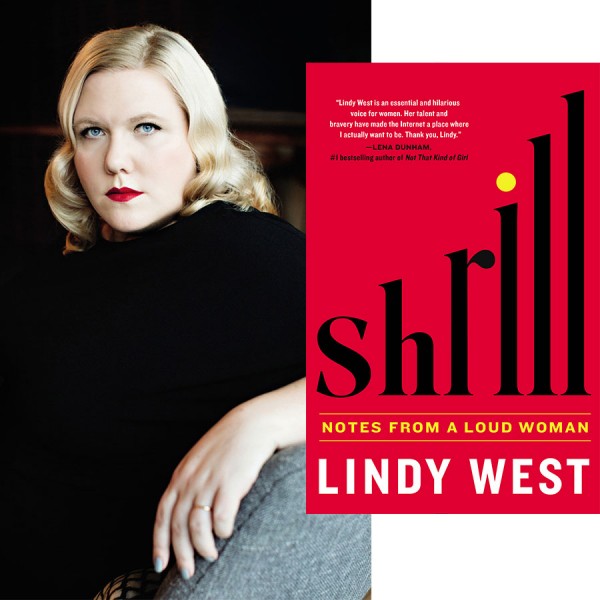
Some Thoughts Inspired by Shrill: Notes From a Loud Woman by Lindy West

When I like a book so much, I run into the age-old problem of not being able to put into words shrilljust how much I like it, besides saying, “I liked it so much!”  The only way it can be described is that the book is just so full of goodness and truth (observations into her own life regarding body image, judgement, harassment, everyday sexism, being a crazy person in relationships, all of which 100% mirror my own) that a summary would only fail to capture the feelings, the right ons, the “yes, I feel that way, toos!”

Here is just a nibble of what provoked my imagination:

  • Shaming others does nothing to inspire change; it creates stagnation.
  • Marching in an anti-Trump rally this weekend in Chicago, we chanted, “My Body, My Choice.”  After reading West’s book, this took on an entirely new meaning.  “My body” doesn’t limit itself to reproductive rights, but the “body” itself.  Your choice to embrace your body: an aging body, an any-sized body, a disabled body, a tall body, an acne filled body (check and check).  In total, it’s no one’s business what the fuck you look like, and we need to stop judging each others bodies because we don’t want people judging our own.
  • This book is laugh out loud funny.  Like, really funny.  We all need post-election moments of distraction, and this made me laugh for the first time in a looong time.
  • Commenting on people’s weight out of “concern” is fat shaming.  You’re not concerned, their body sizes don’t conform to your idea of beauty, and that makes you feel weird.
  • West talks a lot about “being fat,” and this flooded me with several insights into my own life:
    • I have judged others.
    • I have been extremely insensitive to those with body types larger than mine (“I look so fat today!” I’m a size 8.  To myself: gurl, please.  And no, shhhhh…).
    • The talk surrounding weight is a sticky, icky trap.  Especially in the workplace, talking about others weight is one of the most pervasive:
      • “Wow, she looks like she’s lost weight!”
      • “I don’t remember her being so big.”
      • “Did you lose weight?”
      • “You look so skinny!”
      • “Your desk looks like a buffet!” (Hey, I like variety.)

These sentiments are made on a daily basis, and they are damaging.  So on the days where you don’t “compliment” me on my weight, do I look “fat,” also meaning, bad?  When she looks like, “she’s lost weight,” does that make her more beautiful now?

  • Probably one of the most genius quotes in literature to date:

    “…when you hit puberty you don’t magically blossom into a woman…only now once a month hot brown blood just glops and glops out of your private area like a broken Slurpee machine.”

  • Hearing her encounters with male comics, their subsequent minion trolls and their relentless defense of rape culture, sexism and racism made me feel incredibly despondent and also gave me so much respect for her and those who aim to disrupt the status quo.  Calling out sexism, for example, is extremely daunting because it’s a constant uphill battle because it challenges the very fabric on which our culture is built upon, and when people are faced with change, or an accusation that they are upholding inequality, oftentimes they’d rather push you in front of a bus than work through their shit.  And I get it, in a “post-Trump world,” I’m dealing with my own issues of being a crappy feminist to a lot of other women.  The growing pains suck, but are necessary.
  • I listened to the audiobook and the woman has the voice of an angel.  All we need to do is pair her buttery voice (insert Linda Richman here, “it’s like buttah!” with Milton’s Paradise Lost and I’d fall asleep like a damn baby in about five seconds.

My one complaint: that the book had to end and I hope she writes another.  Soon.

Readalikes:
Bad Feminist by Roxane Gay
Meaty: Essays by Samantha Irby
Yes, Please! by Amy Poehler
You Can’t Touch My Hair by Phoebe Robinson
You’ll Grow Out of It by Jessi Klein

I Stand with Planned Parenthood

There’s a war on women’s bodies* and this is one of the many battles-people who don’t need access to affordable healthcare and education believe that no one else needs it either.  Or, they operate under the delusion that they have a personal life-line to God.  They don’t, and I hope that you don’t think that you do.

This is about so much more than abortions; that’s such a small part of it.  It’s about all the big life stuff: having control over what you want to do with your body, having access to birth control, breast exams, cancer screening and most importantly, access to information, regardless of social class.

What makes you think that what you need won’t be restricted, too?

PP

*There is a war for control over what comes out of women’s uteruses. We are fighting for control of our own reproductive organs.  The fight is mainly aimed at women with reproductive capabilities, but eventually affects all men and women in need of PP’s services.

A Quick Note From the American Library Association Conference in San Francisco 

While at the ALA Conference in San Francisco, learning about all that is shiny, sticky and new in librarianship, I started my day with Gloria Steinem.  She spoke for less than an hour but completely blew my hair back.  The woman is brilliant, modest, quick on her feet, and all of the other things that you’d expect of a woman who has dedicated her life to equal rights.

A few paraphrases from GS:

-Men can be feminists.

-If you can’t see it, you can’t be it.

-Every year on Columbus Day I forget to put a note on that statue in Columbus Park that says “murderer.”

-Women are kept down by men controlling by their reproduction. It all starts there.

-We’ll boost the economy by giving women equal pay. It would put millions back into the economy.

She left me in an incredible headspace, feeling empowered to be better, to connect as humans, to learn and impart, to question what is being said to you, and to be the kind of librarian that I want to be, rather than what I think is expected of me by my peers.  It’s easy to forget these basics in the day-to-day, and we all need a little nudge back to the inner light once in a while.  Mine just happened to be from Gloria Steinem.

Best conference ever.

Use Your Power of Purchase! Two Kickstarter Campaigns Worth The Dough

I’m a big believer in purchase power.  If you spend your money at Walmart, for example, then you support Walmart and all its practices regarding employees, the environment, its political stance, et al.  If you participate in a CSA (a local produce share box), then you support small farmers in your community and you’re saying yes to organic food.  When you support Kickstarter Campaigns like these, you are using your purchase power to support a cleaner earth, small business, and help to fight against big business and their own campaigns to capitalize off of the sexualization of women’s bodies.

~

New York based gals Alexis and Jess, creators of the website Beauty Lies Truth are working to get the word (and the products) out about safe and healthy beauty products that are actually good for you and the environment.  It may come as a shock but the U.S. government isn’t doing the greatest job at protecting the public, and these gals are helping us to become better informed about what we purchase and put in and on our bodies.

Their Kickstart Campaign, titled #TRUTHBEAUTY is raising funds to purchase environmentally safe beauty products that you’ll be sent in the mail.

It is our mission to find the most conscious companies making safe, effective products, and then make those products affordable and accessible.

 Visit their website for DIY beauty tips and great articles on the whats and whos about the beauty products that you use everyday.

+

Based in the UK, designer Hayat Rachi has created her feminist lingerie brand, Neon Moon, which is made by a woman, for real women in our varied sizes and shapes, and is raising funds to bring the brand to fruition.  Want to know what feminist lingerie could look like?  Check out the video here and to donate.  Made from from highly renewable bamboo, the lingerie is said to be comfortable, antibacterial, and just from the sight of it, really cute and stylish.

Bra

Personally, I am in love with this bra.

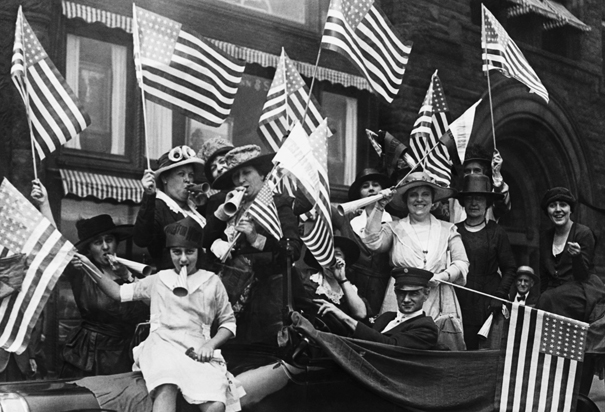
Exploring Feminisms is Five Years Old!

Exploring Feminisms is five years old today!

Thank you to everyone who has read and contributed to the conversation!

suffragettes-celebrating

Feminist Short Stories: Horror & Sci-Fi (Part 1)

Spotlight on Five Feminist-Minded Short Stories with Elements of Horror  

Joyce Carol Oates once so perfectly wrote, “One criterion for horror fiction is that we are compelled to read it swiftly, with a rising sense of dread, and so total a suspension of ordinary skepticism, we inhabit the material without question and virtually as its protagonist: we can see no way out except to go forward.”  It is this very reason that I so love the horror genre; it transports its reader to another world where one can observe, and be an entirely new entity, whether person, monster, witch, or troll.  When you combine horror with the feminist short story, you enter a whole new realm that’s even more terrifying than any Pinhead from Hellraiser or Damien from the Omen.  The horror delves into reality, where much can be hidden beneath the façade of such vanities as a life of wealth, the perfect marriage, or an idyllic community.

The tales below are a sampling of five feminist short stories that do indeed leave us with a “rising sense of dread” because sometimes, the horror is too personal.

The Giant WistariaCPG
Charlotte Perkins Gilman

It’s shocking once you’ve finished The Giant Wistaria to realize that it was published in 1891, when it seems as if it were written not so long ago.  The story takes place during two time periods, the 1700s and the 1800s.  The former century begins with an English family and we’re dropped into the middle of the most scandalous of family dramas–their daughter has just given birth out of wedlock, and the parents are fleeing to England to escape any disgrace to their family name.

Fast toward to the late 1800s; the house from whence they fled is now decrepit and has been virtually swallowed by a gigantic Wistaria vine.  A wealthy young couple and their friends happen by, completely enchanted by what they interpret as rustic charm, they assume that it must be haunted and rent it immediately.  As the three couples drink, eat and laugh, they describe the prospect of an eventful summer chock-full of ghosts that hopefully inhabit the house.  After the first evening, their fantasies come to fruition as half of the group awakens to find that they’ve had the same dream of a young woman with a mysterious bundle in her arms and a red cross around her neck.  They soon find that their collective dreams were more than a mere case of indigestion (to quote A Christmas Carol).

The Giant Wistaria is chilling for several reasons.  First off, the punch that is delivered is done so in only a few pages; not only is CPG a feminist, but she’s also a powerful storyteller and is able to intertwine the two seamlessly.  Another sobering facet of the story is the juxtaposition of the two time periods, the people who exist in each one, and finally, the full-circle of tragic events.  CPG was a master of collective human emotions and is able to make you feel guilty and sickened by indirectly referencing class and gender inequality.

A Good Man is Hard to Find
Flannery O’Connor

Good Man is Hard to FindI knew very little about Flannery O’Connor when this collection of short stories was recommended to me.  I knew that O’Connor was Irish Catholic, and that the stories were written in the mid-20th century.  Needless to say, as I finished the first story, which is also the namesake for my particular edition, I was completely taken aback.  “The person who suggested that I read this should have warned me!” I thought.  Like so many of the other stories in this article, it’s thrilling to read a gem so subversive that it still shocks nearly 70 years later.

As the story begins, we meet a family comprised of three young children, their mother and father, and the paternal grandmother.  Like many of O’Connor’s other writings, A Good Man is Hard to Find is set in the South, and as the family embarks on a road trip to Florida we learn that a murderer is on the loose by the nickname, “The Misfit.”   From start to finish, the grandmother is a pill.  She believes the past was best, children should be quiet, women should always be ladies, and her opinion is always right.  Basically, she’s the southern queen of unsolicited advice.  O’Connor is a master at tapping in on a personality type that annoys most people because they are in everyone’s lives in some form.  Because of that, we as readers are extended participants in this very long road trip.  In addition to being an expert character study, O’Connor takes us on a trip through 1940s/50s Georgia in the summer.  It’s hot and dusty with a killer on the loose.  They are alone on the road in a deserted part of the state where gas stations come only intermittently, setting a tone that leaves us unsure of our surroundings and insecure about the future.  As the trip goes on, the grandmother sends the family on a wild goose chase, seeking out physical proof of a misplaced memory.  This dirt detour sends the family into a downward spiral that puts them face to face with what the grandmother hoped to avoid from the outset–the Misfit.

At first read, A Good Man… could seem like nothing more than a story about an incredibly annoying grandmother and a gang of psychos.  However, this is one of those great stories that unfolds a multitude of onion-like layers that encompasses race, religion, class and poverty, region, crime, place in history, Civil Rights, and gender roles, amongst others.  However you choose to read this story, as one of good old-fashioned murder, or a story of murder inextricably bound with issues of class, race and religion, you are left with comparable sense of dread, and maybe just a hint of schadenfreude as the grandmother finally gets her lips zipped.

The Joy of FuneralsAlix Strauss
Alix Strauss

The Joy of Funerals differs from the other titles in this round-up because it is a collection of short stories that end up connecting in the end, which also packs a great ah-ha as the tales come into the final braid.  Similar to Strauss’ most current book, Based Upon Availability, each story is unique in its own right, and the culmination of all the interlaced stories is an extra cherry on top.

Each story is about how women, whether individually or in a group, deal with the grief they experience over the loss of a loved one in New York.  Strauss plunks us down smack dab into their lives by crafting mournful imagery and offering variety of well fleshed out characters.  Each character, in only a few pages, is described in such thorough detail that you feel like you not only really know them, but can completely empathize with what they are experiencing through their grief.  In one story, a woman burns a photograph of her husband and eats it on her breakfast cereal, and while reading it, you are eating the ashes with her–you can smell it, taste it and feel the loss as if you’ve been punched in the belly.  In another story, a woman’s behavior is so deceitful that it leaves the reader with a personal sense of betrayal, but also left me to unfortunately identify with the character’s insecurities.  To me, only a true master of art can make you identify with the flawed characters, al la the films Spring Breakers and Happiness.  Full disclosure, I found myself crying throughout the majority of the book because the stories are crafted in such a way that they strike the core of shared human experience with concern to love and loss.

Barbara GowdyWe So Seldom Look on Love
Barbara Gowdy

The short story collection, We So Seldom Look on Love is truly a forgotten treasure.  Reading it nearly seventeen years ago, it has remained implanted in my mind, and the physical book has stayed with me through every move of my life because of it.  The short story that I’d like to hopefully introduce you to, which is also the title for the book, is the reason why banned and challenged books are so important for the youth.  Decades ago, this creepy, gross and arguably offensive story exhilarated this gal as a fifteen-year-old and helped to make her the liberal bitch that she is today.

The story is told from the point-of-view of the main character as she reflects on her childhood as a blossoming necrophiliac and fast forwards to current day when she is publicly disgraced as her sexual proclivity becomes mainstream knowledge.  As a child, she realizes that her infatuation with dead animal corpses: the smell, the blood, their energy, et al, will prevent her from attracting and sustaining any form of friendship.  As she gets older, she accepts her sexual attraction to male corpses, admitting that she is unable to fall in love with any living man, and that plenty of corpses have broken her heart.  Naturally, she enters medical school as a means of gaining access to these potential and cadaverous love interests.  Though the idea of engaging in oral sex with dead tissue may seem unattractive to most of us, I give kudos to Gowdy for her character’s unflinching acceptance of her sexuality at so young of an age.  Teenage girls, and really, most women, have mixed emotions regarding their sexual bodies, and it’s refreshing to read about a young woman who doesn’t deny herself those inclinations.

The White CatJCOates
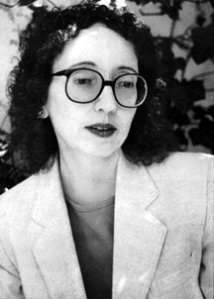
Joyce Carol Oates

The White Cat is one of those great stories where the plot may not be as it seems, and its interpretation can be fluid depending on its reader.  Ostensibly, we’re reading a tale about a WASP of a man, his younger wife, and their evil Persian cat, Miranda.  As we delve deeper into the mind of Julius Muir and his family life, the storyline thickens as we are fed bits of information that make Julius’ home life seem less than perfect, though he would have you think no other way.

It can be argued that the story is a portrait of the building and collapse, aka psychological break-down of the main character, Julius, and since much of it is from his point of view, it’s not exactly clear where the truth lies.  We are to believe that Miranda the cat is evil because of said evidence: “…as the cat grew older and more spoiled…it became evident that she did not…chose him.”  His subsequent reaction contains a crumb of hilarity as he reconciles that he will handle this situation by killing the cat because her ambivalence of him is an affront to this man who “knows who he is.”  Because Mr. Muir purchased the cat for his wife, he believes himself to be her sole master and therefore has the right to end her life since he brought her into being (at least into this own house).

As we read on, the facts become murky.  We wonder, what has happened for the past ten years?  There is no indication that their contemptuous relationship has built over the decade of co-habitation, and seems to be a relatively recent occurrence.  An occurrence that has also surfaced with the advent of his wife making more decisions independent of Julius, perhaps.  Is the quirky Persian evil, living to cause Mr. Muir a life of anguish?  Is he simply ignoring characteristics are inherent in the sometimes fickle feline species?  Or, is he attributing his wife’s human characteristics to his cat instead of facing up to his own troubled family life; a life that is seemingly so perfect in every way?


Part 2 can be viewed here

Stranger by the Book: A Year of Unknown Writing

In 2013, I completed a year-long project titled, My Year of Water in which I saved all excess water for a year.  Since then, I’ve been itching for another project, and it’s time to unveil!

This will be my project: beginning November 5, 2014 and ending on November 5, 2015, I will read one book per month that I’ve never read, wanted to read, and probably have never heard of.  Some of them will be awful, some wonderful (hopefully) and all will certainly leave me with something to say.  The end-result of this project will be to learn something about myself, and the world around me by reading books that I wouldn’t choose myself.

I aim to read 12 books, both fiction and non-fiction and will post every month to report on each one.  Doesn’t sound too challenging?  Let’s just hope that I don’t get stuck with any Ann Coulter or Joel Osteen–it’ll be hell for both of us.

The methodology regarding the selection of the books is still being teased out.  Given that I work in a library, one method is to randomly walk through the library, reach out, and there’s my book.  Not very scientific, but it would work, namely with the fiction.  The problem with this “method” is that I know the Dewey numbers for the non-fiction, and therefore would know what general section I’m pulling from.

Before this kicks off, I’d like to invite anyone to recommend a book(s) to me to add to my list of my unknown books; just complete the form below.

I look forward to your recommendations!

Go back

Your message has been sent

Warning
Warning
Warning
Warning

Warning.