It’s a Catastrophe! An Interview with Director Michael Glover Smith

Having been casting director, food gal, executive producer and all around moral support for the 2011 short film, The Catastrophe, I feel a certain kinship to this film. After having seen it about ten times, I am still left with questions regarding writer and director Michael Glover Smith’s intentions.  So why not ask?  Smith was gracious enough to pimp his movie a little and give me some face time, a.k.a. sitting across the dining room table Sunday morning in our jammies over coffee.

JM: Could you please describe The Catastrophe in one sentence, and I’ll leave it up to you whether you’d like to describe the plot, the story, the general feeling, etc.?

MGS: This is tough but, in one sentence, here goes: The Catastrophe is a dramatic story, told in poetic, dreamlike images, about a man who has the gradual, dawning realization that he may have made the wrong decisions in life.

JM: I know that this story is based off of a Nathaniel Hawthorne story, Mr. Higginbotham’s Catastrophe, but have any of your own decisions in life or lack thereof influenced your adaptation?
MGS: Yes, I fell in love with this Hawthorne story, which was written in 1837, but I would have never used it as the basis for a film if I hadn’t felt a personal connection to it and seen a way to make an adaptation that I felt was relevant and contemporary. I always say The Catastrophe is a cautionary fable about the dangers of not doing what one should be doing in life.  But it’s not like I’m Zeus criticizing the character from on top of Mount Olympus.  It’s more like commonsense advice I’m also giving to myself.  You know, “Don’t waste your time doing things that aren’t important. Don’t do anything just for the money.”  It’s personal in that sense.

JM: Have any other directors influenced how you wrote/directed this film?

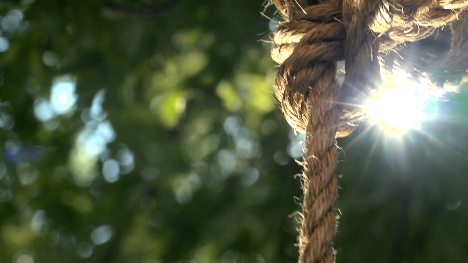
MGS: In terms of specific shots and specific effects, yes, but not in terms of the end result.  I did show a lot of different film clips to Justin Cameron, our brilliant director of photography, as visual references for the kind of “feel” I wanted to go for in certain scenes.  For example, I showed him the interrogation scene from Zodiac in order to communicate how I wanted our opening bathroom scene to start out distanced and objective but then become increasingly ominous and paranoid-feeling as we steadily bring the camera closer to the actors and the shots become more and more subjective.  But obviously, our film as a whole bears no resemblance to Zodiac.  I did a similar thing with the hanging scene; we watched parts of Robert Bresson’s A Man Escaped and talked about using lots of close-ups to fragment the human body the way Bresson did.  Also, I dedicated the movie to Jafar Panahi and Mohammad Rasoulof, two unfairly imprisoned Iranian filmmakers, but that was more a show of political solidarity than anything.  If any Iranian director could be said to be a stylistic influence on this movie, it would be Abbas Kiarostami; I was thinking of his films when I was writing the script because I knew I wanted to have a lot of scenes of our protagonist driving in his car and talking on his cell phone.

JM: When you write and direct a film, do you keep a certain audience in mind?

MGS: I used to try and have a general audience in mind but I think that kind of thinking has gotten me into trouble.  In the past, I would always second guess myself and think, “Well, if this film isn’t successful, it’s because I wasn’t thinking commercially enough.”  So I would rely on formulas and genre conventions to communicate ideas in a shorthand way, knowing that those things had worked in other movies (I’m specifically thinking of the use of faux-documentary interviews in my previous film At Last, Okemah!).  When you try and second guess how a general audience (i.e., a faceless blob of people) will respond, I think you also sacrifice some of your own understanding of what you’re doing.  So, with The Catastrophe, I decided to just go with my gut every step of the way.  Whether it was writing, directing or editing, I kept thinking, “This feels organically right. This makes perfect sense to me even if it might seem weird to others.”  Or to put it another way: I considered myself to be the audience.  I finally made a movie that completely satisfied me personally, which makes me feel like it will have the same effect on others, even if that’s a very small group of people.  I’ve come to realize I would rather completely satisfy a small group of people than partially satisfy a lot of people.

JM: When you write and direct a sex scene, do you feel like you do it from your personal perspective, a [general] male perspective, or something all together different?

MGS: That’s a great question. I think it depends on the specific film because, in terms of perspective, sex scenes can be as varied as murder scenes or any other type of scene.  In the case of The Catastrophe, we are telling a story that sticks fairly close (but not exclusively!) to the perspective of our main male character.  So, I wanted there to be a certain ambiguity in the sex scene between these other two characters.  I wanted the audience to ask themselves, “Is this happening for real or is this the paranoid fantasy of the main character?  Is this merely what he fears his girlfriend is doing while he’s on the road for business?”

JM: What do you aim to achieve by showing us nudity, male and female, and a sex scene?

MGS: Well, I wanted to achieve two things: I wanted to depict the sex act in an honest way and I also wanted it to be somewhat blunt and shocking.  In regards to my first objective, I feel like there’s something dishonest about not showing nudity in a sex scene.  You know, sometimes you’ll see a Hollywood movie and the actress will have a bra or a shirt on during the sex act, and that can take you out of the movie completely.  The first thing you think is that the actress obviously has it stipulated in her contract that she won’t do nudity.  This, of course, is not the kind of thing you should be thinking when you watch a movie.  In regards to the second objective, it goes back to what I was saying about the protagonist’s paranoid fantasy.  If you believe that’s what the bedroom scene in my movie is, I don’t think there is any better way to indicate that paranoia and that fear than by showing you the penis of the “other man.”  And I think I was successful in these objectives because both of the actors (whom, I should add, I think are very brave performers) really liked the scene when they saw it and felt that it was artful and not gratuitous at all.

JM: As the movie comes to its end, it leaves the audience hanging because not much has been realized by the characters/is not a finished story.  Do you feel that because the film is the first part of a longer script, it will be more difficult to be taken seriously by the audience?
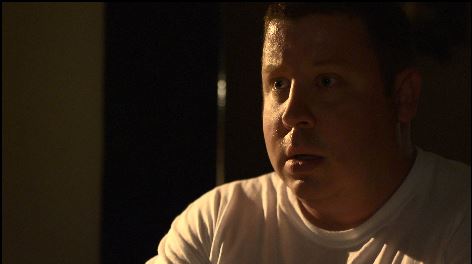
MGS: First of all, you should always leave the audience wanting more – better that than overstaying your welcome!  But it’s a fifteen minute film so there’s only so much you can accomplish.  I did want to show that both Dominicus and Carlie, the male and female protagonists, have realizations in those fifteen minutes.  It’s not as dramatic of an arc as what I could show in a feature but I think you actually do see these characters change in a realistic way.  In the case of Dominicus, I liked the irony of his situation: here’s a guy who is always on the road selling cigars to make enough money so that he can get married.  But the very thing that’s allowing him to make money is the same thing that’s pushing his girlfriend away!  This is the realization that his character comes to.  With Carlie, it’s different; she’s pissed off that he’s always on the road but then comes to a realization that she doesn’t need him to be happy and that she can imagine a life without him.  Now, because the movie is somewhat abstract (transitioning from black and white to color, having a dream sequence, having a character recite a poem, etc.), I know that some people are not going to think of this as being an “actors’ movie.”  But I do think that both Peyton and Marla, who play the leads, successfully show their characters evolving in just a few short scenes.  I am very, very proud of the work they did in this film.  Hopefully, we will get the chance to make the feature-length version of this script and tell the whole story.

JM: At the end of the film, Carlie does something with her face (I won’t spoil the surprise) that makes me think that she is actually not happy, and in that way I do not read it in a way that she feels that she can exist without him.  Can you comment on that as a possible interpretation?

MGS: If that is the way you feel, I’m not going to say you’re wrong.  I wanted Carlie’s gesture to be ambiguous and evocative but I never even discussed what it meant with Marla, so I’m sure she had her own interpretation of what it meant.  The important thing is that she’s had an epiphany and epiphanies can be scary.  They can have positive and negative consequences.  The ultimate meaning is up to each individual viewer.

JM: Thanks Mike, and we’ll see you at the Illinois International Film Festival on November 19th for your Chicago premiere!

Director Info: Smith is an independent filmmaker and Film Studies instructor based in Chicago, Illinois and currently teaches film studies/history at four (yes, four) colleges around the Chicagoland area.  The Catastrophe is Mike’s third film.

For information on the film, please check out The Catastrophe’s website and trailer on You Tube.

47th Chicago International Film Festival Overview

The Last Rites of Joe May
dir. Joe Maggio

This film takes place in Chicago after what we assume to be an aging crook (there’s really no proof of this, we are just non-verbally told by his bad-boy leather jacket) gets out of the hospital after having pneumonia for two months.  When he is released, he finds his apartment inhabited by a young mother and her elementary age daughter after his landlord gives his apartment away during his hospital stint.  When the female lead sees Joe sitting in the cold at a bus stop, she invites him to live with her and her daughter for a hundred bucks a week.  And why wouldn’t a single mother with a young daughter invite a strange man to live with her?  Because, it’s Chicago.  My problem with this movie is that it relies heavily upon stereotypes of Chicago and the Midwest at large–that all Chicagoians are blue-collar, live in a perpetual gray and freezing city that is economically depressed, the police officers are corrupt, and the women are poor and uneducated.  Fuel for the latter is that the mother is dating a cop (big surprise, huh?) who beats her, but she can’t leave him because he’s just really, really stressed out.  Watching this movie as an educated, Midwestern woman who hails from a single-mother household, it seems to me that the director pigeonholes Chicago women based on his wide-sweeping assumptions.

Grade: C

Rabies
dir. Aharon Keshales

This movie was a first for many—the first time that I had ever seen an Israeli movie, and also the first time an Israeli horror flick has ever come out of the country.  Initially, the plot appears fairly formulaic, four teens—two boys and two girls—are driving and get sidetracked by a  bloody person in need in the woods.  However, as the story unfolds, we are given a giant onion, if you will, of layers upon layers of gruesome, complicated, bloody, loud, terrifying and yes, even loving and beautiful story lines that sets this film apart from your run of the mill horror film.  Another unique facet is that it doesn’t rely on predictable film and horror conventions, such as implying a sexual relationship between siblings, the good guy getting punished, the juxtaposition of a truly good cop and a truly bad cop, and a psychotic killer having a sense of humor.  To add to the film’s intrigue, there are some rocking female characters, especially one of the young cheerleaders who we meet in the beginning of the film whose backbone and morals are as tough as the Hoover Dam.

Grade: B+

Le Havre
dir. Aki Kaurismäki

This film tells the tale of a French shoeshine who takes in a young African immigrant on the lam from French authorities.  Marcel (Andre Wilms) hides young Idrissa (Blondin Miguel) so that he may be reunited with family, but all the while he is being sought in order to extradite him back to his native country.  Just as Idrissa is discovered hiding amongst the boats at the local harbor, cold, homeless and hungry, Marcel’s wife is admitted to the hospital for several weeks.  Over that time, Marcel and Idrissa take on a father/son relationship of sorts and the townspeople all come together to help hide him.  What can I say, it’s a heart warming story and with a slight touch of whimsy as only French movies can do (though the director is Finnish).  Director Kaurismäki shines a light on the plight of the immigrant–homelessness, hunger, broken families and loneliness and how young children are amongst the casualties of immigration.

Grade: B+

A Lonely Place to Die
dir. Julian Gilbey

Though listed as a part of their horror/After Dark program at the CIFF, I don’t know if I would stick this movie in the horror section at my local video store.  Like the aforementioned Rabies, when this film begins it seems very formulaic and you think that you have it all figured out–woods, cabin, creepy killers.  And though while some of this true during the first half of the film, the second half blind sides us and turns into a thriller/action/adventure.  The story takes place in Scotland where a group of friends go mountain climbing and along the way, they happen upon a young girl who is buried in a box in the ground.  One by one, each of the group begins to get knocked off by two men with rifles, though we have no idea why until the end of the movie.  The main character of this film becomes the mother figure/savior to the young girl and while it is slightly predictable and relies on the supposed nurturing nature of women, I bought it.  Not only was she willing to put her neck out for some girl that she didn’t know, but she kicked butt and stood by her guns, and the little girl.

Grade: B+

Turn Me On, Dammit!
dir. Jannicke Systad Jacobsen

What can I say about Turn Me on, Dammit! besides if you’re a woman of any age, watch it.  I was shocked at moments by this movie’s brutal honesty in telling the tale of young women discovering their own sexuality, and yet it was done in an incredibly quirky, cute and down to earth way.  Essentially, it is the story of three young friends living in a small town in Norway, all experiencing high school and relationships in very different ways: one who inflicts torment and is filled with jealously, another having big dreams of moving to Texas to help abolish capital punishment, and the last discovering and exploring her own sexual urges while being labeled an outcast.  And so, so many more coming of age issues are up for discussion including mother/daughter relationships, single-parent households, mean girls in high school, small town life and collective small town mentality, young women’s bodies, self-discovery…I could go on and on but trust me, it’s all good stuff!

Grade: A

This film also wins Exploring Feminisms Audience Choice Award for 2011!  Congrats!

In Praise of Marriage

A few months ago, my spouse e-mailed me a link to the Chicago International Film Festival’s gelato naming contest.  You were to pick from a list of flavors and fixin’s, along with a clever movie inspired name.  The winner was to receive two free tickets to the opening night of the festival on October 6th, the after party, and six months worth of free gelato.  Yes, this is extremely corny, but what the hell?  I filled it out and guess what?  I won!  I chose chocolate gelato with bananas, and named it, “Inglorious Bananas” (get it? Inglorious Basterds?).

This morning, my husband, Mike, author of the popular film studies blog, White City Cinema, posted an article titled, “In Praise of My Wife“.  If this is what marriage is going to be like for us, then it’s going to be a good life.

My Top 10 Feminist Horror Movie Picks for 2011

Every year in our house we watch at least thirty horror movies during the month of October.  Of those, very little are what I would consider feminist, or at least having a feminist agenda of some sort.  So, why not seek some out and recommend them to you?  I am also getting them out super early this month so that you can enjoy all Halloween season long!

Here’s the straight dope: this task turned out to be a lot more difficult than I thought–there are about a million and one horror films out there, if you didn’t know.  While sifting through the plethora of bloody thrillers, teen screams, zombie flicks and vampire love stories, directed by both men and women, I came across a few that stood out as notable films ranging from masked and subtle to overt feminist themes.  I narrowed my list down to ten and are in alphabetical order.

Enjoy you feminist sickos!

Carrie
(Brian De Palma, 1976)

This movie is the ultimate revenge fantasy for any girl who was picked on in high school by the popular girls.  Carrie is tormented by both her uber-Christian mother and the nasty girls in school, but gets her comeuppance with the help of her telekinetic powers.

Cat People
(Jacques Tourneur, 1942)

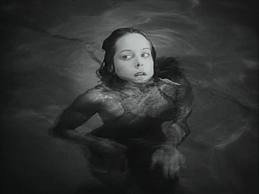
The women of the Dubrovna clan in Serbia turn into large, angry cats when they become jealous or angry and attack the threatening man, or woman.  Young Irena, now transplanted to New York, has brought her family history with her, along with her deadly kiss!  (Also refer to my Cat People blog post under the Movie Reviews tab.)

The Descent
(Neil Marshall, 2005)

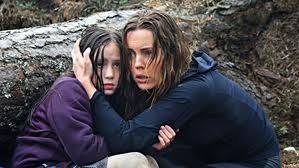
With the exception of a brief appearance during the first five minutes of the film, this all female cast entails a descent, if you will, of both the physical and psychological kinds.  A group of six women go spelunking in North Carolina where they encounter a group of ravenous, bloody thirsty creatures, leaving them to rely only on themselves as the heroes.

In My Skin
(Marina de Van, 2002)

I saw this movie for the first time this year and was intrigued because it was compared to Polanski’s Repulsion.  Though this flick delves heavily into body horror; one could argue that she is exercising autonomy over her own body, making the conscious decision of whether or not to mutilate herself. Where others may find her mutilation deplorable, she finds comfort.  In all, it definitely kept me on the edge of my seat and biting my fingers nails throughout most of the movie…though my definition of biting my finger nails is quite different than how the lead in this film would bite hers…

Ravenous
(Antonia Bird, 1999)

Antonia Bird’s Ravenous encompasses Guy Pearce, westward expansion, war, physical and mental seclusion, and oh, don’t forget, cannibals!  This film has subtle sprinklings of a feminist woman’s touch, including the female Native American who seems to be the only character with any sense amongst the all male cast.

Repulsion
(Roman Polanski, 1965)

Catherine Deneuve.  A woman repulsed by all men.  Enough said.

Rosemary’s Baby
(Roman Polanski, 1968)

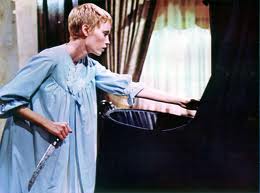
This year, Roman gets two films on my top 10.  Though slightly predictable to be on many horror lists, nothing scares me more as a woman than a group of men having literal control over my uterus, not to mention giving birth to Satan.

Sleepaway Camp
(Robert Hiltzik, 1983)

This movie has one of the most shocking endings I’ve ever seen, along with some hardcore gender bending that will blow your mind!

The Slumber Party Massacre
(Amy Holden Jones, 1982)

Written by Rita Mae Brown and directed by Amy Holden Jones, this horror flick has a feel all its own and in many ways sets itself apart from the typical B-Horror film of the 1980s.  Though the premise of an all-female crew alone with the parents away on vacation may seem run of the mill, but it dares to confront such issues as youth, virginity, masculinity and fear all in one swoop.

 I give Slumber Party Massacre this year’s top Feminist Horror Film award for being my favorite new discovery!

Teeth
(Mitchell Lichtenstein, 2007)

Vagina Dentada.  Look it up.

If only we all, men and women, could instantly react against our aggressors in such an assertive manner.

For more recommendations, see the list for my 2012 Feminist Horror Movie Picks and 2013 Feminist Horror Movie Picks

Cat People

Sometimes described as a “B-Movie” because of its low budget, I would argue that Jacques Tourner’s Cat People (1942) transcends the genre of the low quality, often ridiculous and hokey films that most times are associated with those on a budget.

Basically, the story is one of a young Serbian woman named Irena who fears that when she becomes immensely jealous, angry, or kisses a man, she becomes a black cat and attacks the offending party, whether male or female.  Any day of the week she can be found at the local zoo’s panther cage, sketching the cats with large swords being stabbed through them.  Irena, hating and rejecting her ability to transform draws the sword in a literal hope that the cat part of her will be slain (why she wouldn’t want to embrace this awesome power is beyond me).  During one her daily sketch sessions, local mapmaker Oliver is intrigued by her beauty and pursues her, later stating that though he did not love her, he was drawn and intrigued by her.

The two quickly get hitched and are married for several months without even the hint of physical activity, including kissing on down.  Irena fears the transformation into her powerful cat self and I’d venture to bet that this is a metaphor for the fear of female sexuality, both from a male’s point of view and also the taboo of women having and recognizing their own sexual urges.

As time rolls on, Oliver becomes increasingly frustrated by Irena’s lack of physical affection–although Irena is upfront with him from the beginning that she needs time and he assures her that she can have all the time in the world.  Unfortunately for Irena, to Oliver “all the time in the world” translates to a few mere months before he finds himself in the embrace of a female co-worker, with whom he quickly leaves Irena for.

But let’s not argue that little Ollie didn’t try to salvage the marriage, he did after all send her to a male shrink to “cure” her irrational fantasies.  Her therapist, Dr. Judd believes that Irena can be cured by kissing her against her will and as a result she becomes a cat, and in this case I’d wager more of a defense mechanism and kills him.  And why shouldn’t she defend herself when forced upon by her doctor?  Though this film was written, directed and produced by men who probably weren’t attending any feminist rallies, this revenge fantasy does resonate with my blood lust for attackers and rapists, which is essentially what this doctor was.

While watching the somewhat incestuous relationship between Irena, Doc Judd and her husband Oliver, I kept thinking that I had seen this scenario before.  And then it hit me–The Yellow Wallpaper, the short story by Charlotte Perkins Gilman!  It almost seems verbatim–a woman who is deemed by her husband too high strung and emotional and is physically and/or emotionally locked up from society (in the short story’s version in a child’s room).  In both stories, the female lead is patronized by her husband and doctor, who discuss “the patient” amongst each other while skipping over the middleperson–the patient herself.  Both women’s cures are discussed and prescribed, and the medicine is the inhibition of personal expression and/or creativity.  Again, I think it is safe to call both of these scenarios fairly textbook–that women’s bodies and minds need to be analyzed, explored, controlled and cured.

Another point of note that struck me while watching is the idea of the “other,” which Irena inherently is as she is not only a woman, but foreign to New York.  And why wouldn’t a foreigner have a family history of crazed, emotional women who turn into killer cats because of some sort of Turkish curse or something of the like?  Because Irena is “other” to the main characters, she is mysterious, deadly and comes from uncivilized and archaic roots.  Even the American female lead, when juxtaposed to Irena’s outlandish story is portrayed as rational and believable, even when she indulges in fanciful, irrational stories.

Though I probably wouldn’t describe Cat People as a feminist film per se, I would say it can be analyzed with a feminist lens, especially as a cultural artifact of the 1940s.  Through it all though, and even though she was the villain, I sided with Irena and for the first time ever, I sided with the bad guy, or in this case, bad gal.  What can I say?  She’s one tough pussy.

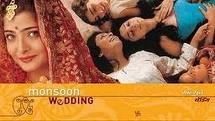
Monsoon Wedding (Directed by Mira Nair)

When I finished watching Monsoon Wedding, directed by Mira Nair of Amelia and New York, I Love You fame, I said out loud, “I loved that movie, how come I’ve never seen it before?!”  Let’s admit it, sometimes we think that we’ve tried all the delicious food in the world and have seen all the good movies ever made, so as the movie ended I felt thankful that movies like this one are still being made.

Monsoon Wedding is essentially about an impending arranged marriage with the bride-to-be as the central character, though the cast is really an ensemble which encompasses her mother, father, little brother, female cousin and branching out further into her extended family. This movie addresses a plethora of issues that include familial relationships between female cousins, father and daughter, uncle and niece; discovering love; sexual abuse (and somehow Nair presents the issue with such delicacy, conviction and honesty that you are left feeling empowered by its confrontation); falling in love; blooming hetero/homosexuality in a young boy; the fluidity of tradition, including Hindi women and tattoos; arranged marriage as a positive; and sex in midlife, to highlight only a few.

Visually, the movie is stunning; it brims with vibrant reds, oranges and greens.  The wedding is decorated with thousands of bright orange flowers that also seem to punctuate the film.  The wedding tent (set up to shield the wedding party from monsoon rains) is bright red, eschewing the traditional white.  The tent is actually originally white and the father of the bride asks the wedding planner if the occasion is a wedding or a funeral.  The women are dressed in primary colors, gold, silver and with glittering beads and accents.  Suffice it to say, these women are not afraid of color.

After thinking back over the film,  I was reminded Kasi Lemmons’s movie Eve’s Bayou in that both of these movies lack racial stereotype–both families are just families, and that is where the story lies.  By doing this, the story transcends being about black people, or a movie about Indian people, to a movie about the relationships between family members and the intricacies of romantic relationships.  And let’s admit it, this is human condition stuff; things that we all have in common.

Another great facet to Nair’s directing is how she presents India amidst popular notions of it being overpopulated, hot and a land of outsourcing and while all of these may be true, they don’t make the country synonymous with an ill place to live.  The film included shots of the country itself: a shabby looking outdoor cafe; people soaked during the monsoon, being taxied around in rickshaws; some houses without indoor plumbing, along with lush green golf courses; amazing chai tea; and expansive views of ancient architecture.  Like all countries in the world, you take the good with the bad and by presenting several views of Indian life, Nair offers us as viewers a more fair approximation of the country.

Admittedly, previous to this film I have only seen Deepa Mehta’s films and don’t have much familiarity with Indian directors in general, so I hesitate to say that Nair’s style is indicative of all female Indian directors.  Looking at this film as its own entity, even days later I am left with a swelling in my heart when I think of a father affirming his love for his children; the power of kindness changing even the most miserly into a lover; the tradition of arranged marriage being a choice and if chosen, evolving into a solid, respectful, loving and romantic union.  If this film suggests even the smallest aspect of Indian families and marriage, then throw me in a sari and serve me some samosas–I’m there.

Short Interview with Michael Glover Smith

Here’s a short plug: I am working on a short film directed by Michael Glover Smith called, “The Catastrophe” where I will be moonlighting as the casting director slash food prep person.  Michael interviewed me about my mad food prep skills and if you’d like to read it, here it is:  http://www.indiegogo.com/the-Catastrophe.

As a little teaser, after I read the script I argued with the director that full frontal male nudity should be included since there was to be frontal female nudity, and he agreed.  When a male director directs a film that includes female nudity, for me it alienates the female audience by making it a film by a man, for a man.  By adding male nudity, it throws the dynamic off kilter by not assuming that only men are watching the film.  So here is my extremely short blurb on the male gaze.

Joan Rivers: A Piece of Work, Post-Modern Mess or Feminist Icon?

The documentary, Joan Rivers: A Piece of Work is directed by Ricki Stern and Anne Sundberg, whose previous joint work includes documentaries on fascism in America and racial injustice.  Though their previous work is heavily steeped in more serious matters of the human condition, this documentary is not so off the beaten path.  It follows Rivers’ life over the span of one year as she turns 75.  We as an audience learn in the extra features footage from the Sundance Film Festival that the hours of filming capture much of Rivers’ life and do not only span from 9 to 5 because Joan’s life/career is not 9 to 5.  Basically, little is left out short of what she does in the bathroom. And what we see in that year is something sitting elbow to elbow with amazing.  When you think of 75, the senior citizen discount, dinner at 5:00 and penny candy may come to mind, which is completely laughable when you are allowed to sit in on Rivers’ life; it gave me a completely new perspective on the possibilities of the 70’s age.  She is fanatical about her work and her main drive is to keep her calendar brimming at the seams with book signings, stand-up comedy acts, her QVC appearances promoting her jewelry line (and yes, I have two pieces from it already), cruise bookings, and the list goes on.  Work is her crack and at times it seems to trump even her family.  In the documentary, Joan’s daughter, Melissa Rivers, describes her mother’s career as another member of the family called, “the career.”  This is the main focus of the documentary, but it is punctuated with so much of Joan’s life that we just don’t know about, such as what she looks like without makeup, the close relationship with her grandson, the shaky relationship she has with her manager, and how much she loves feeding bacon to her animals.

Before Rivers, the presence of female comedians on television was virtually nonexistent with the exception of Phyllis Diller.  She began her public career in the 1960s, appearing on TV while performing her stand-up, followed by her appearance in 1965 when she was 28 and first appeared on NBC’s Late Show with Johnny Carson.  There, she became a nightly staple before leaving the show and moved to Fox to host her own show, followed by famously being shunned by both Carson and NBC to this very day (she has since made an appearance where she spread dear departed Edgar’s ashes on the stage).  During her early TV appearances, she closed her stand-up act on television by saying, “I put out” and Rivers recounts the silent reaction from the audience.  She was also the first man or woman to address abortion in front of a live television audience.  Because of talking about sex, abortion and topics of the like that were considered off-limits for women, she was told that she was “going places that a woman shouldn’t go.”  Eschewing this “well-meant” advice, she continued to brand herself with her no holds barred form of comedy.

Now when you think of Joan Rivers, what comes to mind?  If you are the casual or seasoned observer, you probably think of plastic surgery, and it’s difficult not to.  Though it may seem redundant to comment on this, especially since her name, and really her face, are synonymous with plastic surgery, we need to address it.  In this documentary, we are given a golden ticket into Joan’s life and therefore, this documentary cannot be discussed without the surgery’s intimate relationship with age, career, femininity, and the struggle to stay, or at least appear, relevant to the public.

Despite Rivers’ strides in comedy, paving the way for such comedians as Kathy Griffin, Chelsea Handler, Sommore and even less known but equally noteworthy comedians Elvira Kurt and Poppy Champlin, the real issue that piques the public’s interest is Joan’s plastic surgery. In the Comedy Central Roast of Joan Rivers, the brunt of the jokes throughout the evening are at the expense of Joan’s face.  I also recently saw an episode of VH1’s TV show, Mob Wives, where one of the cast members comments on another woman’s chemical peel and compares her to looking like Rivers.  From ages 28 to 75, Joan has worked in show business.  She promotes herself,  writes her own jokes, is constantly on the move and literally never turns down work (she even comically offers to do a diaper commercial).  To what end?  All of these efforts are glossed over and the spotlight is shone on her surgeries.  She doesn’t want to retire because she loves this public life and she knows that she needs to make money in order to live the lifestyle that she chooses.  So what is she fighting against?  The main obstacle that she faces, as she puts it, is “it’s a youth [obsessed] society and nobody wants you.”  She’s caught in a catch-22–look young so that the public will still find you attractive and therefore hire-able/get plastic surgery in order to look young and society “[sees you] as a plastic surgery freak.”  She gets plastic surgery so that she will seem relevant, and then she is ostracized for what is expected of her because the public does not want to look at an old woman.

One side of the plastic surgery argument is that what Joan has transformed herself into is detrimental to women and that her decision to have plastic surgery is one big post-modern mess; she can change herself into whoever or whatever she wants.  She has changed herself, as much as she can, into the idealization of the Westernized woman with perfected Westernized features: skinny, blonde and straight hair, full lips, young-looking, thin nose, smooth and flawless skin.  Joan hangs onto the facade of youth, and the cosmetically altered younger version of herself is one that conforms to the epitome of what every woman in the world hopes to achieve.  The act of transforming yourself through surgery into an idealization of “perfect” could be seen as damaging and also a setback for women.  Plastic surgery is being used to make women look the same, and this “same” is a perpetuation of what is viewed as normative, and any woman who looks different from this is, whether by choice or otherwise, is “other.”

On the other hand, getting plastic surgery makes Rivers feel good, and this is where it comes down to the topic of choice.  Joan is pro-choice; she chooses plastic surgery.  Whether or not you are pro or anti-plastic surgery is not the issue here.  We can again definitely argue post-modern feminist theory here, but I offer another idea.  Please allow a tangent and let’s take the topic that first put Rivers on the forefront of subversiveness-abortion.  No one is pro-abortion and having worked an abortion clinic for two years, I feel that I can say that with some modicum of authority.  And I know, this debate has been beat up, teased, slapped down and pushed around, but if you are pro-choice, it means that you are pro the decision for a woman to have authority over her own body.  If you are an anti-choice man or woman, then you think that other women aren’t smart enough to make informed decisions about their own bodies.  It’s really quite simple.  So let’s apply this theory to plastic surgery.  It is a choice, and whether or not you approve of going under the Botox Cosmetic needle, the backbone of many feminisms is to support autonomy and let women do whatever the hell they want to do with their bodies.  Still with me?

I wonder if it is the plastic surgery that causes people to criticize Joan, or if criticism of her choices is really a front for what she’s been dealing with from day one?  She is loud, vulgar, considers no topic off limits, and doesn’t rely on a husband to financially support her.  These are all threats to the patriarchal dynamic of show business, which Rivers still claims is very much a boys’ club.  I cringe slightly at constantly comparing men and women, but in the media, men can be crude, unattractive, overweight, and even pass gas on screen, but We (with a big “W”) accept it and further, support its perpetuation.  To support my case, look at John Candy. He was overweight and one could even say less than attractive and yet he was always the love interest in his films (Uncle Buck, Delirious).  Let’s insert a woman here; when have you recently seen an unattractive or overweight women portrayed as a sex symbol (by unattractive and overweight I mean larger than a size 0-2 and has a nose that is wider than a number 2 pencil)?  Seriously, think about it.  Look at Kathy Bates in About Schmidt. When I saw it in the theatre, the audience gasped and whispered, “gross” and laughed at seeing her large and sagging breasts.  Now don’t get me wrong, I love John Candy, but this type of double-standard is indicative of what women must choose to either conform to or fight against, with the possibility of stunting their careers.  Rivers acknowledges this dynamic and chooses to participate in by looking the part, and yet at the same time by being a woman of power, she subverts her feminine look with her career and her voice.

It’s safe to say that anyone can deduce what my argument is regarding Rivers; I do think she is a feminist icon and she’s at the top of my list.  I also think it is safe to say that the issues of plastic surgery, masculinity and femininity in comedy, gender roles, youth, and aging are fluid subjects of which I have barely scratched the surface.  Whether you consider yourself a feminist and hate plastic surgery, would never call yourself a feminist and think John Candy is hot, or aren’t sure but think Joan Rivers is hot, your argument is valid and needs to be brought into the dialogue.  Joan began teaching us this in the early sixties and plastic surgery or not, we still need to give her props and assert our own choices through whatever vehicle we deem fit.