2011: Explore My Literary Feminisms!

At the beginning of 2011, I set a goal to read 24 books before the year was through in the attempt to trump my 17 from 2010.  If I didn’t reach it, no biggie, the point is quality, not quantity.  I did feel though, that a good amount of my time was melting into endless nights of watching the uber-dramatic and the really important issues of wives from Beverly Hills and the Mob.  Maybe a portion of my time would be better spent on what I sometimes forget that I really love?

My choices were not preplanned at the beginning of the year and I tried to tackle a range of books resulting in some feminist, most not, and a surprising few dabbled in Library Science, which I saw as more bang for my buck in the end.

My reading plan for this year not only differed from last year in goal (from 17 to 25), but also price.  Besides one or two that were bought for me, I checked all of the books out from the library.  Like many library types, a good amount of us buy our books.  Shocking, I know.  A lot of us are collectors of books and pride ourselves on showing off our giant libraries.  Think of it as battle scars.  However, being on a fairly strict budget for much of 2011, I decided to put my money, or rather, no money, where my mouth is (I think this also had a direct impact on my increased number of books).  Once I remembered that I had free access to an endless amount of books, I found it difficult not to fill my arms with mass amounts of fiction and non-fiction with the  voracious appetite of a brain eating zombie who had just encountered fresh prey!

Top 10

The Night Eternal
by Guillermo del Toro and Chuck Hogan (2011)

The third and final book in the Strain Trilogy about vampires taking over the earth.  The trilogy was amazing and each book led me on an emotional roller coaster.  Needless to say, I cried when I closed the last book.
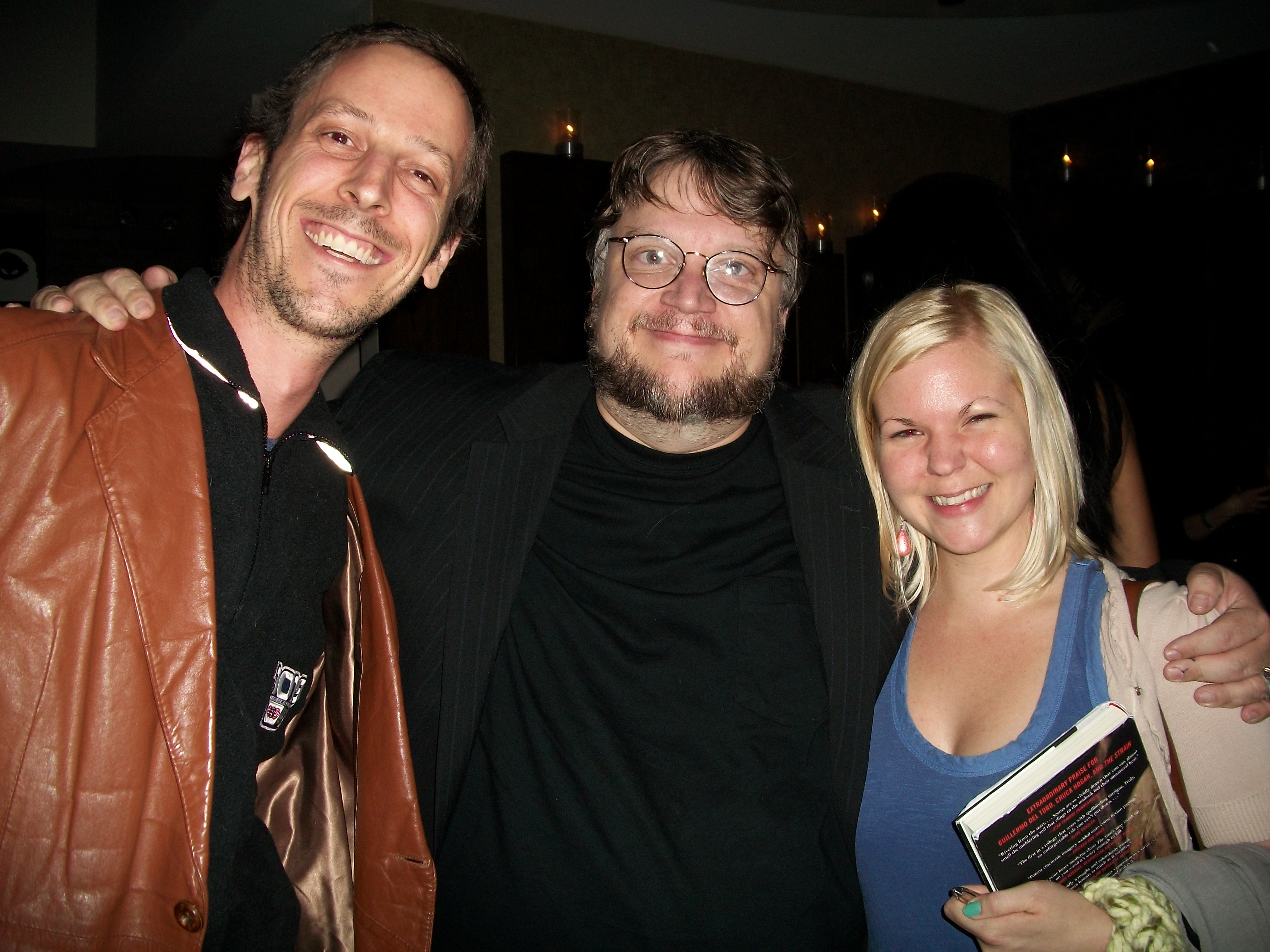
With GDT himself and yes, I am holding the first book of the Strain Trilogy

Neverwhere
by Neil Gaiman (1996)
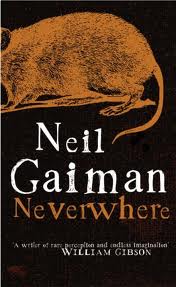
This year I discovered Gaiman, as you will see as you read further.  I read most of his adult fiction this year, and Neverwhere was my favorite Gaiman novel, and second favorite overall this year.  It had a happy ending, a very likable protagonist, and it sucked me in within the first few pages.  I also recommend this on audiobook because Gaiman himself reads the text and because of this, the audiobook expresses exactly what the writer was thinking when he was writing it.

Gunn’s Golden Rules
by Tim Gunn (2007)

This book is my Bible, or the closest thing I’ve ever read to a guide on how I want to live my life.  Gunn gives practical advice on how to act like a normal human being, encompassing good manners, the importance of treating yourself with respect and of course, making everything work.  I will definitely be reading this on a yearly basis and I recommend buying this one.

An Object of Beauty
by Steve Martin (2010)
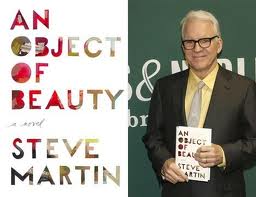
If you like artwork, New York, fashion, Steve Martin, coming of age stories, color pictures in books or any combination thereof, then this book is for you.

Herland
by Charlotte Perkins Gilman (1915)

Three men crash land into an all-female utopia where the women actually function just fine!  Go figure!  Plus, it’s a classic by a classic woman.  If you haven’t read CPG yet, I recommend starting with her short story the Yellow Wallpaper.

American Gods
by Neil Gaiman (2001)
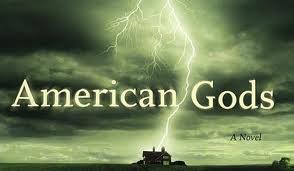
Gods living on earth in human forms.  What more could you want?  This piece of fiction is epic and like Neverwhere, grabs you right away.  At times, this book tackles some tough life and death issues but not so much that you feel like you’re reading a Russian novel.

Bossypants
by Tina Fey (2011)

Fey is a feminist and Fey is funny.  And I also want her to be my best friend.  Recommended for women and men who aren’t scared of childbirth, rotten breath or pubic hair that resembles vermicelli noodles.

The Fellowship of the Ring
by J.R.R. Tolkien (1954)

This year I thought that I’d take on the book since I love the movies so much.  It really reinforced that books and film are two totally different mediums and therefore are difficult to compare.  The book fills in gaps in the movie that I didn’t even know there were.  Plus, I was surprised by what an easy read it ended up being.

Based Upon Availability
by Alix Strauss (2010)
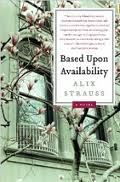
Short stories about women who are interconnected by their association with the Four Seasons Hotel.  Like her last fiction novel, Joy of Funerals, Strauss is really great at writing from varied female points of view.

Men Are Stupid and They Like Big Boobs
by Joan Rivers (2008)

What can I say?  It’s Joan Rivers and she rocks.  She’s a bipartisan powerhouse with a voice and an opinion.

Runners Up

The Anansai Brothers
by Neil Gaiman (2005)

The story of two reunited brothers who are the sons of an African God.  Very Gaimanesque: death; life; Gods; whimsy; a somewhat awkward central character who comes into his own; and as always, he presents us with magic and superstitions and makes it so easy to want to be part of that world.

Oh No She Didn’t: The Top 100 Style Mistakes Women Make and How to Avoid Them
by Clinton Kelly (2010)

Kelly’s guide makes you reflect on  your own wardrobe, laugh out loud on the bus and then look around to judge everyone near you.  However, I think his critique on eyebrows is totally incorrect.

Locke and Key
by Joe Hill (2008)

I am going to say it, Stephen King can’t hold a candle to his son’s writing.  Having never been a real graphic novel fan (besides being made to read Maus and Persepolis in undergrad), Hill’s graphic novel has prompted me to want to read the next three in the series.  A little bloody, a little disturbing and totally enthralling.  (May I also recommend Hill’s fiction: Heart Shaped Box and Horns.)

The Graveyard Book
by Neil Gaiman (2008)

The story of a baby who is adopted by ghosts in a graveyard after his parents are murdered.  Though technically a teen novel, I thoroughly enjoyed this coming of age story.

Carrion Comfort
by Dan Simmons (1989)

If you liked the Strain Trilogy, I’d recommend this novel as well.  Vampires living on earth unbeknownst to humans, a group of rag-tags on the hunt and characters that you fall in love with.  The end gets a little murky and I wouldn’t hold it against you if you speed read the last 1/4 of the book.

Tim Gunn’s Guide to Quality, Taste and Style
by Tim Gunn (2007)

Like Joan Rivers, I like everything that Gunn writes so naturally he’d make it to my runners up group.  Though not one that I’d stress that you buy, he does give good, solid advice on fashion and style, though through a somewhat more conservative lens.  Maybe it’s a New York high fashion thing.

Abraham Lincoln, Vampire Hunter
by Seth Graham-Smith (2010)

Sometimes we need something to read where we don’t have to think, right?  Well this is it.  Lincoln was actually a vampire hunter and guess what, slave owners were usually vampires.  It’s real!  Seriously!

Wigfield
by Paul Dinello, Amy Sedaris and Stephen Colbert (2003)

Yet another book where you can just laugh and not have to think much, though be prepared to accept the utter silliness and absurdity of the whole piece.  I’d recommend this on audiobook because Paul Dinello, Stephen Colbert and Amy Sedaris perform the voices for several of the characters.

Mister B. Gone
by Clive Barker (2007)

The concept for this book is really unique–a first person, or rather demon, point of view.  Demon Jakabok Botch is trapped within the pages of the book that you are reading, at that very moment, and he warns and implores you throughout the book to stop reading or else be damned!

The Vegetarian Low-Carb Diet
by Rose Elliot (2006)

Okay, so I am listing this as a runner up because I lost ten pounds in two months.  I was a vegetarian already but the low-carb thing really works.  I wouldn’t take this book as word, but it’s easy to use it as a general guide and make it your own.

Summer of Night
by Dan Simmons (1991)

This book is a prequel to another Simmons book, Winter Haunting and describes a group of boys over the course of one summer.  It entails possession, ghosts, baseball and creepy teachers.  It’s an easy, mindless read and I would recommend it if you have nothing better to read.

The Terror
by Dan Simmons (2007)

I keep reading Simmons because I feel like a lot of the time he almost gets there, but not quite.  This book falls in the typical Simmons style, much like Carrion Comfort.  Most of this book is great–the story of an arctic expedition, Eskimos with special powers, and a large killer spirit who kills off a ship of 19th century English explorers.  The first 3/4 of this book keeps your interest piqued, and then the last 1/4 goes a little off course.  If you can stretch your imagination and suspend belief for a few dozen pages, then you’ll be fine.

Eh.

Holidays on Ice
by David Sedaris (1997)

I realize that by saying this I may be pegged with eggs on the street by strangers, but this book is not great.  The stories are disjointed and the book doesn’t seem to have much focus.  I think it could have been a lot better it if were just stories about his normal [holiday] anecdotes, but it pulls in some strange tales, such as a young Asian girl moving in with an American family and the mother killing her grandchild.  While this story is totally acceptable and somewhat entertaining, it seemed like it would be better in another book.

Salem’s Lot
by Stephen King (1975)

The more I read Stephen King, the more disappointed I am, and the more I read.  Stephen King is known as the king (pun intended) of horror, but I think that his novels are just okay.  I’m not drawn in, scared or excited by his stories and this novel was no exception.  There were a lot of gaps in the story and I was missing the meat of a great vampire tale.  The idea behind it was great, a vampire comes to a small town, but it lacked the follow-through.

The Girl Who Loved Tom Gordon
by Steven King (1999)

A little girl gets lost in the woods and is accompanied by a battery operated radio with the voice of commentators reporting on baseball player Tom Gordon.  I did like how King describes being perpetually wet and stung by mosquitoes, because we can all relate to this.  However, I felt myself becoming bored at times because like Salem’s Lot, I felt like the meat of the story was lacking.
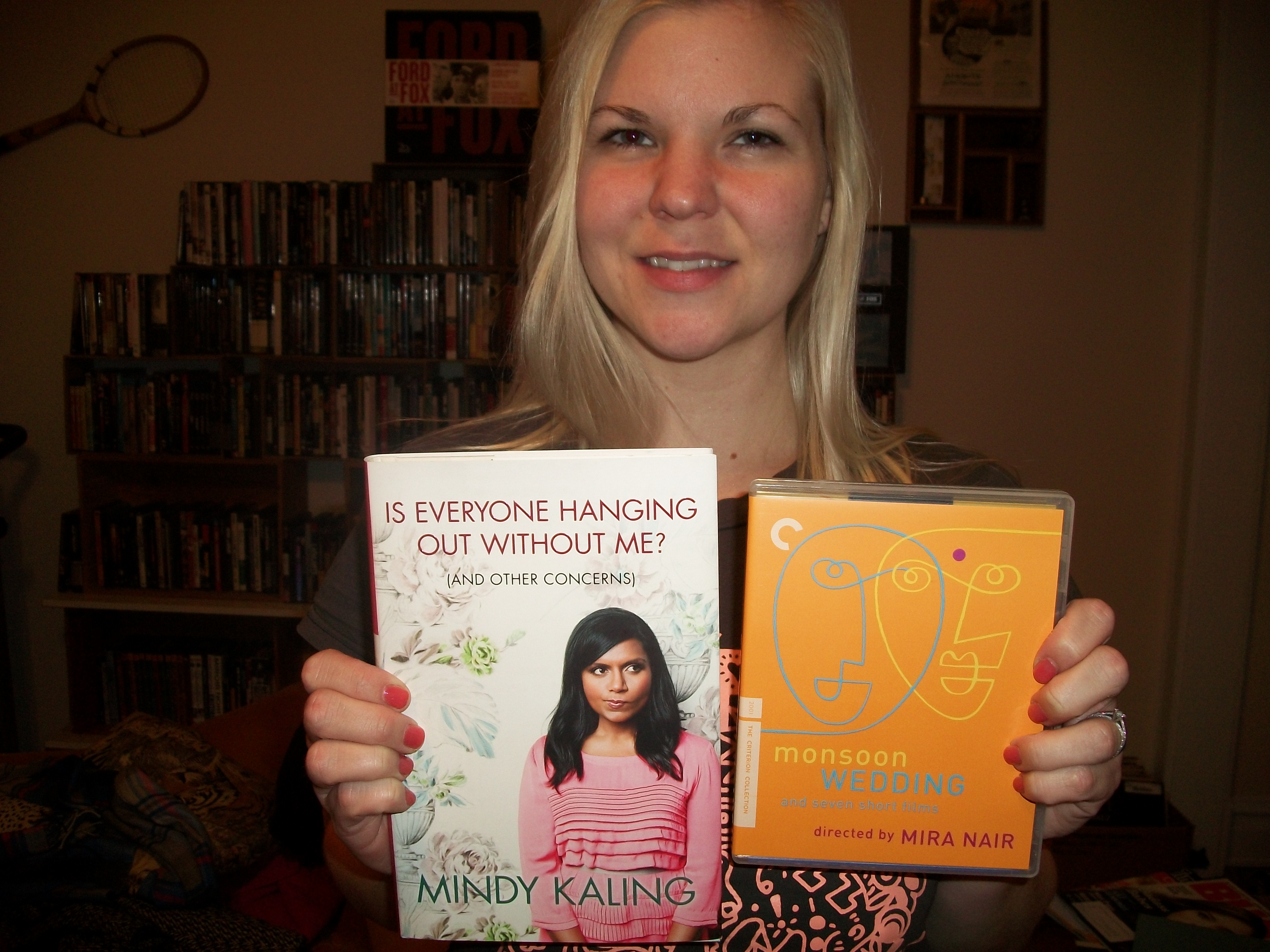
Happy Holidays from Exploring Feminisms!

Mindy Kaling, Monsoon Wedding and Exploring Feminisms All Wish You a Very Merry Christmas and Holiday Season!

He Said/She Said Review: Another Year

Another Year

dir: Mike Leigh (UK, 2010)
MGS rating: 8.3
JM rating: 9.0

This “dialogue review” of Mike Leigh’s Another Year is a joint-venture of Exploring Feminisms and my spouse Michael’s film studies blog White City Cinema. I saw this film a few weeks ago and thought it was a really unique and desirable view of long-term co-habitation/marriage.  Like Mike, for once we completely agree that this flick is one of the best of the year.  It tells the story of a year in the life of a sixty-something married couple and their relationships with their closest friends and family.

JM: In a nutshell, Another Year is the story of a couple in middle-age who are happily married, but are surrounded by friends who are unhappy. What I loved most about this film was the relationship between Tom and Gerri (who I perceive to be the main two characters) . It’s easy to watch it and believe that these two people really have long-term co-habitation figured out. I think it’s rare in film to see a long-term monogamous/married couple in a successful relationship. Your thoughts?

MGS: I think you’ve hit upon one of the most remarkable aspects of the film and one that made a big impression on me when I first saw it in the theater at the beginning of 2011. Tom and Gerri are indeed a happy, well-adjusted couple and it is weird to see that at the center of a movie! But after watching it a second time on blu-ray I think one could also argue that Mary is the “main character” because she appears in all four segments and she serves as the catalyst for almost all of the drama. It seems like Tom and Gerri remain consistent throughout the film but Mary spirals increasingly out of control – to the point where she has become estranged from them by the end. If anyone deserved to win an award for this movie I think it should’ve been Lesley Manville for her performance as Mary.

What I love about this movie and what I love about Mike Leigh’s movies in general is his sense of characterization. The characters are all so well written and acted that it’s very easy to believe that their lives continue on once they leave the frame. It’s also easy to believe in, and fun to speculate about, their pasts. The characters make references to things that happened years earlier and to other characters who we never see and, even if I don’t understand all of those references, I know that Leigh and the actors know these characters’ backstories inside and out. As a viewer that makes me feel like I’m in good hands.

What do you make of the relationship between Mary and Joe, the twenty-something son of Tom and Gerri?

JM: First I’d like to address what you mentioned about the characters referring to the past, and I also completely buy into and go along with their memory recollections. This makes me think of one of my major criticisms of the movie The Last Rites of Joe May. When we are introduced to Dennis Farina’s character, Joe May, we are asked as an audience to accept that Joe was some sort of criminal and tough guy, but when I watched how his character acted in the present, I didn’t buy it at all. You can’t just expect your audience to believe whatever you present to them if it’s not done convincingly, but Leigh does it perfectly. I feel like I am part of the family.

To answer your question about Mary and young Joe’s relationship, I think that it is very sad on Mary’s part. We learn later in the film that Mary is like an aunt to Joe and when Joe was only in grade school, Mary was already an adult. When Joe is an adult, Mary hits on him, making Mary an extremely pathetic character. She is grasping at any chance to have a life with this family and essentially be part of the family, and she’ll do it by any means possible. This awkward attempt at flirtation on Mary’s part also presents Joe, like his parents, as a mature and empathetic character. Instead of being creeped out by Mary or indulging in any sort of sexual escapade with her, he shows her kindness by not making a big thing out of it. I don’t know if I totally agree with you that Mary could be the main character though because I feel that it is more of an ensemble cast. Maybe I just liked Tom and Gerri’s characters and their relationship to each other and their friends so much that I have blinders on only for them when I watch the film.

Besides Mary, what do you think of Tom and Gerri’s other friends and family and their relationships to them?

MGS: Good point of contrast with Joe May.

I think that Ken is also a fascinating character. I get the sense that he and Tom probably started out in a similar place when they were young men but that, over the years, Ken has somehow made bad decisions that have led to him becoming bitter, out of shape, alcoholic and alone. Tom of course tries to help him in the way that old friends do, which leads to some of the film’s most painful moments. I think Leigh suggests that Ken and Mary could hypothetically have a relationship and help each other out; Ken clearly wants it but Mary seems to have unrealistic ideas about what her long-term relationship prospects are.

I also really like the character of Ronnie, Tom’s taciturn brother. I love the way he’s introduced only in the final section; as you know, the film charts a year in the life of its characters and is split up into chapters that correspond to the four seasons, each of which has its own distinct visual style. It seems like introducing the emotionally damaged Ronnie after the death of his wife (unseen by the audience) completely justifies the desaturated color palette of this “Winter chapter.” Obviously, this is a very somber part of the movie but I also think there’s a wonderful, deadpan humor to some of the exchanges between Ronnie and Mary. What did you make of their interactions?

JM: First of all, I completely agree with the winter section corresponding to the death of Ronnie’s wife! I felt like that part was so sad and mournful, and thinking back the lighting and weather mirrored that.

Admittedly, I didn’t really know what to think of the relationship between Mary and Ronnie. I felt that Mary, yet again, was attempting to cling to a member of the Tom/Gerri family and will flirt with whomever will be her key to that world. As for his interest in her, the connection lies in loneliness, companionship and the social act of smoking cigarettes. I tried to read more into it, as if maybe they’d end up together, but overall I think that I was romanticizing it.

MGS: I feel like there’s zero chance that those two could end up together but I have to admire Mary’s manic, indomitable persistence. One of my favorite moments is when she asks him about The Beatles and he replies that he’s an Elvis man. Then she sings a line from “All Shook Up”!

I’d like to conclude my thoughts by saying that I think Another Year is a great title for this film. It reminds us that what we’re watching is a slice of life; I feel like Leigh and his estimable cast show us the high and low points of one year in the life of these characters but that there could have been many similar movies made about the same characters in any of the other years of their lives. This is one of the ways in which it reminds me of the work of one of my favorite directors, Japan’s Yasujiro Ozu. Also Ozu-like is how Leigh manages to examine family ties in a way that feels simultaneously culturally specific and universal.

It’s well known that Leigh’s screenplays evolve out of improvisational workshops with his actors and I feel like he has perfected that process over the decades. To borrow a phrase from an old beer commercial, I think it allows his movies to reach a place, in terms of character development, that the other movies can’t. So that is why I think Another Year is a very special film. Any final thoughts you’d like to add?

JM: I’ve never seen any of the director’s other films, but this one definitely piques my interest to explore further. There is something so intriguing about his characters that when I finished watching the film, I felt like I was closing a really great book. I was sad that it was over, and also that I wouldn’t be a part of their lives anymore.

Another Year is currently available in a splendid blu-ray/dvd combo pack from Sony Pictures.

It’s a Catastrophe! An Interview with Director Michael Glover Smith

Having been casting director, food gal, executive producer and all around moral support for the 2011 short film, The Catastrophe, I feel a certain kinship to this film. After having seen it about ten times, I am still left with questions regarding writer and director Michael Glover Smith’s intentions.  So why not ask?  Smith was gracious enough to pimp his movie a little and give me some face time, a.k.a. sitting across the dining room table Sunday morning in our jammies over coffee.

JM: Could you please describe The Catastrophe in one sentence, and I’ll leave it up to you whether you’d like to describe the plot, the story, the general feeling, etc.?

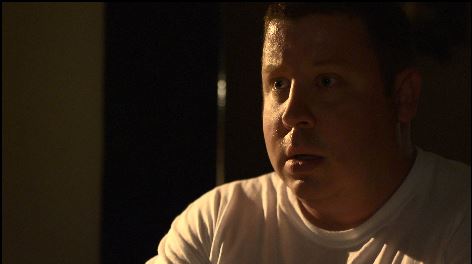
MGS: This is tough but, in one sentence, here goes: The Catastrophe is a dramatic story, told in poetic, dreamlike images, about a man who has the gradual, dawning realization that he may have made the wrong decisions in life.

JM: I know that this story is based off of a Nathaniel Hawthorne story, Mr. Higginbotham’s Catastrophe, but have any of your own decisions in life or lack thereof influenced your adaptation?

MGS: Yes, I fell in love with this Hawthorne story, which was written in 1837, but I would have never used it as the basis for a film if I hadn’t felt a personal connection to it and seen a way to make an adaptation that I felt was relevant and contemporary. I always say The Catastrophe is a cautionary fable about the dangers of not doing what one should be doing in life.  But it’s not like I’m Zeus criticizing the character from on top of Mount Olympus.  It’s more like commonsense advice I’m also giving to myself.  You know, “Don’t waste your time doing things that aren’t important. Don’t do anything just for the money.”  It’s personal in that sense.

JM: Have any other directors influenced how you wrote/directed this film?

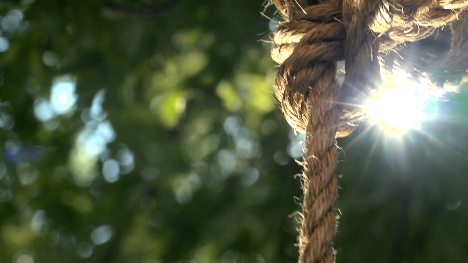
MGS: In terms of specific shots and specific effects, yes, but not in terms of the end result.  I did show a lot of different film clips to Justin Cameron, our brilliant director of photography, as visual references for the kind of “feel” I wanted to go for in certain scenes.  For example, I showed him the interrogation scene from Zodiac in order to communicate how I wanted our opening bathroom scene to start out distanced and objective but then become increasingly ominous and paranoid-feeling as we steadily bring the camera closer to the actors and the shots become more and more subjective.  But obviously, our film as a whole bears no resemblance to Zodiac.  I did a similar thing with the hanging scene; we watched parts of Robert Bresson’s A Man Escaped and talked about using lots of close-ups to fragment the human body the way Bresson did.  Also, I dedicated the movie to Jafar Panahi and Mohammad Rasoulof, two unfairly imprisoned Iranian filmmakers, but that was more a show of political solidarity than anything.  If any Iranian director could be said to be a stylistic influence on this movie, it would be Abbas Kiarostami; I was thinking of his films when I was writing the script because I knew I wanted to have a lot of scenes of our protagonist driving in his car and talking on his cell phone.

JM: When you write and direct a film, do you keep a certain audience in mind?

MGS: I used to try and have a general audience in mind but I think that kind of thinking has gotten me into trouble.  In the past, I would always second guess myself and think, “Well, if this film isn’t successful, it’s because I wasn’t thinking commercially enough.”  So I would rely on formulas and genre conventions to communicate ideas in a shorthand way, knowing that those things had worked in other movies (I’m specifically thinking of the use of faux-documentary interviews in my previous film At Last, Okemah!).  When you try and second guess how a general audience (i.e., a faceless blob of people) will respond, I think you also sacrifice some of your own understanding of what you’re doing.  So, with The Catastrophe, I decided to just go with my gut every step of the way.  Whether it was writing, directing or editing, I kept thinking, “This feels organically right. This makes perfect sense to me even if it might seem weird to others.”  Or to put it another way: I considered myself to be the audience.  I finally made a movie that completely satisfied me personally, which makes me feel like it will have the same effect on others, even if that’s a very small group of people.  I’ve come to realize I would rather completely satisfy a small group of people than partially satisfy a lot of people.

JM: When you write and direct a sex scene, do you feel like you do it from your personal perspective, a [general] male perspective, or something all together different?

MGS: That’s a great question. I think it depends on the specific film because, in terms of perspective, sex scenes can be as varied as murder scenes or any other type of scene.  In the case of The Catastrophe, we are telling a story that sticks fairly close (but not exclusively!) to the perspective of our main male character.  So, I wanted there to be a certain ambiguity in the sex scene between these other two characters.  I wanted the audience to ask themselves, “Is this happening for real or is this the paranoid fantasy of the main character?  Is this merely what he fears his girlfriend is doing while he’s on the road for business?”

JM: What do you aim to achieve by showing us nudity, male and female, and a sex scene?

MGS: Well, I wanted to achieve two things: I wanted to depict the sex act in an honest way and I also wanted it to be somewhat blunt and shocking.  In regards to my first objective, I feel like there’s something dishonest about not showing nudity in a sex scene.  You know, sometimes you’ll see a Hollywood movie and the actress will have a bra or a shirt on during the sex act, and that can take you out of the movie completely.  The first thing you think is that the actress obviously has it stipulated in her contract that she won’t do nudity.  This, of course, is not the kind of thing you should be thinking when you watch a movie.  In regards to the second objective, it goes back to what I was saying about the protagonist’s paranoid fantasy.  If you believe that’s what the bedroom scene in my movie is, I don’t think there is any better way to indicate that paranoia and that fear than by showing you the penis of the “other man.”  And I think I was successful in these objectives because both of the actors (whom, I should add, I think are very brave performers) really liked the scene when they saw it and felt that it was artful and not gratuitous at all.

JM: As the movie comes to its end, it leaves the audience hanging because not much has been realized by the characters/is not a finished story.  Do you feel that because the film is the first part of a longer script, it will be more difficult to be taken seriously by the audience?

MGS: First of all, you should always leave the audience wanting more – better that than overstaying your welcome!  But it’s a fifteen minute film so there’s only so much you can accomplish.  I did want to show that both Dominicus and Carlie, the male and female protagonists, have realizations in those fifteen minutes.  It’s not as dramatic of an arc as what I could show in a feature but I think you actually do see these characters change in a realistic way.  In the case of Dominicus, I liked the irony of his situation: here’s a guy who is always on the road selling cigars to make enough money so that he can get married.  But the very thing that’s allowing him to make money is the same thing that’s pushing his girlfriend away!  This is the realization that his character comes to.  With Carlie, it’s different; she’s pissed off that he’s always on the road but then comes to a realization that she doesn’t need him to be happy and that she can imagine a life without him.  Now, because the movie is somewhat abstract (transitioning from black and white to color, having a dream sequence, having a character recite a poem, etc.), I know that some people are not going to think of this as being an “actors’ movie.”  But I do think that both Peyton and Marla, who play the leads, successfully show their characters evolving in just a few short scenes.  I am very, very proud of the work they did in this film.  Hopefully, we will get the chance to make the feature-length version of this script and tell the whole story.

JM: At the end of the film, Carlie does something with her face (I won’t spoil the surprise) that makes me think that she is actually not happy, and in that way I do not read it in a way that she feels that she can exist without him.  Can you comment on that as a possible interpretation?

MGS: If that is the way you feel, I’m not going to say you’re wrong.  I wanted Carlie’s gesture to be ambiguous and evocative but I never even discussed what it meant with Marla, so I’m sure she had her own interpretation of what it meant.  The important thing is that she’s had an epiphany and epiphanies can be scary.  They can have positive and negative consequences.  The ultimate meaning is up to each individual viewer.

JM: Thanks Mike, and we’ll see you at the Illinois International Film Festival on November 19th for your Chicago premiere!

Director Info: Smith is an independent filmmaker and Film Studies instructor based in Chicago, Illinois and currently teaches film studies/history at four (yes, four) colleges around the Chicagoland area.  The Catastrophe is Mike’s third film.

For information on the film, please check out The Catastrophe’s website and trailer on You Tube.

Happy Halloween from Exploring Feminisms!

Happy Halloween from Exploring Feminisms and Melanie Daniels, a.k.a. Tippi Hedren from Alfred Hitchcock’s

The Birds!

Barbie Turns Bad-Ass

Over the years, Barbie has caught a lot of flack–too thin, boobs too big, hair too blonde–but now, Barbie has decided to revamp her image and turn bad-ass. That’s right, Barbie has tattoos.

The new line, aptly named, “Totally Stylin’ Tattoos Doll” is geared for adult collectors, though because it is sold on Mattel’s website and at Walmart children will probably become aware of her existence. From the run of the mill Virginian moms’ points of view, they say that it sets a bad example for young girls, making tattoos seem okay to get.  Obviously, my problem with that logic is that if any parent is worried about their kids seeing tattoos and wanting them, then they might want to lock them away until they’re 18, or maybe the parent should actually talk to their kids about tattooing.  

Anyhoo, I say kudos to Mattel for keeping up with the times by embracing and showing what different demographics look like.  And  who knows what’s next? Lesbian Barbie?  Cellulite Barbie?  Nipple pierced Barbie?  Israeli Barbie?  Single mother with adopted baby Barbie?  The sky is the limit.  And though she may be facing a lot of criticism, Barbie has weathered worse and I’m sure she’ll come out unscathed, unscarred, and rocking some awesome ink.

47th Chicago International Film Festival Overview

The Last Rites of Joe May
dir. Joe Maggio

This film takes place in Chicago after what we assume to be an aging crook (there’s really no proof of this, we are just non-verbally told by his bad-boy leather jacket) gets out of the hospital after having pneumonia for two months.  When he is released, he finds his apartment inhabited by a young mother and her elementary age daughter after his landlord gives his apartment away during his hospital stint.  When the female lead sees Joe sitting in the cold at a bus stop, she invites him to live with her and her daughter for a hundred bucks a week.  And why wouldn’t a single mother with a young daughter invite a strange man to live with her?  Because, it’s Chicago.  My problem with this movie is that it relies heavily upon stereotypes of Chicago and the Midwest at large–that all Chicagoians are blue-collar, live in a perpetual gray and freezing city that is economically depressed, the police officers are corrupt, and the women are poor and uneducated.  Fuel for the latter is that the mother is dating a cop (big surprise, huh?) who beats her, but she can’t leave him because he’s just really, really stressed out.  Watching this movie as an educated, Midwestern woman who hails from a single-mother household, it seems to me that the director pigeonholes Chicago women based on his wide-sweeping assumptions.

Grade: C

Rabies
dir. Aharon Keshales

This movie was a first for many—the first time that I had ever seen an Israeli movie, and also the first time an Israeli horror flick has ever come out of the country.  Initially, the plot appears fairly formulaic, four teens—two boys and two girls—are driving and get sidetracked by a  bloody person in need in the woods.  However, as the story unfolds, we are given a giant onion, if you will, of layers upon layers of gruesome, complicated, bloody, loud, terrifying and yes, even loving and beautiful story lines that sets this film apart from your run of the mill horror film.  Another unique facet is that it doesn’t rely on predictable film and horror conventions, such as implying a sexual relationship between siblings, the good guy getting punished, the juxtaposition of a truly good cop and a truly bad cop, and a psychotic killer having a sense of humor.  To add to the film’s intrigue, there are some rocking female characters, especially one of the young cheerleaders who we meet in the beginning of the film whose backbone and morals are as tough as the Hoover Dam.

Grade: B+

Le Havre
dir. Aki Kaurismäki

This film tells the tale of a French shoeshine who takes in a young African immigrant on the lam from French authorities.  Marcel (Andre Wilms) hides young Idrissa (Blondin Miguel) so that he may be reunited with family, but all the while he is being sought in order to extradite him back to his native country.  Just as Idrissa is discovered hiding amongst the boats at the local harbor, cold, homeless and hungry, Marcel’s wife is admitted to the hospital for several weeks.  Over that time, Marcel and Idrissa take on a father/son relationship of sorts and the townspeople all come together to help hide him.  What can I say, it’s a heart warming story and with a slight touch of whimsy as only French movies can do (though the director is Finnish).  Director Kaurismäki shines a light on the plight of the immigrant–homelessness, hunger, broken families and loneliness and how young children are amongst the casualties of immigration.

Grade: B+

A Lonely Place to Die
dir. Julian Gilbey

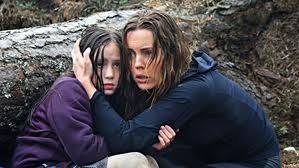
Though listed as a part of their horror/After Dark program at the CIFF, I don’t know if I would stick this movie in the horror section at my local video store.  Like the aforementioned Rabies, when this film begins it seems very formulaic and you think that you have it all figured out–woods, cabin, creepy killers.  And though while some of this true during the first half of the film, the second half blind sides us and turns into a thriller/action/adventure.  The story takes place in Scotland where a group of friends go mountain climbing and along the way, they happen upon a young girl who is buried in a box in the ground.  One by one, each of the group begins to get knocked off by two men with rifles, though we have no idea why until the end of the movie.  The main character of this film becomes the mother figure/savior to the young girl and while it is slightly predictable and relies on the supposed nurturing nature of women, I bought it.  Not only was she willing to put her neck out for some girl that she didn’t know, but she kicked butt and stood by her guns, and the little girl.

Grade: B+

Turn Me On, Dammit!
dir. Jannicke Systad Jacobsen

What can I say about Turn Me on, Dammit! besides if you’re a woman of any age, watch it.  I was shocked at moments by this movie’s brutal honesty in telling the tale of young women discovering their own sexuality, and yet it was done in an incredibly quirky, cute and down to earth way.  Essentially, it is the story of three young friends living in a small town in Norway, all experiencing high school and relationships in very different ways: one who inflicts torment and is filled with jealously, another having big dreams of moving to Texas to help abolish capital punishment, and the last discovering and exploring her own sexual urges while being labeled an outcast.  And so, so many more coming of age issues are up for discussion including mother/daughter relationships, single-parent households, mean girls in high school, small town life and collective small town mentality, young women’s bodies, self-discovery…I could go on and on but trust me, it’s all good stuff!

Grade: A

This film also wins Exploring Feminisms Audience Choice Award for 2011!  Congrats!

In Praise of Marriage

A few months ago, my spouse e-mailed me a link to the Chicago International Film Festival’s gelato naming contest.  You were to pick from a list of flavors and fixin’s, along with a clever movie inspired name.  The winner was to receive two free tickets to the opening night of the festival on October 6th, the after party, and six months worth of free gelato.  Yes, this is extremely corny, but what the hell?  I filled it out and guess what?  I won!  I chose chocolate gelato with bananas, and named it, “Inglorious Bananas” (get it? Inglorious Basterds?).

This morning, my husband, Mike, author of the popular film studies blog, White City Cinema, posted an article titled, “In Praise of My Wife“.  If this is what marriage is going to be like for us, then it’s going to be a good life.

My Top 10 Feminist Horror Movie Picks for 2011

Every year in our house we watch at least thirty horror movies during the month of October.  Of those, very little are what I would consider feminist, or at least having a feminist agenda of some sort.  So, why not seek some out and recommend them to you?  I am also getting them out super early this month so that you can enjoy all Halloween season long!

Here’s the straight dope: this task turned out to be a lot more difficult than I thought–there are about a million and one horror films out there, if you didn’t know.  While sifting through the plethora of bloody thrillers, teen screams, zombie flicks and vampire love stories, directed by both men and women, I came across a few that stood out as notable films ranging from masked and subtle to overt feminist themes.  I narrowed my list down to ten and are in alphabetical order.

Enjoy you feminist sickos!

Carrie
(Brian De Palma, 1976)

This movie is the ultimate revenge fantasy for any girl who was picked on in high school by the popular girls.  Carrie is tormented by both her uber-Christian mother and the nasty girls in school, but gets her comeuppance with the help of her telekinetic powers.

Cat People
(Jacques Tourneur, 1942)

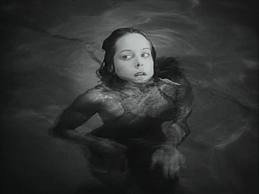
The women of the Dubrovna clan in Serbia turn into large, angry cats when they become jealous or angry and attack the threatening man, or woman.  Young Irena, now transplanted to New York, has brought her family history with her, along with her deadly kiss!  (Also refer to my Cat People blog post under the Movie Reviews tab.)

The Descent
(Neil Marshall, 2005)

With the exception of a brief appearance during the first five minutes of the film, this all female cast entails a descent, if you will, of both the physical and psychological kinds.  A group of six women go spelunking in North Carolina where they encounter a group of ravenous, bloody thirsty creatures, leaving them to rely only on themselves as the heroes.

In My Skin
(Marina de Van, 2002)

I saw this movie for the first time this year and was intrigued because it was compared to Polanski’s Repulsion.  Though this flick delves heavily into body horror; one could argue that she is exercising autonomy over her own body, making the conscious decision of whether or not to mutilate herself. Where others may find her mutilation deplorable, she finds comfort.  In all, it definitely kept me on the edge of my seat and biting my fingers nails throughout most of the movie…though my definition of biting my finger nails is quite different than how the lead in this film would bite hers…

Ravenous
(Antonia Bird, 1999)

Antonia Bird’s Ravenous encompasses Guy Pearce, westward expansion, war, physical and mental seclusion, and oh, don’t forget, cannibals!  This film has subtle sprinklings of a feminist woman’s touch, including the female Native American who seems to be the only character with any sense amongst the all male cast.

Repulsion
(Roman Polanski, 1965)

Catherine Deneuve.  A woman repulsed by all men.  Enough said.

Rosemary’s Baby
(Roman Polanski, 1968)

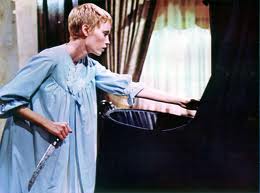
This year, Roman gets two films on my top 10.  Though slightly predictable to be on many horror lists, nothing scares me more as a woman than a group of men having literal control over my uterus, not to mention giving birth to Satan.

Sleepaway Camp
(Robert Hiltzik, 1983)

This movie has one of the most shocking endings I’ve ever seen, along with some hardcore gender bending that will blow your mind!

The Slumber Party Massacre
(Amy Holden Jones, 1982)

Written by Rita Mae Brown and directed by Amy Holden Jones, this horror flick has a feel all its own and in many ways sets itself apart from the typical B-Horror film of the 1980s.  Though the premise of an all-female crew alone with the parents away on vacation may seem run of the mill, but it dares to confront such issues as youth, virginity, masculinity and fear all in one swoop.

 I give Slumber Party Massacre this year’s top Feminist Horror Film award for being my favorite new discovery!

Teeth
(Mitchell Lichtenstein, 2007)

Vagina Dentada.  Look it up.

If only we all, men and women, could instantly react against our aggressors in such an assertive manner.

For more recommendations, see the list for my 2012 Feminist Horror Movie Picks and 2013 Feminist Horror Movie Picks

Ain’t Your Ordinary Sister Act: An Interview with the Watson Twins

Though I did resist asking which sister was the evil one, I couldn’t hold back some other, let’s say, more pertinent questions when I interviewed indie/folk goddesses Chandra and Leigh Watson, otherwise known as the musical group, the Watson Twins.

JM:  I read that you gals were born in Oklahoma and raised in Kentucky (and now live in Los Angeles).  How has living in Kentucky and/or the greater South influenced your music?

Chandra:  I think it definitely has…we grew up with the records our mom and older sister used to play: classic rock, country and folk along with us singing gospel music in our church choir.  As we got older we started going to local punk/experimental shows in Louisville and so our sound is a melting pot of all that we heard and experienced growing up.  It’s easier to identify with those influences when you live 3000 miles away, so I felt more connected to my home after moving away. Funny how that happens.

Leigh:  Growing up in Kentucky definitely had an influence, but different than what most might expect considering it is known for bluegrass.  That part of the country is a real melting pot of sounds and that influence allowed us to experiment and push boundaries with our own music.

JM:  You’ve put out five (five!) albums in under six years and I read from the bio on your website (www.thewatsontwins.com) that you have a forthcoming album due in 2012.  Incredibly ambitious is a phrase that definitely comes into my mind.  How do you keep each other motivated?

Chandra:  We try to help each other stay focused and positive…it’s strange, when one of us starts “losing steam” the other picks up the slack and pushes forward.  We are cheerleaders for one another and having that support helps us to keep making music and touring.  There’s also that “thing” inside everyone who HAS to write and create to stay sane…just when you think you’ve written your last song the creative spirit strikes.

Leigh:  Yes, definitely our own little cheerleading team.  I think we are both pretty encouraging to one another and also have a bit of competitiveness, if Chandra is working on music I know I should be too!  It’s the ying and the yang.

JM:  I was also surprised to see an additional sixth album sneak in there from 2009 called Live at Fingerprints. Can you offer a little more information about that one?

Chandra:  Fingerprints is an amazing Independent Record Store in Long Beach, CA.  Rand, who is the owner and champion of eclectic Indie music, asked us to do an instore and record it.  He then suggested that we release it and the rest is history. Always fun to release LIVE tunes as they are a very honest representation of the performer… for better or worse, ha!

JM:  How did you choose the tracks featured on your newest album of cover songs, Night Covers?

Chandra:  A few of them we’d been playing live: Bill Withers “Ain’t No Sunshine” and Sade “Sweetest Taboo” the others just sort of came along.  Listening to The Turtles on vinyl one night and “You Showed Me” came on…I thought what a great song, we should cover that…so we did.  The Black Keys “Tighten Up” was just more of a fun challenge, we are fans of the band and thought it would be fun to try and make it sound like a Watson Twins song…needless to say most folks don’t recognize it right off the bat.

Leigh:  The PJ Harvey song has such amazing lyrics and imagery.  She is one female artist who we have always admired.  “Here Comes The Rain Again” by the Eurythmics was a suggestion from my oldest nephew…little did he know we had been talking about it as well.  It had to be on the list.

JM: What is so great about Night Covers’ songs is that you completely make them your own, resulting in classics that actually sound like totally new songs.  Can you describe your process or mindset when setting out to reconstruct the songs that you chose?

Chandra:  Thanks for saying that…we do really try to make them our own as mentioned.  Much of our approach just has to do with the sound that we’ve created for the band over the years and now it’s just instinctual.

Leigh:  “Just Like Heaven” started our affinity for covers.  We had such a great experience with that song, arranging and recording the Night Covers record was a total guilty pleasure.

JM:  In the lyric credits for Fire Songs, I see that each of your names is next to different songs.  How much of your writing process is collaborative?

Chandra:  We usually write separately and then come together to work on harmonies, arrangement and production.  We’ve just collaborated for the first time writing a song for an indie film and are hoping to collaborate more on the writing side on the next record.

Leigh:  I feel like co-writing has been something we’ve been working towards.  We spent the last few records finding our individual styles and now are ready to make that step.  Our first collaboration went well and seems like that’s definitely part of our next recording.

JM: I think its safe to say that a lot of your songs include lyrics about relationships and/or love. Do you see these as connecting threads throughout all of your songs, and if not do you see any that have emerged?

Chandra:  Human emotion and our connection to others inspires me on many levels…all my songs stem from that, but some of those love stories are metaphors for other trials and experiences in our lives.

Leigh:  That subject pops into a lot of writing.  Love, heartbreak and relationships are things we can all understand.

JM:  Your style has been described in a number of ways: indie folk, Americana, alternative country, folk and so forth. Do you feel that within these comparable genres your music differs from that of your male counterparts (I’m thinking maybe Amos Lee, Iron & Wine, Elvis…)?

Chandra:  Wow, I never thought about it…I guess the big difference is that none of those fellas have a cool twin to sing sweet harmonies with. 🙂

Leigh:  I’m flattered to be listed along side those male counterparts.  The familial harmonies definitely are one thing that are distinctive to our sound.

JM:  You are playing Schubas in Chicago on September 20th.  Are you going to do anything extra fun while you’re here?

Chandra: We might just be cruising around sampling deep dish pizza…hard to say at this point, but we’ll keep you posted.

JM:  May I recommend Spacca Napoli?  It’s amazing.  And finally, if each of you could meet any singer/songwriter or artist who ever was or is, who would it be?

Chandra:  Another tough one, great questions btw…hummmm, I think it would have to be Dolly Parton.  I’ve always said over the years that she’s one person I’d like to have lunch with…her sense of humor is amazing I’m sure she’d have a story or two.

Leigh: Bob Dylan.

JM:  Thanks so much, gals and I’ll see you at the show!

Quick Watson Twins Album Info:
Southern Manners (2006)
Rabbit Fur Coat (2006)
Fire Songs (2008)
Live at Fingerprints (2009)
Talking to You, Talking to Me (2010)
Night Covers (2011)
? (2012)

For further information and tour dates, please visit The Watson Twins’ website at: www.thewatsontwins.com.